Custom Orthotics vs Over the Counter Inserts Explained
Date:
Editor:
The Foot & Ankle Group
When foot pain persists, it is easy to assume that the most expensive insert must offer the best solution. Retail arch-support stores may charge $1,500 to $2,500 for products presented as custom, even though the underlying insert may be prefabricated. The important question is not simply what an insert costs. It is whether the device is based on a medical evaluation and the way your feet function when you walk.
The key difference in custom orthotics vs over the counter inserts is personalization: true custom orthotics are medical devices designed by a podiatrist using examination findings and 4D movement data. Over-the-counter inserts are mass-produced cushions made in limited shapes and sizes.
Schedule a biomechanical evaluation at The Foot and Ankle Group to find out whether custom orthotics or OTC inserts are right for your feet.
At The Foot and Ankle Group, 4D dynamic pressure analysis captures how forces move through your feet, then supports an AI-assisted design and 3D-printing process. That data-driven approach helps distinguish temporary cushioning from targeted biomechanical treatment, starting with how the technology measures your movement. Compare our custom orthotics process with what retail stores offer.
What Makes 4D Custom Orthotics Different From Store-Bought Inserts
True custom orthotics are made from a medical evaluation with 4D dynamic pressure analysis, AI-assisted design software, and 3D printing. By contrast, store-bought inserts are mass-produced in standardized sizes without any clinical assessment of your biomechanics.
Not every arch-support product is designed to address the same problem. Store-bought inserts are mass-produced for broad categories of foot shape and comfort. The Foot and Ankle Group's custom orthotics are medical treatment devices designed around your examination findings, your movement patterns, and the specific forces affecting your feet.
1. Dynamic pressure analysis captures your foot in motion
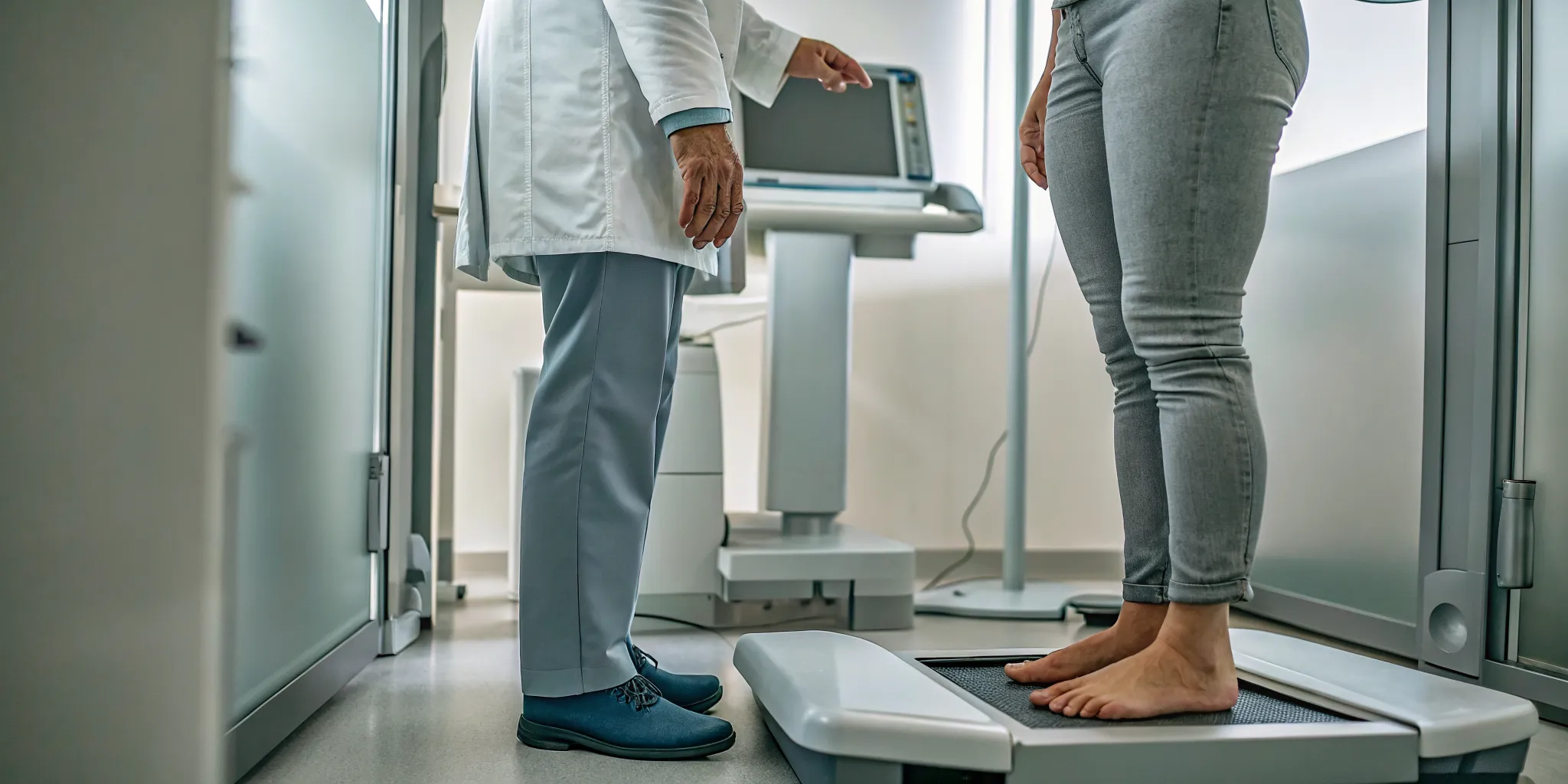
The process begins with 4D dynamic pressure analysis. Instead of assessing only how your foot looks while standing still, high-resolution pressure plates record how force moves across your feet as you walk. This helps map gait forces, pressure distribution, and volumetric foot data during movement.
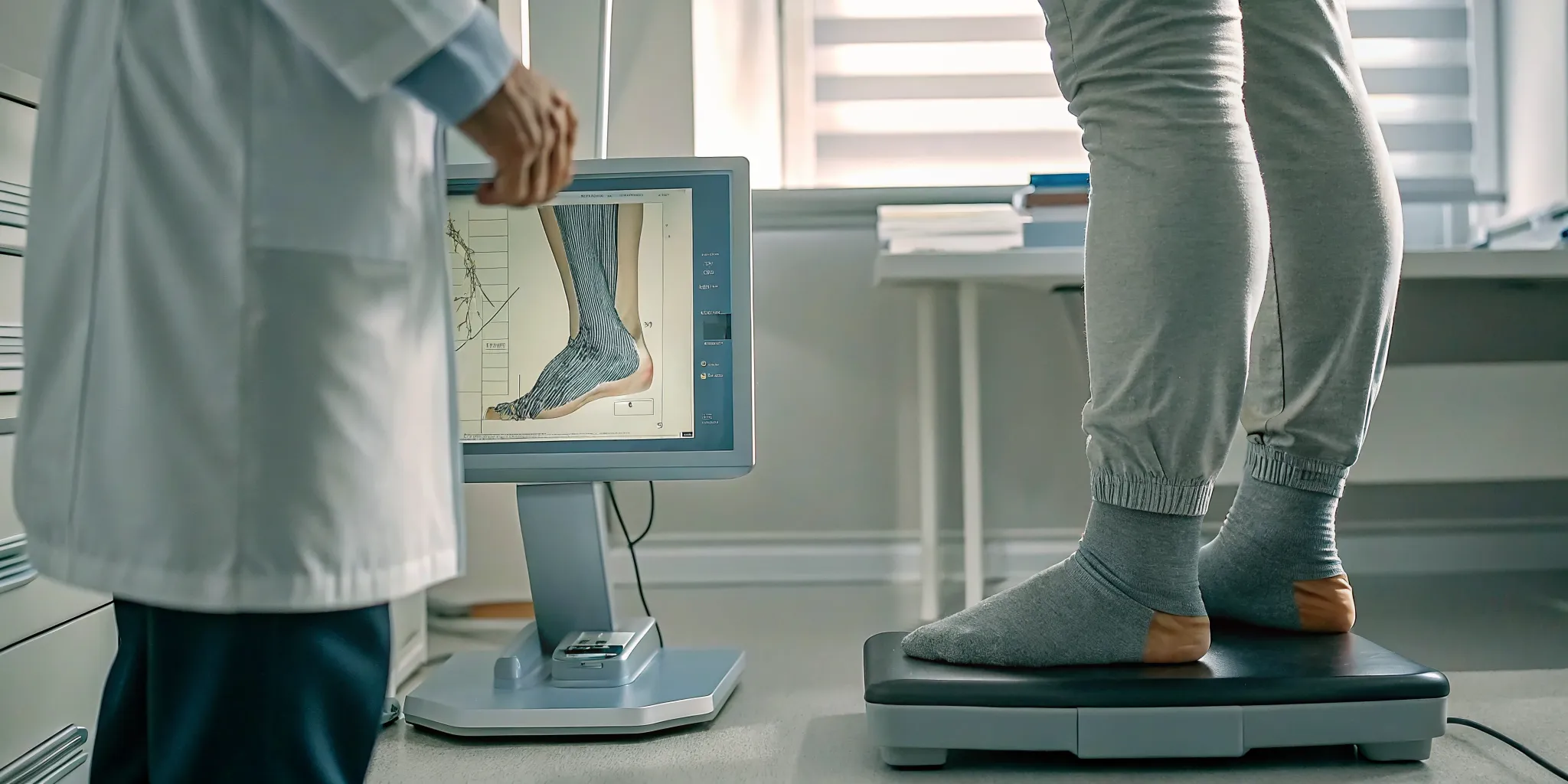
That distinction matters because many symptoms are related to what your foot does during each step, not simply its static shape. A moving assessment can provide a more complete biomechanical profile than the basic static methods used at many retail arch-support stores, such as having a customer stand on carbon paper to create a footprint.
2. Footscan software helps translate data into a treatment plan
The pressure data is then reviewed through footscan AI-assisted software. It recommends orthotic specifications based on the patient's pathology and measured biomechanics. This does not replace a podiatrist's examination or clinical judgment. It gives the medical team a detailed set of measurements to consider alongside your symptoms, physical findings, activity demands, and goals.
The result is a treatment plan based on evidence from your feet rather than a sales associate's choice among a few predesigned shapes. Because an average foot rarely reflects the person standing in front of the clinician, individualized data can guide more targeted support. Learn more about why podiatrists prescribe custom orthotics.
3. 3D printing produces precise, engineered support
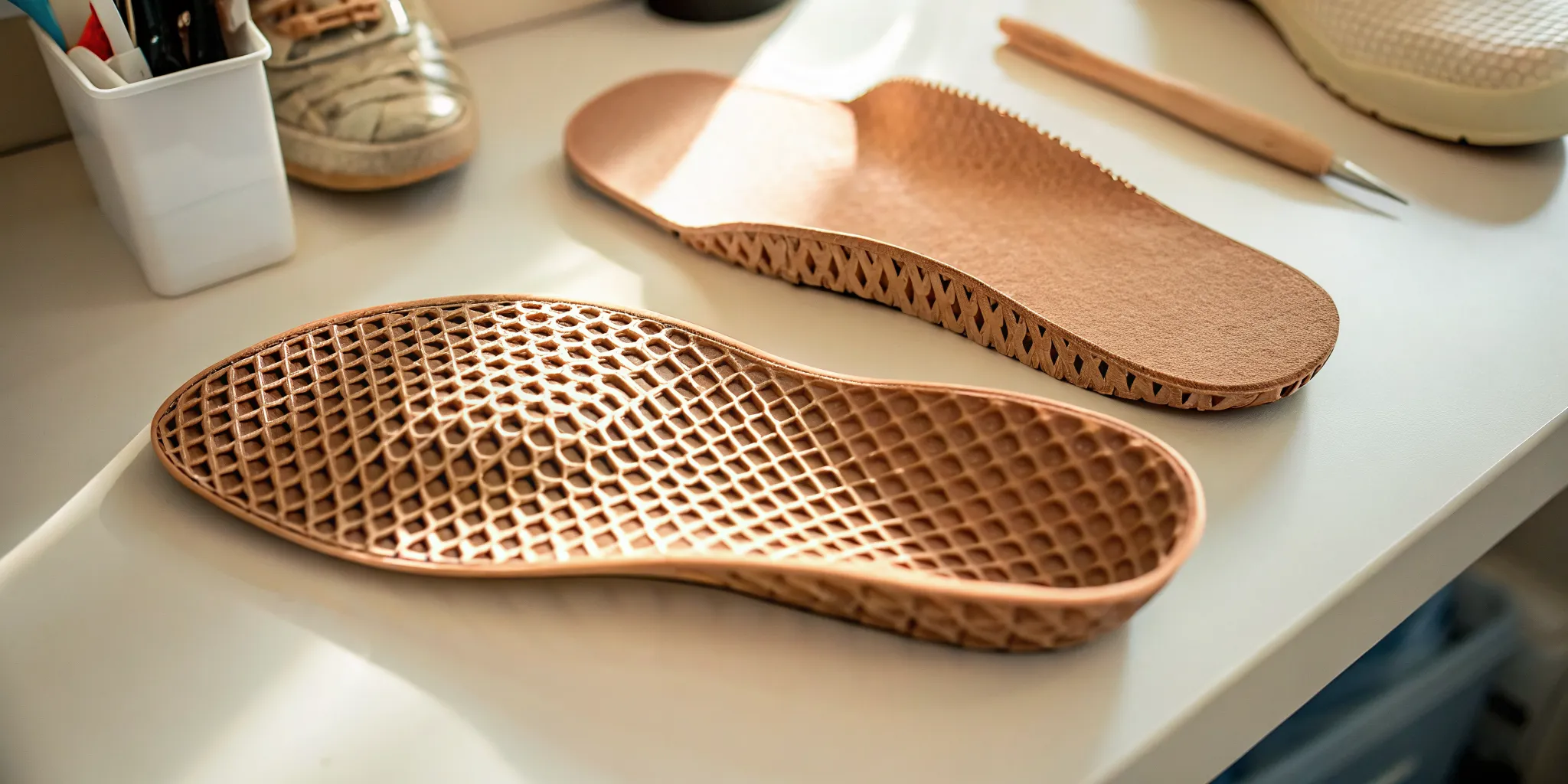
Once the specifications are selected, the orthotics are 3D-printed to precise measurements. This manufacturing approach allows the device to reflect the data collected during your evaluation, rather than forcing your foot into a generic insert. The materials are engineered for targeted support and durability, not simply short-term cushioning.
For patients comparing custom orthotics with over-the-counter inserts, the central difference is the purpose of the product. A prefabricated insert may provide temporary comfort for some people. A 4D custom orthotic is developed as part of professional podiatric care, with the goal of addressing the mechanical factors contributing to pain or dysfunction.
What Over-the-Counter Inserts Can and Cannot Do
OTC inserts provide basic cushioning and light arch support for mild, temporary foot discomfort. However, they cannot correct diagnosed biomechanical problems, account for differences between your two feet, or replace a podiatric evaluation when symptoms persist.
Over-the-counter inserts are mass-produced for broad groups of feet rather than made for one person. They typically come in a limited range of sizes and shapes, such as small, medium, and large, and use basic foam or plastic polymer materials. Most cost about $30 to $80, making them an accessible first step for someone with mild discomfort. However, they are built around an "average" foot, and that average rarely reflects the way a particular person's arches, joints, and gait work together.
What they can do
A prefabricated insert can provide basic cushioning, light arch support, and a more comfortable surface inside a shoe. It may reduce pressure during walking or standing when symptoms are mild, temporary, or related to increased activity. For uncomplicated plantar fasciitis, research has found that low-cost prefabricated inserts and custom devices can have similar effectiveness after eight weeks of use. The appropriate choice depends on the person's symptoms and clinical findings, not on the higher price of a product. (PubMed study)
Health care professionals may recommend an off-the-shelf insert to help distribute pressure more evenly, particularly when heel pain is uncomplicated. (Mayo Clinic guidance)
What they cannot do
Examine the underlying cause of your foot pain
Correct a diagnosed biomechanical problem such as overpronation or supination
Account for precise differences between your left and right foot
Replace a podiatric evaluation when symptoms persist beyond two to four weeks
Last beyond a few months before cushioning and support begin to break down
If you have tried OTC inserts without improvement, learn more about who should see a podiatrist for orthotics.
Custom Orthotics vs Over-the-Counter Inserts: Key Differences at a Glance
The right choice depends on whether you need general cushioning or treatment for a diagnosed foot problem. Custom devices are made for an individual foot using a mold or scan, while OTC inserts are prefabricated in standardized shapes.
How custom orthotics compare with over-the-counter inserts | ||
Feature | Custom orthotics | Over-the-counter inserts |
|---|---|---|
Fit | Custom-molded or scanned to match the contours and needs of your feet. | Generic S, M, or L sizing with limited shapes designed for an average foot. |
Support mechanism | Can correct abnormal motion and improve alignment based on a diagnosis and biomechanical findings. | Provides basic cushioning or a general arch pad. Does not account for the specific cause of abnormal motion. |
Medical evaluation | Requires a podiatrist examination and full biomechanical evaluation, including 4D scanning when clinically appropriate. | Usually selected independently at a store or online, without a clinical diagnosis. |
Durability | Typically lasts about 2 to 5 years, depending on materials, activity, footwear, and wear. | Often lasts only a few months before cushioning and support begin to break down. |
Cost | Approximately $400 to $800, reflecting professional assessment and specialized fabrication. | Approximately $30 to $80, making them a lower-cost trial for mild symptoms. |
Conditions treated | May be appropriate for chronic biomechanical issues, persistent plantar fasciitis, alignment problems, diabetic foot concerns, or symptoms that do not improve with basic support. | May help with mild, temporary discomfort or uncomplicated plantar fasciitis, but cannot diagnose or treat an underlying mechanical problem. |
Cost and durability should be considered together, not in isolation. Custom orthotics require a higher initial investment because they involve professional assessment and specialized fabrication, while prefabricated inserts offer a less expensive starting point. Read more about getting custom orthotics from a podiatrist.
When Over-the-Counter Inserts Are Enough
OTC inserts can be a reasonable first choice when symptoms are mild, recent, or tied to a predictable activity. Research shows prefabricated and custom devices have similar effectiveness for uncomplicated plantar fasciitis after eight weeks, making a low-cost trial appropriate in straightforward cases.
Over-the-counter inserts can be a reasonable first step when your symptoms are mild, recent, or linked to a predictable activity. Mild arch fatigue after walking more than usual, temporary foot discomfort from standing all day. Or uncomplicated plantar fasciitis may improve with a supportive insert that fits comfortably in your shoes.
Research supports starting simply in uncomplicated cases. In a randomized trial, prefabricated and custom devices had similar effectiveness for noncomplicated plantar fasciitis after eight weeks of use. The authors concluded that a low-cost prefabricated insert may be an efficient choice when plantar fasciitis has no complicating factors. (Read the study on PubMed)
Use a short, practical trial
Give a new insert time to prove whether it helps, but do not continue indefinitely if pain is unchanged.
Banner Health recommends speaking with a podiatrist if OTC inserts have not improved symptoms within two to four weeks.
Stop using an insert that creates new pain, numbness, rubbing, or pressure points.
If symptoms persist, recur quickly, or affect your walking, a podiatric examination is more useful than trying increasingly rigid retail products.
The Mayo Clinic likewise notes that a health professional may recommend either an off-the-shelf or custom-fitted arch support to distribute pressure more evenly and help manage symptoms such as heel pain. If you are comparing orthotics for heel pain, focus first on comfort, fit, and whether the insert reduces your symptoms during the activities that trigger them.
When Custom Orthotics Are Worth the Investment
Custom orthotics are worth considering when foot pain reflects an underlying mechanical problem, chronic pain persists despite OTC inserts, or a diagnosis identifies conditions like overpronation or persistent plantar fasciitis that require individualized support.
Custom orthotics are usually worth considering when foot pain reflects an underlying mechanical problem, not just temporary soreness. If chronic pain has continued despite properly trying over-the-counter inserts, a podiatric evaluation can determine whether your foot needs more targeted support. Custom-made devices are designed around the unique contours of your feet, while prefabricated inserts are mass-produced in standardized sizes and shapes.
When a diagnosis calls for individualized support
A custom device may be appropriate when an examination identifies:
Overpronation or supination that changes how your feet and legs load during movement
A leg length discrepancy affecting your gait
Persistent plantar fasciitis that has not improved with conservative care
Arthritis-related foot pain or symptoms that keep returning when you resume normal activity
Diabetes or neuropathy requiring individualized pressure offloading
The goal is not simply to add cushioning. Functional orthotics can help address abnormal motion and alignment, while accommodative designs can reduce pressure over sensitive areas. People with diabetes or neuropathy may also need individualized pressure offloading, because reduced sensation can make irritation harder to notice. Learn more about plantar fasciitis and whether orthotics are appropriate for your specific condition.
Why prescription orthotics cost more
The premium reflects the medical work and specialized manufacturing behind the device. A podiatrist evaluates the cause of your symptoms, then may use 4D dynamic pressure analysis to see how force moves through your feet in motion. The resulting data can guide AI-assisted design and 3D-printed manufacturing, producing support matched to your anatomy and movement pattern.
Custom orthotics are typically more expensive than prefabricated versions because they require professional assessment and specialized fabrication. With appropriate care, custom orthotics may last roughly two to five years, so durable, targeted support can be more cost-effective over time than repeatedly replacing inserts that do not address the problem. That does not make custom treatment necessary for everyone. For uncomplicated plantar fasciitis, research has found similar short-term effectiveness between custom and prefabricated options, making the diagnosis and response to care important parts of the decision.
Why Those Retail Arch-Support Stores Are Not the Answer
Retail arch-support stores often sell prefabricated inserts presented as custom for $1,500 to $2,500. Their sales staff cannot provide a medical diagnosis, and basic carbon-paper measurements do not replace a podiatric evaluation with 4D dynamic pressure analysis.
Retail arch-support stores can make the decision between custom orthotics vs over the counter inserts unnecessarily confusing. A sales presentation may describe a prefabricated insert as "custom" and quote $1,500 to $2,500, even though the product is selected from an existing range of shapes and sizes. That is a major distinction when you are paying for medical treatment rather than basic cushioning.
Consumer complaints associated with this retail model, including complaints reflected in the Better Business Bureau rating context, commonly describe high-pressure sales tactics, non-refundable policies, and little or no improvement after spending thousands of dollars. These concerns do not mean every retail employee intends to mislead you. They do mean you should understand what is being measured, who is evaluating your feet, and what you are actually receiving before you buy.
A store measurement is not a medical evaluation
Retail arch-support stores may use carbon paper, a simple mat scan, or another basic measurement to recommend an insert. Those tools can show where your foot contacts a surface, but they do not establish why you hurt, how your feet function while walking, or whether an underlying condition is affecting your symptoms. A podiatrist can combine a physical examination, medical history, gait assessment, and dynamic pressure data from a 4D analysis to evaluate the complete picture.
Sales staff cannot replace a podiatrist
Store personnel are salespeople, not medical professionals. They cannot provide the same diagnosis, prescription, or clinical follow-up as a board-certified podiatrist. Prefabricated inserts may be appropriate for mild, temporary discomfort, but they are not the same as medical-grade custom orthotics designed to address a diagnosed biomechanical problem.
Seeing a board-certified podiatrist gives you a clearer path: identify the cause, receive a legitimate prescription when appropriate, and choose treatment based on your foot health rather than a sales script. That approach may prevent you from spending thousands on an insert that does not address the problem. Find out who should see a podiatrist for foot inserts and whether professional evaluation is right for you.
Frequently Asked Questions
Are custom orthotics worth the cost?
They can be, particularly when persistent pain is connected to an individual alignment or movement problem, or when prefabricated inserts have not provided enough relief. Custom devices require a professional assessment and specialized fabrication, so they cost more than mass-produced inserts. For uncomplicated plantar fasciitis, however, research found similar short-term effectiveness between custom and prefabricated devices after eight weeks, making a lower-cost trial reasonable for some patients (PubMed).
How long do custom orthotics last?
The useful life depends on the materials, your activity level, body weight, footwear, and how quickly the device shows wear. Rather than replacing them on a fixed schedule, have them evaluated if pain returns, the device becomes visibly damaged, or its support feels different. A podiatrist can determine whether an adjustment, refurbishment, or replacement is appropriate.
Do over-the-counter inserts work for plantar fasciitis?
They may help distribute pressure and reduce symptoms when plantar fasciitis is uncomplicated. A clinical trial found prefabricated and custom devices had similar effectiveness after eight weeks, and the study concluded that low-cost prefabricated inserts may be an efficient option in uncomplicated cases (PubMed). If pain persists or worsens, an examination is more useful than repeatedly buying new inserts.
How much do prescription orthotics cost?
There is no single price because the total depends on the evaluation, design, materials, fabrication method, and insurance coverage. Custom devices are typically more expensive than prefabricated versions because they require professional assessment and specialized fabrication (PubMed). Ask about the complete treatment cost and what follow-up care is included before proceeding.
What is the difference between custom orthotics and insoles?
Custom orthotics are designed for an individual foot using an examination and a mold or scan. Over-the-counter inserts are mass-produced in standardized shapes and a limited range of sizes. The right choice depends on the cause of your symptoms, not simply on which product feels firmer or costs more.
Schedule a Biomechanical Evaluation
If you are unsure whether custom orthotics are right for you, a biomechanical evaluation can help connect your symptoms with the way your feet function. The Foot and Ankle Group can assess your needs and explain appropriate next steps. Call 609-760-7661 to schedule your evaluation or contact us online.