Date:
Editor:
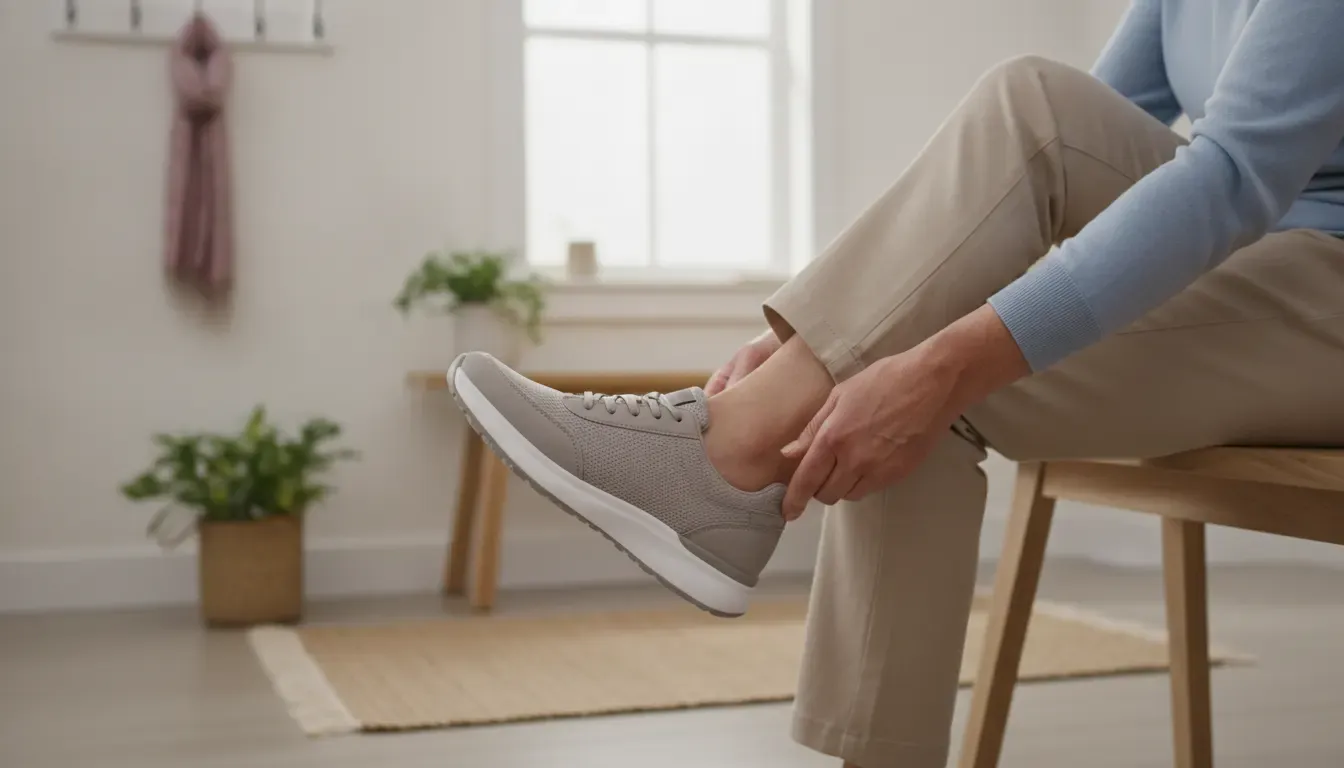
If you are searching for the best shoes for arthritic feet and ankles, start with fit and function rather than a brand name. A comfortable shoe with enough room for the toes, a secure heel, appropriate cushioning, and a sole suited to your painful joint may reduce pressure during daily activity. The right choice depends on where arthritis is located, whether swelling or deformity is present, and what you want to do while wearing the shoe.
Short answer: The best starting point is a well-fitted, low-heeled shoe with a roomy and deep toe box, supportive upper, cushioned sole, secure heel, and enough stability for your activity. A stiff or rocker-style sole may help some people, but no single shoe works for every arthritic foot or ankle.
What Features Matter in Shoes for Arthritic Feet?
Shoes cannot reverse arthritis, but thoughtful construction can limit avoidable pressure and make movement more comfortable. In Our Expert Opinion, the most useful shoe is one that matches your joint symptoms, foot shape, activity, and any orthotic or brace recommended by a clinician.
Shoe feature | Why it may help | What to check |
|---|---|---|
Roomy, deep toe box | Leaves space for swollen or prominent joints and allows the toes to move. | Toes should not touch the front, sides, or top of the shoe. |
Soft or stretch upper | Reduces rubbing over a bunion, stiff big toe, or other sensitive area. | Look for smooth materials and no seam pressing on the painful spot. |
Cushioned, shock-absorbing sole | May reduce the feel of impact during walking or prolonged standing. | Cushioning should not make the foot unstable or allow excessive wobbling. |
Stable heel counter | Helps hold the heel in place and can improve confidence while walking. | The heel should not slide up and down with each step. |
Low, broad heel | Limits the forward shift of body weight and reduces instability compared with a narrow high heel. | Choose a broad base and a sole with reliable traction. |
Removable insole | Creates room for a prescribed orthotic or a different insert. | Bring your current orthotic when trying on shoes. |
The Arthritis Foundation shoe guide also emphasizes matching footwear to the activity and to the specific joint problem. A shoe that feels supportive for a short walk may be too rigid, too soft, or too unstable for another person or activity.
Are Walking Shoes, Stability Shoes, or Neutral Shoes Better?
Walking shoes, stability shoes, and neutral shoes are categories, not diagnoses. A walking shoe may be a practical everyday option when it has a comfortable fit, cushioning, traction, and a secure upper. A stability shoe may help some people whose foot mechanics require additional motion control, but it is not automatically better for arthritis. A neutral shoe may feel more natural to someone who does not need added control.
Try a shoe for the activity you actually plan to do. If you stand at work, prioritize stable cushioning and a roomy forefoot. If you walk outdoors, look for traction, a secure closure, and a sole that bends or rolls in a way that feels comfortable. If you use an ankle brace, make sure the shoe has enough volume and a fastening system that can accommodate it without creating pressure.
For ankle arthritis, a shoe that limits painful ankle motion may feel better than a very flexible shoe. Some people are more comfortable in a shoe with a firm sole or a rocker profile, but the geometry should not make you feel unstable. The American Academy of Orthopaedic Surgeons overview of foot and ankle arthritis notes that inserts or custom-made shoes with stiff soles and rocker bottoms may reduce pressure for some patients. That is a reason to discuss options, not a universal prescription.
What Should You Look For If Your Toes or Feet Are Swollen?
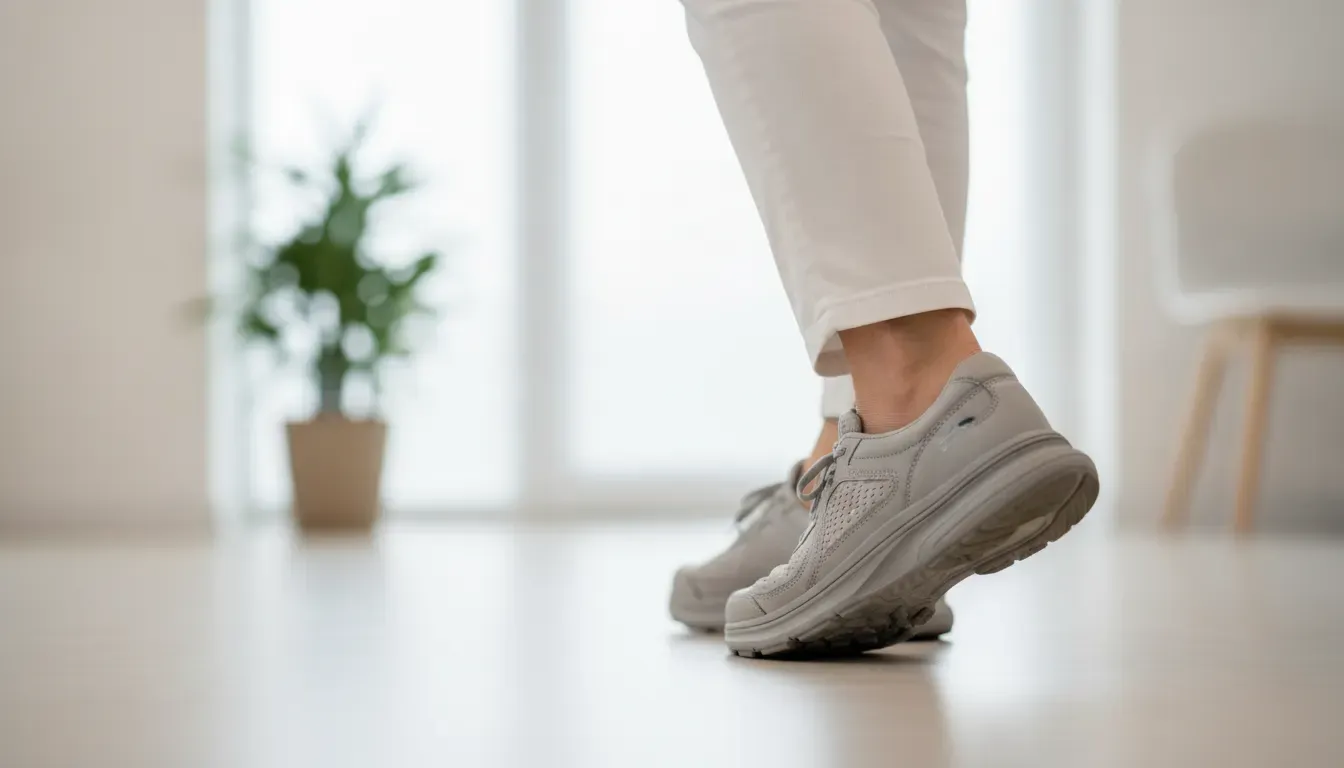
Swelling, a bunion, a stiff big toe, or changes caused by inflammatory arthritis can make a standard shoe feel tight even when the length is correct. Choose a shoe based on the larger foot and try it on at the time of day when swelling is usually greatest. The upper should give without squeezing, while the heel and midfoot should remain secure.
Leave approximately a thumb's width between the longest toe and the end of the shoe.
Check width and depth, not just the printed shoe size.
Make sure the little toes can spread without pressing against the sidewall.
Run your hand over the inside for seams, folds, or hard edges.
Choose adjustable laces, straps, or hook-and-loop closures when swelling changes.
Wear the socks and orthotics you normally use when checking the fit.
Walk on a firm surface and notice pressure, rubbing, slipping, or instability.
Do not rely on a painful break-in period. Mild unfamiliarity can be expected with a new shoe, but repeated rubbing, numbness, sharp pain, or pressure over a joint is useful feedback that the shoe or size is wrong. If both feet differ, a professional shoe fitting or clinical evaluation can help you avoid accommodating one side while irritating the other.
Are Rocker-Bottom or Stiff-Sole Shoes Good for Arthritis?
A rocker-bottom or stiff-soled shoe may reduce the need for a painful joint to bend during part of the walking cycle. This can be useful for some people with arthritis in the big toe or forefoot. A rocker profile can also change how pressure moves across the foot, so it should feel controlled and comfortable rather than forcing you forward.
Rocker soles are not ideal for every person. They may feel unstable if you have balance concerns, weakness, significant ankle instability, or difficulty adapting to the sole. An excessively soft and flexible shoe can also lack the support a painful or unstable foot needs. The best choice depends on your gait, range of motion, foot alignment, and the joint involved.
The Versus Arthritis footwear guidance recommends supportive, well-fitting shoes with a broad low heel, a round or deep toe box, a secure heel, and adjustable fastening. It also advises avoiding pressure, rubbing, and uncomfortable seams. These principles are often more useful than choosing a shoe from a generic list.
How Do Footwear Needs Differ for Foot and Ankle Arthritis?
Foot arthritis may affect the big toe, midfoot, or smaller joints, while ankle arthritis affects the joint between the lower leg and ankle bones. Symptoms can overlap, but the shoe feature that feels helpful may differ. Pain at the big toe may make a stiff or rocker sole appealing. Midfoot pain may call for a supportive upper and enough depth for an orthotic. Ankle pain may require secure heel control, stable traction, and an assessment of how much ankle motion is comfortable.
Foot shape, past injury, swelling, flat feet, and other conditions can change the pressure pattern. If a shoe improves one area but creates pain elsewhere, do not keep forcing the fit. A podiatrist can examine alignment, walking mechanics, joint motion, skin pressure, and footwear needs. The comparison of custom orthotics and over-the-counter inserts may also help explain why an insert that works for one person is not automatically right for another.
For broader background on causes and treatment pathways, read The Foot & Ankle Group's foot arthritis treatment options. This article focuses on footwear selection and does not replace an examination or a treatment plan.
When Is Footwear Alone Not Enough?
Consider a clinical evaluation when foot or ankle pain persists despite changing shoes, progressively worsens, or keeps you from normal activities. Shoes may support comfort, but they cannot identify the source of pain or address every mechanical, inflammatory, or structural problem.
You cannot bear weight normally or your walking pattern is changing.
The joint is significantly swollen, warm, red, or suddenly more painful.
Your ankle repeatedly gives way or you feel unsafe on ordinary surfaces.
A shoe causes persistent numbness, burning, blisters, or an open sore.
You have a new deformity or a prominent area that no shoe can accommodate.
Pain continues even when you reduce activity and use comfortable footwear.
People with diabetes, reduced sensation, inflammatory arthritis, or a history of foot wounds should be especially careful about pressure and skin changes. Do not wait for a shoe-related blister or sore to become severe before asking for help. For unexplained ankle symptoms, The Foot & Ankle Group also provides guidance on ankle soreness causes and treatment.
Frequently Asked Questions
What shoes do podiatrists recommend for arthritis?
Podiatrists generally look for a comfortable, well-fitted shoe with adequate toe space, a secure heel, suitable cushioning, and a sole that matches the person's joint symptoms and activity. A podiatrist may recommend a stiff sole, rocker profile, orthotic, or brace for some patients after evaluating foot mechanics. No single brand or model is right for everyone.
What kind of shoes are best for arthritic foot pain?
The best starting point is usually a low-heeled shoe with a roomy, deep toe box, supportive closure, cushioned but stable sole, and enough width for the feet later in the day. Avoid shoes that cause rubbing, squeezing, slipping, or pressure over a painful joint. Fit and function matter more than a label.
Are barefoot or zero-drop shoes good for arthritic feet?
Not necessarily. Barefoot and zero-drop shoes change the demands placed on the foot and ankle and may be uncomfortable for someone with limited joint motion, weakness, or pain. If you want to try one, transition cautiously and stop if symptoms increase. Ask a clinician whether the change fits your mechanics and activity.
Can an orthotic make an arthritis shoe more comfortable?
An orthotic may help some people by changing pressure or supporting alignment, but an insert must fit the shoe and the person's foot. It can also make a shoe too tight if there is not enough depth. Bring the orthotic to a fitting and discuss whether an over-the-counter or custom option is appropriate.
Should shoes feel tight at first and loosen later?
A shoe should feel comfortable when you buy it. Materials may soften slightly, but a tight toe box, painful seam, slipping heel, or pressure point should not be treated as a normal break-in problem. Try another width, depth, upper material, or style instead.
When should I see a podiatrist about arthritis pain?
Arrange an evaluation if pain is persistent or worsening, limits walking, causes instability, or is accompanied by marked swelling, warmth, redness, skin damage, or difficulty bearing weight. A podiatrist can help determine whether footwear, an orthotic, activity changes, medication discussion, or another treatment approach is appropriate.
Find the Right Next Step for Your Feet
Choosing shoes for arthritis is an exercise in matching construction to your body, not finding a universal winner. Start with space, comfort, stability, traction, and the activity you need to perform. If symptoms continue, a clinical assessment can help identify whether the problem is the shoe, the fit, the joint, or a broader alignment issue.
This educational article is not a diagnosis or a substitute for individualized medical advice. The Foot & Ankle Group serves patients across Philadelphia and South Jersey with comprehensive foot and ankle care.
Schedule a personalized foot and ankle consultation with The Foot & Ankle Group.