Date:
Editor:
Heel pain can do more than just slow you down; it can start to shrink your world. You might find yourself saying no to morning walks, skipping your favorite workout, or struggling to keep up with your kids. When foot pain begins to dictate your daily life, it’s time to take action. This disruptive pain is often caused by plantar fasciitis, a condition where the plantar fascia ligament becomes strained and inflamed. It can feel defeating, but relief is entirely possible. This guide offers a clear path forward, with actionable steps to help you heal and get back to living your life without limitations.
Key Takeaways
That sharp morning heel pain is a classic sign of plantar fasciitis: This is an overuse injury caused by repeated stress on the ligament in your foot's arch. Common culprits include unsupportive shoes, your foot's natural shape, and certain high-impact activities.
Most cases get better without surgery through simple, consistent care: Start with at-home remedies like gentle stretching (especially for your calves), icing your heel, and resting your feet. For persistent pain, a podiatrist can provide personalized solutions like custom orthotics to correct underlying mechanical issues.
Don't just walk it off, as untreated heel pain can create bigger problems: Ignoring the issue can lead to chronic pain and secondary aches in your knees, hips, and back. If your pain doesn't improve after a couple of weeks with home care, it's time to see a specialist for a proper diagnosis.
What Is the Plantar Fascia?
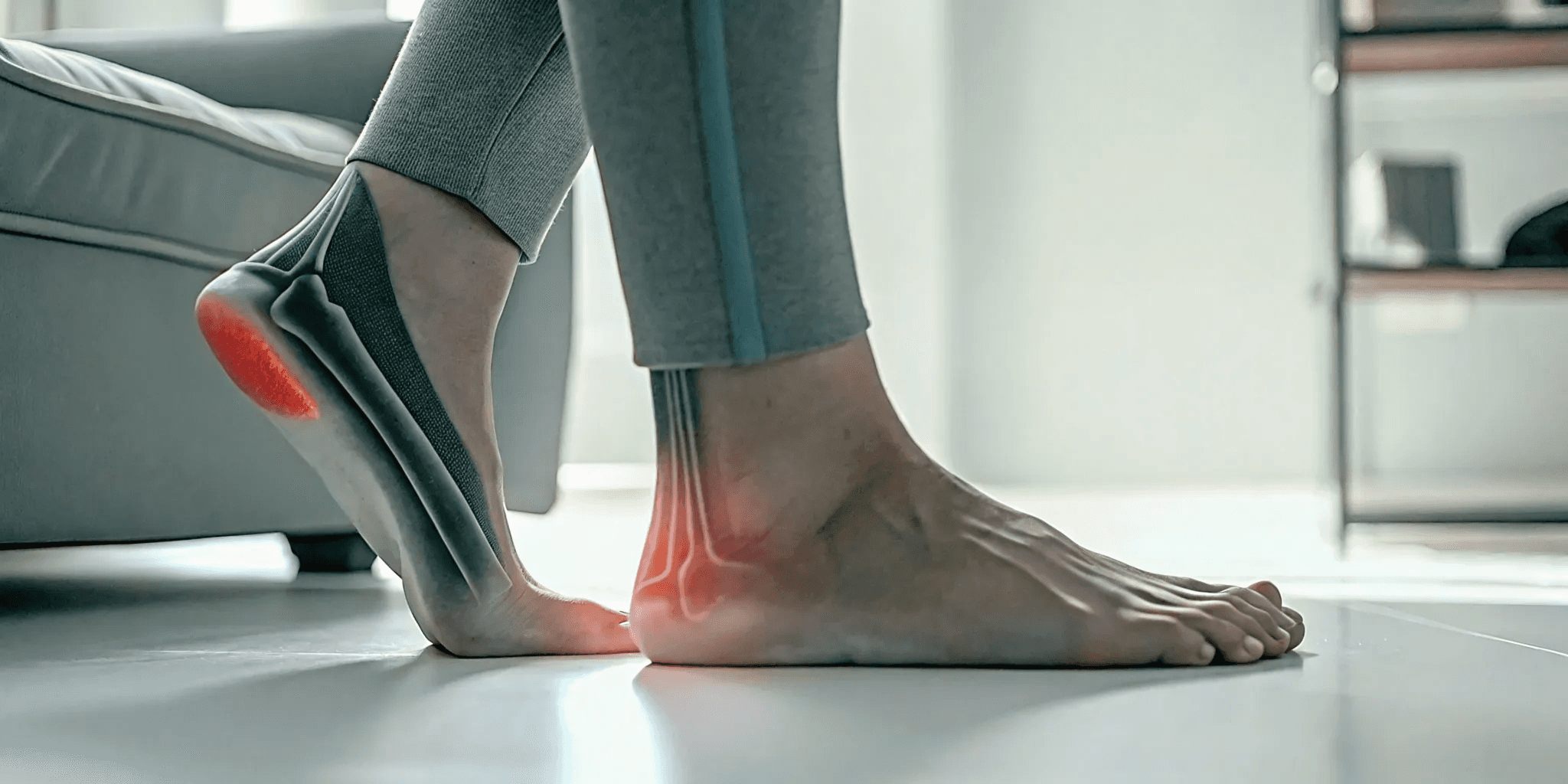
Before we talk about why your heel might be hurting, let’s get familiar with the part of your foot causing the trouble: the plantar fascia. Think of it as a crucial piece of your foot's internal support system. It’s a thick, powerful band of tissue running along the bottom of your foot, connecting your heel bone to the base of your toes. This unsung hero plays a massive role in how you walk, run, and stand, supporting you through every step of your day.
A Quick Look at Its Anatomy
The plantar fascia is made of tough, fibrous collagen, which gives it both incredible strength and necessary flexibility. It has three sections, with the thick central part doing most of the heavy lifting. In younger people, the plantar fascia is also connected to the Achilles tendon. This link tends to weaken as we age, which can affect your foot’s stability and mechanics. It's a normal change, but it highlights why professional foot care becomes even more important over time. If you're noticing changes in how your feet feel, our expert physicians are here to help.
How It Supports Every Step You Take
The primary job of the plantar fascia is to support the arch of your foot. It acts like a bowstring, preventing the arch from collapsing when you stand or walk. This small band is surprisingly mighty, bearing up to 14% of the total load on your foot. It also functions like a spring, stretching slightly with each step to absorb shock and help you move more efficiently. When this vital support structure is healthy, you probably don't even notice it's there. But when it becomes strained or inflamed, you'll definitely feel it. If this sounds familiar, it may be time to schedule an appointment.
What Is Plantar Fasciitis?
If you’ve ever felt a sharp, stabbing pain in your heel, especially with your first steps out of bed, you might be dealing with plantar fasciitis. It’s the most common cause of heel pain, and it happens when the plantar fascia, a thick, web-like ligament that runs along the bottom of your foot, becomes inflamed. Think of this ligament as a natural shock absorber that connects your heel bone to your toes and supports the arch of your foot. When it’s working correctly, you barely notice it. But when it gets irritated, the pain can be hard to ignore.
The good news is that this condition is very treatable. Because the plantar fascia plays such a crucial role in how you walk and stand, putting too much stress on it can lead to significant discomfort that affects your daily routine. The pain can range from a dull ache to a sharp, burning sensation, making it difficult to enjoy your favorite activities or even just get through a workday. Whether you're an athlete, someone who stands all day for work, or you've just noticed a new ache in your heel, understanding the cause is the first step toward finding relief. Our team provides a number of services designed to diagnose and treat the root cause of your heel pain, helping you get back on your feet comfortably.
How Does This Painful Condition Start?
Plantar fasciitis doesn't just appear out of nowhere. It typically develops from repetitive strain that causes tiny tears in the plantar fascia ligament. Imagine an elastic band that's been stretched too far, too many times. Eventually, it starts to fray. The same thing happens to your plantar fascia. Too much tension and stress can overwhelm the ligament, leading to these micro-tears. When this happens over and over, your body responds with inflammation as it tries to heal the area. This inflammation is what causes the classic heel pain and stiffness associated with the condition, especially after periods of rest.
Plantar Fasciitis Myths vs. Facts
There's a lot of information out there about heel pain, so let's clear up a few things. One common myth is that plantar fasciitis will just go away on its own. While mild cases might improve with rest, ignoring the problem can lead to chronic pain that makes it difficult to walk, exercise, or even stand. Another myth is that surgery is the only real fix. In reality, that’s far from the truth. About 95% of people with plantar fasciitis get better with simple, non-surgical treatments like stretching, physical therapy, and proper footwear. Surgery is truly a last resort. The best first step is getting an accurate diagnosis to create a treatment plan that works for you, which you can do by scheduling an appointment with a specialist.
What Are the Symptoms of Plantar Fasciitis?
If you've ever felt a sharp, stabbing pain in your heel that seems to have come out of nowhere, you might be dealing with plantar fasciitis. This condition is the most common cause of heel pain, and its symptoms can be quite distinct. The pain is typically centered on the bottom of your foot, near the heel, but it can sometimes radiate into the arch. For most people, the discomfort isn't constant. Instead, it tends to flare up at specific times, like when you first get out of bed or after you've been sitting for a while.
The feeling itself can range from a dull, persistent ache to a sharp, piercing sensation that makes you wince with every step. You might also notice some mild swelling or tenderness in your heel. Understanding these specific symptoms is the first step toward getting the right diagnosis and finding effective relief. Our team provides a full range of podiatry services to identify the root cause of your pain and create a personalized treatment plan. Let's break down the most common signs of plantar fasciitis.
That Telltale First-Step-in-the-Morning Pain
This is the classic, hallmark symptom of plantar fasciitis. You wake up, swing your legs out of bed, and the moment your foot hits the floor, you feel a sharp, stabbing pain in your heel. It can be intense enough to make you limp for the first several steps of your day. This happens because the plantar fascia, the ligament that supports your arch, tightens up overnight while you rest. When you put weight on it suddenly, the inflamed tissue is stretched, causing that initial jolt of pain. The good news is that this severe pain usually eases after you've walked around for a few minutes and the fascia has had a chance to warm up and stretch out.
Aches After Rest or Long Days on Your Feet
That morning pain isn't the only time plantar fasciitis makes an appearance. A similar kind of discomfort can strike after any long period of inactivity. If you've been sitting at your desk for a few hours, driving in the car, or relaxing on the couch, you might feel that same sharp pain when you stand up again. Just like with sleeping, resting allows the plantar fascia to shorten and tighten. Conversely, spending too much time on your feet, especially on hard surfaces, can also aggravate the condition. The pain might start as a dull ache that gets progressively worse throughout the day, leaving your feet feeling sore and tired by evening.
When Is Heel Pain a Red Flag?
While plantar fasciitis pain can sometimes improve with movement, you should never ignore it. Persistent heel pain is your body’s way of telling you something is wrong. If left untreated, the condition can become a chronic issue that makes it difficult to enjoy your normal activities, from walking the dog to your favorite workout routine. To cope with the pain, you might unconsciously change the way you walk. This altered gait can throw off your body's alignment and lead to secondary problems in your other foot, knees, hips, or even your back. If your heel pain lasts for more than a week or two, it's time to schedule an appointment with a podiatrist.
What Causes Plantar Fasciitis?
If you’re dealing with the sharp, stabbing pain of plantar fasciitis, you’re probably wondering how you got here. The truth is, it’s rarely caused by a single event. Instead, this condition usually develops from a combination of factors that place repeated stress on your plantar fascia, the thick band of tissue that runs across the bottom of your foot. Think of it as a series of small strains that, over time, lead to irritation, inflammation, and pain.
Understanding the potential causes is the first step toward finding relief. Your foot shape, daily activities, and even your favorite pair of shoes can play a role. By looking at the full picture of your lifestyle and body mechanics, you can start to connect the dots and figure out what’s contributing to your heel pain. Let’s walk through some of the most common culprits behind plantar fasciitis.
Your Foot's Natural Shape and Movement
Sometimes, the unique structure of your feet can make you more susceptible to plantar fasciitis. People with flat feet or very high arches often experience an uneven distribution of weight when they stand and walk. This can put extra tension on the plantar fascia, causing it to overstretch and become inflamed. The way you walk, known as your gait, also plays a part. If your foot rolls inward or outward more than it should, it can create abnormal stress. A podiatrist can analyze your foot structure and gait to see if this is a contributing factor and may recommend custom orthotics to provide the right support.
How Age and Weight Play a Role
As we get older, typically between the ages of 40 and 60, the tissues in our bodies, including the plantar fascia, can become less flexible and the fat pad on the heel can thin out, reducing its natural shock absorption. This makes the fascia more prone to injury. Additionally, carrying extra body weight increases the load on your feet with every step you take. According to the Cleveland Clinic, this added pressure can significantly strain the plantar fascia, contributing to irritation and pain. Managing your weight can be a powerful way to reduce the daily stress on your feet.
The Impact of Your Workout Routine
Staying active is great for your health, but certain exercises can be tough on your feet. High-impact activities that involve a lot of stress on the heels are common triggers for plantar fasciitis. This includes long-distance running, ballet, and aerobic dance classes. Even the surface you work out on matters; exercising on hard surfaces like concrete puts much more strain on your feet than a track or a gym floor. If your workout routine is a likely cause, you don’t necessarily have to stop. Instead, you might need to adjust your training, improve your form, or incorporate more supportive injury treatment and prevention strategies.
Are Your Shoes to Blame?
Take a look at the shoes you wear most often. Are they providing the support your feet need? Footwear with thin soles, poor arch support, or a loose fit can be a major contributor to plantar fasciitis. Shoes like flip-flops or old, worn-out sneakers don't absorb shock well, forcing your plantar fascia to take the brunt of the impact with every step. Walking barefoot on hard surfaces like tile or hardwood floors can have a similar effect. Choosing shoes with good cushioning and solid arch support is a simple but effective change you can make to protect your feet from daily strain.
Your Job and Daily Habits
Your occupation could be a key factor in your heel pain, especially if you spend most of your day on your feet. Jobs that require long hours of standing or walking on hard surfaces, such as teaching, factory work, or nursing, put constant pressure on the plantar fascia. This sustained, day-after-day stress can easily lead to overuse and inflammation. It’s not just about a single intense workout; it’s the cumulative effect of your daily routine. If your job keeps you standing, it’s even more important to wear supportive shoes and take breaks when you can. If any of these causes sound familiar, it may be time to schedule an appointment for a professional evaluation.
How to Treat Plantar Fasciitis
Dealing with plantar fasciitis can be frustrating, but the good news is that most people find relief with simple, consistent care. The goal of any treatment is to reduce inflammation, relieve tension in the fascia, and address the underlying causes of the strain. While at-home remedies are often the first line of defense, a podiatrist can help you create a personalized plan that gets you back on your feet without pain. Combining a few different strategies usually yields the best results. It’s all about finding the right mix of rest, stretching, and support to help your foot heal properly. Below are some of the most effective and common treatment options, from simple steps you can take today to more advanced medical interventions.
Simple At-Home Care for Relief
For many people, relief starts right at home. The first and most important step is to give your feet a break. Try to reduce or modify activities that put a lot of stress on your heels, like running or standing for long periods. Icing is another fantastic tool for calming inflammation. You can apply an ice pack to your heel for 15 to 20 minutes a few times a day. A popular and effective trick is to roll your foot over a frozen water bottle; it ices and gently massages the fascia at the same time. Over-the-counter anti-inflammatory medications, like ibuprofen, can also help manage pain and swelling in the short term.
Key Stretches to Ease Tension
Tight muscles in your calves and feet are often major contributors to plantar fasciitis. Gentle, consistent stretching can make a world of difference by loosening the plantar fascia and the Achilles tendon. A simple calf stretch against a wall is a great place to start. Another effective stretch involves sitting down and pulling your toes back toward your shin to feel a stretch along the bottom of your foot. Performing these stretches, especially before you get out of bed in the morning, can help ease that dreaded first-step pain. Our team of physicians can show you specific exercises and techniques tailored to your needs.
Finding Support with Custom Orthotics
The right support can be a game-changer. While over-the-counter shoe inserts can offer some cushioning, they don’t correct the specific biomechanical issues that might be causing your pain. This is where custom orthotics come in. Unlike generic inserts, custom orthotics are prescribed by a podiatrist and crafted from a mold of your feet. They are designed to support your arch, cushion your heel, and correct any alignment problems that are putting extra strain on your plantar fascia. By providing tailored support exactly where you need it, orthotics can significantly reduce pain and help prevent the problem from returning.
How Night Splints Can Help
If your worst pain strikes with those first few steps in the morning, a night splint might be an excellent solution. When you sleep, your feet naturally point downwards, which shortens the plantar fascia and Achilles tendon. A night splint holds your foot in a gentle, flexed position overnight. This provides a constant, mild stretch that prevents the fascia from tightening up while you rest. It might feel a little strange at first, but many people find that wearing a splint dramatically reduces or even eliminates that sharp morning heel pain, allowing them to start their day much more comfortably.
When to Consider Injections
When conservative treatments like stretching and icing aren't providing enough relief, your podiatrist might suggest a corticosteroid injection. These injections deliver a powerful anti-inflammatory medication directly into the most painful area of your plantar fascia. The goal is to quickly reduce inflammation and pain, giving you a window of relief that can last for several weeks or even a month. This pain-free period allows you to more effectively engage in physical therapy and stretching, which are key to long-term healing. An injection isn't a permanent fix, but it can be a very effective tool for breaking the cycle of pain and inflammation.
Is Surgery an Option?
It’s important to know that surgery for plantar fasciitis is very rare. In fact, more than 95% of people with the condition recover fully with non-surgical treatments. Surgery is typically only considered as a last resort for severe cases where the pain has not improved after 6 to 12 months of consistent, conservative care. The procedure, called a plantar fascia release, involves cutting part of the ligament to relieve tension. If you're worried that your heel pain might require surgery, the best first step is to get a thorough evaluation. You can schedule an appointment with one of our specialists to discuss all your options.
How Can You Prevent Plantar Fasciitis?
While we've covered how to treat plantar fasciitis, let's talk about something even better: how to avoid it altogether. Preventing that sharp, stabbing heel pain often comes down to a few key habits. By making some thoughtful adjustments to your daily routine, you can significantly reduce your risk and keep your feet feeling strong and supported. It’s all about being proactive and giving your feet the care they deserve. Here are the most effective strategies to keep plantar fasciitis at bay.
Choose the Right Footwear
Your shoes can be your feet's best friend or their worst enemy. Footwear that lacks support, like flimsy flip-flops or completely flat sneakers, can put undue stress on your plantar fascia. Even walking barefoot on hard surfaces for long periods can contribute to the problem. The goal is to find shoes with good arch support and a cushioned sole to absorb the impact of every step. If you feel your shoes aren't providing enough support, custom orthotics can be a game-changer, providing tailored support right where you need it most.
Stretch and Strengthen Your Feet
Think of your feet and lower legs as a connected system. Tight calf muscles or a tight Achilles tendon can pull on your heel, increasing tension on the plantar fascia. Incorporating simple stretches into your daily routine can make a huge difference. Gently stretching your calves and feet before and after exercise, or even after long periods of sitting, helps keep everything flexible. It's also important to give your feet time to rest after intense activity, allowing the tissues to recover and repair.
Maintain a Healthy Weight
Every step you take sends a force through your feet, and carrying extra weight significantly increases that force. This added stress on your feet can increase your chances of developing plantar fasciitis. Maintaining a healthy weight is one of the most effective ways to reduce the load on your plantar fascia and lower your risk. Even a small amount of weight loss can lead to a big reduction in the pressure your feet have to manage every day, supporting your overall foot health.
Know When to Replace Your Sneakers
That favorite pair of running shoes might still look good, but their support system has a shelf life. The cushioning and stability in athletic shoes break down over time, long before the outside shows significant wear. As a rule of thumb, you should replace your sneakers every 250 to 500 miles of use, or about every six to nine months for most active people. Continuing to use worn-out shoes is like exercising without the proper equipment; you're not getting the protection you need, which can easily lead to injury.
What Happens If You Ignore Plantar Fasciitis?
It’s easy to think you can just push through heel pain, especially when you have a busy life. You might hope it will go away on its own. But ignoring plantar fasciitis is a gamble with your long-term health and mobility. What starts as an annoying ache can grow into a much larger problem that affects your entire body and daily routine. Letting the issue go untreated can lead to more pain and a longer, more difficult recovery down the road.
The Risk of Chronic Pain and Other Issues
When you don't address plantar fasciitis, you risk developing chronic heel pain that can last for months or even years. The sharp, stabbing sensation you feel with your first steps in the morning can become a constant, unwelcome companion. To avoid this pain, you might unconsciously change the way you walk. This shift in your gait can set off a chain reaction, creating stress on other parts of your body. Soon, you may find yourself dealing with new aches in your other foot, your knees, your hips, or even your lower back. These compensatory issues can sometimes become more troublesome than the original foot pain, creating a cycle that is difficult to break without professional help.
How It Can Limit Your Daily Life
Heel pain can quickly start to dictate what you can and can't do. Activities you once enjoyed, like morning walks, playing with your kids, or even just a shopping trip, can become daunting. You might find yourself turning down invitations or avoiding activities that require you to be on your feet. This isn't just about physical discomfort; it can take a toll on your mental well-being and overall quality of life. Don't let foot pain shrink your world. Our team of physicians is here to help you get back to your daily activities without pain holding you back.
When Should You See a Podiatrist for Heel Pain?
It’s natural to try a few things at home first when your heel starts acting up. Rest, ice, and some gentle stretching can often make a difference. But how do you know when it’s time to stop waiting it out and call a professional? A good rule of thumb is to pay attention to your timeline. If your heel pain doesn’t get any better after a week, or if you’ve been trying home treatments for two weeks with no real improvement, it’s time to get it checked out.
Ignoring persistent heel pain can cause more than just discomfort. When you change the way you walk to avoid the pain, you can create a ripple effect of problems in your foot, knee, hip, or even your back. What started as a simple foot issue can become a long-lasting problem that affects your ability to enjoy your daily activities. If you find that your heel pain is becoming a chronic issue, a professional diagnosis is the best way to get back on track and prevent further complications.
Some symptoms are more than just a nuisance; they’re red flags that you should see a podiatrist sooner rather than later. If your pain is severe, if you can’t put weight on your foot, or if you notice swelling, redness, or warmth around your heel, don't wait. These could be signs of a more serious issue that requires immediate attention. Our team of expert physicians can examine your foot, pinpoint the exact cause of your pain, and create a treatment plan that works for you. Don't let heel pain dictate your life; making an appointment is the first step toward relief.
Related Articles
Frequently Asked Questions
Why does my heel hurt so much in the morning? That sharp pain with your first few steps is a classic sign of plantar fasciitis. While you sleep, the plantar fascia ligament along the bottom of your foot tightens and shortens. When you stand up, your body weight suddenly stretches that tight, inflamed tissue, causing that initial jolt of pain. As you walk around, the fascia warms up and becomes more flexible, which is why the pain usually subsides after a few minutes.
Can I treat plantar fasciitis entirely at home? For mild cases, at-home care like rest, icing, and stretching can provide significant relief and are a great first step. However, if the pain doesn't improve after a couple of weeks or if it's severe, it's important to get a professional diagnosis. A podiatrist can confirm that it is plantar fasciitis and not another issue, and they can help you create a plan to address the root cause, preventing it from becoming a chronic problem.
How long will it take for my plantar fasciitis to heal? Recovery time really varies from person to person. It depends on how long you've had the pain, the severity of the inflammation, and how consistent you are with your treatment plan. Some people feel better within a few weeks of diligent care, while for others it can take several months. The key is patience and sticking with the recommended stretches, support, and activity modifications to give the tissue proper time to heal.
Do I have to stop exercising if I have plantar fasciitis? You don't necessarily have to stop being active, but you will likely need to modify your routine. High-impact activities like running or jumping can make the condition worse. This is a great time to try low-impact exercises like swimming, cycling, or yoga. When you do exercise, make sure you wear supportive shoes and always take time to properly warm up and stretch your calves and feet afterward.
Are custom orthotics really that much better than store-bought inserts? Think of it this way: store-bought inserts provide general cushioning, which can feel nice temporarily. Custom orthotics, on the other hand, are prescribed medical devices made from a mold of your feet. They are designed to correct your specific foot mechanics, providing support exactly where you need it to address the underlying structural issues that are causing the strain on your plantar fascia in the first place.