Date:
Editor:
Have you ever taken off your shoes at the end of a long day and felt a deep, throbbing ache in your heels? Your footwear might be a bigger part of the problem than you think. While unsupportive shoes are a major contributor, the full story of what causes plantar fasciitis is more detailed. This common and painful condition is often the result of a perfect storm of factors, including your natural foot structure, your age, and the surfaces you walk on every day. This guide is designed to connect the dots for you, explaining how these different elements can strain your plantar fascia and lead to chronic pain. By understanding the causes, you can make smarter choices for your feet.
Key Takeaways
Pinpoint the source of stress: Plantar fasciitis is an overuse injury, so understanding the cause is your first step. Your daily routine, foot shape like flat feet or high arches, tight calf muscles, and even a new workout can all put extra strain on your feet.
Prioritize foundational support: Simple habits can bring significant relief. Focus on wearing shoes with good cushioning and arch support, stretching your calves and feet daily, and avoiding walking barefoot on hard floors to reduce pressure on the inflamed tissue.
Know when to get professional help: If your heel pain persists after a couple of weeks of consistent at-home care, it's time to see a specialist. A podiatrist can offer an accurate diagnosis and a personalized treatment plan to prevent the issue from becoming a chronic problem.
What Is Plantar Fasciitis?
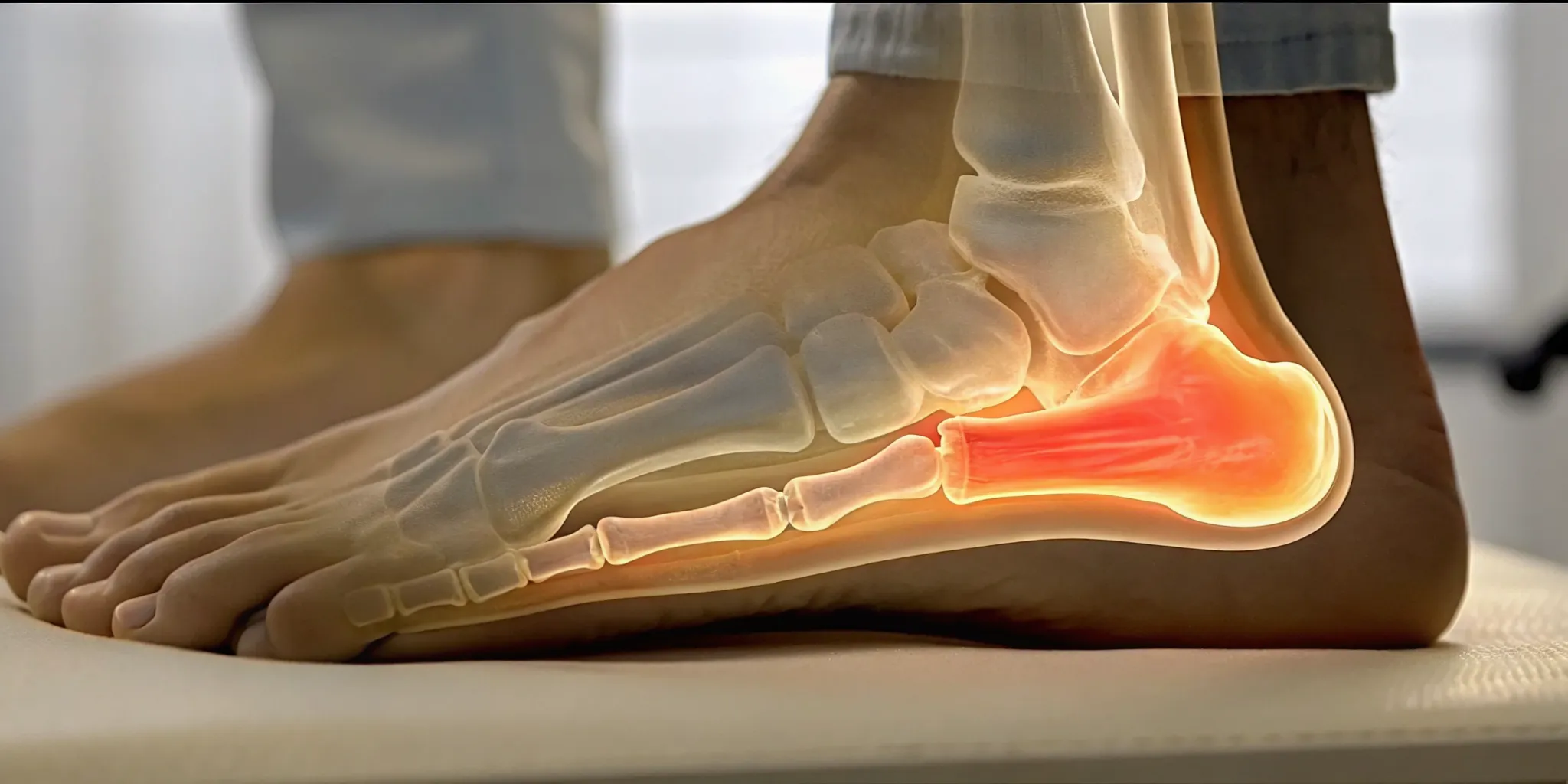
If you’ve ever dreaded that first step out of bed, knowing a sharp pain will shoot through your heel, you might be dealing with plantar fasciitis. It’s a very common condition and is actually the leading cause of heel pain for adults. Simply put, plantar fasciitis is the inflammation of a thick band of tissue on the bottom of your foot. This tissue, the plantar fascia, gets irritated and painful from stress and strain.
While the name sounds complicated, the issue is straightforward: your foot's natural support system is overworked. The good news is that you don't have to live with the pain. With the right diagnosis and care plan, you can get back on your feet comfortably. Our team offers a range of podiatry services to help you find relief.
A Closer Look at the Plantar Fascia
So, what exactly is this plantar fascia? Think of it as a strong, ligament-like band that runs along the sole of your foot, connecting your heel bone to the base of your toes. It has two very important jobs. First, it helps create and support the arch in your foot. Second, it acts as a shock absorber, cushioning the impact every time you walk, run, or jump. When this hard-working tissue is put under too much repetitive stress, tiny tears can develop. This leads to the inflammation and pain known as plantar fasciitis.
Key Symptoms to Watch For
The most classic sign of plantar fasciitis is a sharp, stabbing pain at the bottom of your heel. Many people feel it most intensely with their first few steps after waking up. The pain might also flare up after you’ve been sitting for a while or after (not usually during) exercise. As you move around, the pain may decrease to a dull ache, but it often returns after long periods of standing. If these symptoms sound familiar and are interfering with your daily life, it’s a good idea to schedule an appointment for a proper diagnosis.
What Causes Plantar Fasciitis?
That stabbing pain in your heel rarely appears out of nowhere. Plantar fasciitis is typically the result of accumulated stress that strains the ligament connecting your heel to your toes. Think of it less as a single injury and more as a process where repeated tension leads to irritation and pain. Several factors can contribute to this condition, from your daily habits to your foot's unique structure. Understanding these root causes is the first step toward finding lasting relief.
How Repetitive Stress Leads to Pain
Your plantar fascia is a thick band of tissue that runs along the bottom of your foot, supporting your arch and absorbing shock with every step you take. When you walk, run, or even stand, this tissue is put under tension. Over time, repetitive strain from activities can cause tiny tears in the fascia. This is especially common if you spend long hours on your feet or engage in high-impact exercises. The constant pressure prevents the tissue from healing properly, leading to chronic pain and discomfort that can disrupt your daily life.
The Role of Inflammation
Inflammation is your body’s natural response to injury, and it plays a key role in plantar fasciitis. When the plantar fascia develops those tiny tears from repetitive stress, your body tries to repair the damage. This healing process involves inflammation, which causes the swelling and sharp pain you feel, particularly with your first steps in the morning. If the stress on your foot continues, the tissue can remain in a constant state of irritation, creating a frustrating cycle of pain. Our team offers several podiatry services designed to manage this inflammation and promote healing.
Why Sudden Changes in Activity Can Hurt
Have you ever jumped into a new fitness routine with a little too much enthusiasm? A sudden increase in the intensity or duration of your physical activity can be a major trigger for plantar fasciitis. Your feet, and specifically your plantar fascia, need time to adapt to new demands. Going from a sedentary lifestyle to running several miles a day or starting a new job that requires constant standing can overload the tissue before it has a chance to strengthen. If you're planning to change your activity level, it's wise to ease into it. You can always schedule an appointment to ensure your feet are ready for the challenge.
Are You at Risk for Plantar Fasciitis?
Plantar fasciitis can feel like it comes out of nowhere, but it often develops when a combination of factors puts too much stress on your feet. While anyone can experience that tell-tale heel pain, some people are more likely to develop it than others. Understanding these risk factors isn’t about placing blame; it’s about empowering you to make small changes that can bring big relief.
Your risk is influenced by a mix of your body’s unique structure, your daily habits, and even your job. Things like your age, the shape of your foot, and how much time you spend standing all play a role. By looking at these different pieces of the puzzle, you can get a clearer picture of what might be contributing to your pain. If you recognize yourself in some of these descriptions, don't worry. It simply means you have a great starting point for a conversation with a specialist who can help you get back on your feet, pain-free. Our team of physicians is here to help you identify your specific risk factors and create a personalized treatment plan.
How Age and Weight Play a Part
As we get older, the tissues in our bodies change, and the plantar fascia is no exception. It tends to be most common in people between the ages of 40 and 60. Around this time, the fascia can lose some of its flexibility, and the protective fat pad on your heel may start to thin, reducing its natural cushioning.
Additionally, carrying extra weight puts more pressure on your feet with every step you take. This added stress can strain the plantar fascia, making it more susceptible to irritation and tiny tears. Think of it as increasing the workload for your feet every single day. Managing your weight can be a powerful step in reducing this strain and lowering your risk for heel pain.
Your Foot Structure: High Arches and Flat Feet
The way your foot is built plays a huge role in how force is distributed when you walk or stand. Both flat feet and very high arches can alter your foot’s mechanics and put extra tension on the plantar fascia. If you have flat feet, your foot may roll inward too much (a motion called overpronation), causing the fascia to overstretch.
On the other hand, if you have high, rigid arches, your foot may not absorb shock very well, concentrating the impact on your heel. An unusual walking pattern can also contribute to the problem. If you suspect your foot structure is a factor, our team can perform a gait analysis and discuss services like custom orthotics to provide the right support.
The Link Between Tight Calves and Heel Pain
You might be surprised to learn that tightness in your calves can directly lead to pain in your heel. Your calf muscles connect to your heel bone via the Achilles tendon, which is located near where the plantar fascia attaches. When your calf muscles are tight, they pull on the Achilles tendon.
This constant pulling action increases tension across the entire system, including the plantar fascia. It limits your ankle's range of motion and forces the fascia to endure extra strain, especially when you're walking, running, or climbing stairs. According to the Cleveland Clinic, this is a very common contributor to plantar fasciitis, which is why stretching your calves is often a key part of treatment and prevention.
Jobs That Put Pressure on Your Feet
Your occupation can be a major risk factor, especially if it requires you to be on your feet all day. Teachers, factory workers, nurses, and retail employees often spend hours standing or walking, usually on hard, unforgiving surfaces like concrete. This repetitive, long-term stress can easily overload the plantar fascia, leading to inflammation and pain.
It’s not just about the hours you put in, but also the environment you’re in. If your job involves prolonged standing, the cumulative impact can be significant. Wearing supportive shoes can help, but if your heel pain persists, it’s a sign that your feet need more support than they’re getting. Don't wait for the pain to become unbearable; schedule an appointment to find solutions that work for your lifestyle.
How Does Your Gait Affect Heel Pain?
The way you walk, also known as your gait, has a huge impact on your overall foot health. Think about it: with every single step, your feet absorb the force of your body weight hitting the ground. When your foot mechanics are just right, this process is seamless and efficient. But if your foot has an unusual walking pattern, that force can be distributed unevenly, putting a ton of extra stress on specific parts of your foot, including the plantar fascia. This is where the connection between how you move and why you feel pain becomes crystal clear.
Over time, even a slight imbalance can lead to big problems. It might be that your foot rolls inward too much (overpronation), or maybe your arches are either too high or too flat to absorb shock effectively. These biomechanical quirks aren't just minor details; they fundamentally change how your foot functions with every step you take. This repeated, targeted strain is a primary driver of the micro-tears and inflammation that cause the sharp, persistent pain of plantar fasciitis. Understanding your personal walking pattern is one of the first steps toward figuring out why your heel hurts and what you can do about it.
Understanding Overpronation and Walking Patterns
One of the most common gait issues linked to heel pain is overpronation. This is when your foot rolls excessively inward as you step. This inward motion causes your arch to flatten, which in turn stretches and pulls on the plantar fascia. If this happens thousands of times a day, it's easy to see how that ligament can become irritated and inflamed. Other factors, like having tight calf muscles or a stiff Achilles tendon, can also alter your walking patterns and increase tension on your heel. This constant pulling action puts the plantar fascia under a lot of strain, making it much more susceptible to injury.
The Importance of Proper Foot Alignment
Proper foot alignment is crucial for keeping your feet healthy and pain-free. Your foot's structure, whether you have high arches or flat feet, determines how well it can distribute pressure. An ideal arch acts like a natural shock absorber, but when it's too high or too low, it can't do its job correctly. This forces other structures, like the plantar fascia, to take on more stress than they were designed to handle. Ensuring your feet are properly aligned helps spread your body weight evenly, reducing the strain on any single point. If you suspect an alignment issue is causing your pain, our team can provide a full evaluation and discuss potential services to help.
Could Your Shoes Be the Culprit?
It’s easy to overlook, but what you put on your feet every day has a massive impact on your overall foot health. That sharp, stabbing pain in your heel might have less to do with a single misstep and more to do with your daily footwear choices. If you’re dealing with plantar fasciitis, taking a hard look at your shoe collection is one of the most important steps you can take toward finding relief. Your shoes are meant to support you, but the wrong pair can be the primary source of your pain.
Why Arch Support and Cushioning Matter
Think of your plantar fascia as your foot's natural shock absorber. It’s designed to stretch and absorb impact with every step you take. However, it needs help, especially when you’re walking on hard, unforgiving surfaces like concrete and pavement. This is where arch support and cushioning come in. Good shoes provide a supportive structure that helps distribute pressure evenly across your foot, so the plantar fascia doesn't have to bear the entire load. Without that support, your arch can flatten more than it should, putting excessive strain on the ligament. For those needing extra help, custom orthotics and other services can provide the specific support your unique foot structure requires.
Footwear That Puts a Strain on Your Feet
Certain shoes are notorious for contributing to heel pain. Footwear like flip-flops, completely flat sneakers, and flimsy sandals often lack the necessary structure to protect your feet. When you wear flip-flops, for example, your toes are forced to grip the shoe to keep it on, which can alter your natural walking pattern and strain the fascia. Shoes with thin or overly soft soles might feel comfortable at first, but they often fail to provide the firm support your arch needs, leading to strain over time. It’s not about having the most expensive shoes; it’s about choosing footwear that gives your feet a stable and supportive foundation for your daily activities.
The Truth About Walking Barefoot
Many people believe walking barefoot is the most natural way to move, and on soft surfaces like grass or sand, it can be. The problem is that most of us spend our days walking on hard, artificial surfaces like tile, hardwood, and concrete. Walking barefoot on these floors offers zero shock absorption, meaning your plantar fascia takes the full force of every step. This repeated impact can easily lead to inflammation and pain. If you’re prone to heel pain, it’s a good idea to avoid walking barefoot at home. Instead, opt for a pair of supportive house shoes or slippers to give your feet a break. If you think your habits are contributing to your pain, it might be time to schedule an appointment for a professional evaluation.
How Your Daily Activities Contribute
That nagging heel pain might not be a random occurrence. Often, the things we do every day, from our workouts to our work shifts, play a significant role in developing plantar fasciitis. The structure of our feet is designed to absorb shock, but constant or excessive strain can push the plantar fascia past its limit. Understanding how your routine affects your feet is the first step toward finding relief. Let's look at two common ways your daily life could be contributing to the discomfort you're feeling.
The Impact of High-Intensity Sports
If you love to run, dance, or play sports, you know the benefits of an active lifestyle. However, these high-impact activities can put a lot of pressure on your heels and the arches of your feet. Activities like long-distance running, ballet, or aerobic dance involve forceful, repetitive movements that can cause tiny tears in your plantar fascia. Over time, this repetitive stress leads to inflammation and that familiar sharp pain. This is especially common if you’ve recently increased the intensity or duration of your workouts without giving your feet enough time to adapt to the new demands.
The Strain of Standing All Day
You don't have to be an athlete to get plantar fasciitis. Many jobs that keep you on your feet for hours can be just as demanding on your plantar fascia. If you're a teacher, nurse, factory worker, or retail employee, you likely spend most of your day standing or walking, often on hard, unforgiving surfaces like concrete or tile. This constant pressure can strain the ligament, leading to inflammation and a painful condition that makes getting through your shift difficult. Carrying extra weight can also add to this strain, making your feet work even harder to support you throughout the day.
Common Myths About Plantar Fasciitis
When it comes to heel pain, there’s a lot of information out there, and not all of it is accurate. Misconceptions about plantar fasciitis can keep you from finding the right treatment and getting back on your feet. Let's clear up a couple of the most common myths so you can take the right steps toward relief.
Myth: "It's Only a Problem for Athletes"
You might think plantar fasciitis is reserved for marathon runners or professional athletes, but that’s a common misconception. While high-impact activities can certainly contribute to the condition, the truth is that it affects a wide range of people. Plantar fasciitis is a leading cause of heel pain for active adults from all walks of life.
In fact, your job could be a bigger risk factor than your workout routine. People who spend long hours standing or walking on hard surfaces, like teachers, factory workers, and retail employees, are especially prone to developing this painful condition. It’s the repetitive strain on the plantar fascia that matters most, not whether you’re crossing a finish line or just getting through your workday.
Myth: "It Will Heal on Its Own"
It can be tempting to ignore that nagging heel pain and hope it just goes away. Unfortunately, taking a "wait and see" approach with plantar fasciitis often does more harm than good. Ignoring the symptoms can lead to chronic pain that makes it difficult to perform your normal activities, from walking the dog to simply standing at the kitchen counter.
The good news is that you don’t have to live with the pain. Most people find significant relief with simple, consistent treatments that don't involve surgery. Things like targeted stretches, proper footwear, and other at-home care can make a huge difference. The key is to be proactive. Addressing the issue early gives you the best chance for a full and speedy recovery, and our team of physicians is here to help you create a treatment plan that works for you.
Finding Relief: How Is Plantar Fasciitis Treated?
Finding relief from plantar fasciitis often starts with simple, consistent steps you can take right in your own home. The good news is that most people can successfully treat plantar fasciitis at home with a bit of patience and diligence. The key is to reduce the strain on your inflamed fascia and give it a chance to heal. If these initial steps don't bring relief, there are more advanced professional options available to get you back on your feet without pain.
At-Home Care and Simple Stretches
Your first line of defense is rest. I know it’s frustrating, but taking a break from activities that trigger your heel pain, like running or long walks, is crucial. Try to give your feet a rest for at least a week. You can also use ice to calm inflammation. A great trick is to roll a frozen water bottle under your foot for 10 to 15 minutes a few times a day; it’s a massage and ice pack all in one. Over-the-counter pain relievers like ibuprofen can also help manage pain and swelling. Gentle calf and foot stretches are also essential for loosening the tight tissues contributing to the problem.
The Benefits of Custom Orthotics and Supportive Shoes
What you put on your feet matters immensely when you’re dealing with plantar fasciitis. Your shoes are your foundation, and choosing the right ones can make a world of difference. Look for sturdy, cushioned shoes that provide excellent arch support. It’s also a good idea to avoid walking barefoot, especially on hard tile or wood floors, as this puts direct stress on your plantar fascia. Remember to replace your athletic shoes regularly, about every six to nine months, as they lose their cushioning over time. For extra support, you can try over-the-counter shoe inserts. If those don't provide enough relief, we can create custom orthotics molded specifically for your feet to provide targeted support.
Professional Options for Persistent Pain
If you’ve been diligent with at-home care and are still struggling with persistent pain, please don’t get discouraged. This is when professional help can make a significant impact. A podiatrist might recommend a walking boot for a short period to fully rest the foot and allow the fascia to heal. In cases of severe pain, corticosteroid injections can offer powerful, short-term relief. However, these are used carefully because they can potentially weaken the fascia over time. If your heel pain isn't improving, it’s a clear sign that it’s time to explore these next steps. You don’t have to manage this alone, and we’re here to help you find a solution that works. You can schedule an appointment with one of our specialists to create a personalized treatment plan.
When Should You See a Podiatrist?
It can be tricky to know when heel pain is just a temporary annoyance or a sign of something more serious. While many of us try the "wait and see" approach, ignoring persistent foot pain can lead to bigger problems down the road. If you’ve been trying at-home remedies without success, it’s probably time to let a professional take a look. A podiatrist can give you a clear diagnosis and create a treatment plan that gets to the root of the problem, preventing the issue from becoming a chronic condition that affects your daily life.
Signs It's Time for Professional Help
If you’ve been resting, icing, and stretching your foot for a week or two and the pain isn’t getting any better, that’s your cue to seek professional help. This is especially true if the pain is sharp, interferes with your daily activities, or started after a specific injury. Ignoring plantar fasciitis can cause you to change the way you walk to avoid the pain. This compensation can create a ripple effect, leading to new problems in your other foot, knees, hips, or even your back. A podiatrist will perform a physical exam, check for stiffness or swelling, and talk with you about your symptoms to figure out exactly what’s going on.
Get Expert Care at The Foot & Ankle Group
If that sharp, stabbing pain in your heel sounds all too familiar, please know that you don’t have to live with it. Our team at The Foot & Ankle Group is here to help you find relief. We specialize in diagnosing and treating conditions like plantar fasciitis, and we’re dedicated to finding the best solution for your specific needs. We’ll work with you to understand your lifestyle and symptoms to create a personalized treatment plan that gets you back on your feet comfortably. Don’t wait for the pain to become a long-term issue; schedule an appointment with one of our expert podiatrists today.
Related Articles
Frequently Asked Questions
Why does my heel hurt the most with my first steps in the morning? That sharp morning pain is a classic sign of plantar fasciitis. While you sleep, the plantar fascia ligament on the bottom of your foot tightens and shortens. When you take your first steps, you are suddenly stretching that cold, tight tissue, which causes a jolt of pain. As you walk around and the tissue warms up, it becomes more flexible, and the pain usually subsides to a dull ache.
Can I continue to exercise if I have plantar fasciitis? It’s best to take a break from high-impact activities that put a lot of stress on your heels, like running or jumping. Pushing through the pain will likely make the inflammation worse and prolong your recovery. Instead, you can switch to low-impact exercises such as swimming, cycling, or using an elliptical machine. These activities keep you moving without repeatedly pounding your feet on a hard surface.
How long will it take for my heel pain to go away? Recovery time for plantar fasciitis varies from person to person. It really depends on how severe the condition is and how consistent you are with your treatment plan. For many people, sticking to a routine of stretching, icing, and wearing supportive shoes can bring significant relief in a few weeks. For more persistent cases, it could take several months to fully heal, which is why it's so important to address the issue early.
Do I really need custom orthotics, or will store-bought inserts work? Over-the-counter inserts can provide extra cushioning and general arch support, which is sometimes enough for mild cases. However, if your pain is caused by a specific structural issue, like flat feet or overpronation, custom orthotics are a much better solution. They are molded specifically to your feet to correct your alignment and distribute pressure evenly, providing targeted support that a generic insert cannot.
Will I need surgery to fix my plantar fasciitis? It is highly unlikely that you will need surgery. The vast majority of people with plantar fasciitis find relief through conservative, non-invasive treatments. Methods like targeted stretching, physical therapy, wearing proper footwear, and using custom orthotics are very effective. Surgery is typically only considered a last resort for severe, chronic cases that have not responded to any other treatments after an extended period.