TPO Roofing 101: An Expert's Complete Guide
Date:
Editor:
A new commercial roof is one of the most significant investments you’ll make in your property. While it’s tempting to focus solely on the initial price tag, the true value lies in a roof's long-term performance and its impact on your operating costs. This is where TPO roofing truly shines. It offers a compelling balance of affordability at installation with substantial energy savings over its lifespan. Its reflective surface keeps buildings cooler, easing the strain on HVAC systems and lowering utility bills. We’ll explore the full financial picture, covering installation costs, factors that influence the price, and how this material provides a strong return on investment.
Key Takeaways
Get great value without sacrificing performance: TPO is a cost-effective roofing choice that also helps lower your energy bills. Its reflective white surface keeps your building cooler, reducing the strain on your HVAC system and saving you money in the long run.
A great roof starts with a great team: The quality of your TPO roof is directly linked to the skill of your installer and the reputation of the manufacturer. Always hire a certified contractor who uses materials from a trusted brand to prevent common problems like seam failures.
Plan for proactive maintenance: A TPO roof can last up to 30 years, but it needs consistent care to get there. Schedule professional inspections twice a year to catch and fix small issues before they turn into costly leaks, ensuring you get the most out of your investment.
What Is TPO Roofing?
When you start exploring options for a flat or low-slope roof, you'll quickly come across TPO. It's one of the most popular choices for commercial buildings, and for good reason. TPO is a single-ply membrane roofing system known for its energy efficiency and cost-effectiveness. To help you decide if it's the right fit for your property, let's break down what it is, how it works, and some of the common myths surrounding its performance.
What TPO Is Made Of
TPO stands for Thermoplastic Polyolefin, which simply describes the material's makeup. Think of it as a single, flexible sheet that covers your entire roof. This sheet is made from a blend of polypropylene and ethylene-propylene rubber. To give it extra strength and prevent tears, a polyester fabric scrim is layered inside. This combination creates a durable, waterproof, and lightweight roofing material that can handle the elements without adding a lot of stress to your building's structure.
How TPO Protects Your Building
One of the biggest selling points of TPO is its reflective surface, which is usually bright white. This color works like a giant sun shield for your building. Instead of absorbing the sun's heat, it reflects it away. This simple feature can make a huge difference in your building's internal temperature, especially during hot summer months. A cooler building means your air conditioning system doesn't have to work as hard, which translates directly into lower energy bills. Many TPO roofing systems are so effective at this that they can earn an Energy Star rating, signaling top-tier energy efficiency.
Common TPO Myths, Busted
Because TPO is a newer player compared to materials like EPDM rubber, there's a lot of talk about its long-term performance. It's true that early versions of TPO had some issues, and some products even faced recalls. This history has led to the myth that all TPO is unreliable. The reality is that the technology has improved significantly. Reputable manufacturers have refined their formulas to create much more durable products. The key is to work with a trusted contractor who uses high-quality materials from a well-regarded manufacturer. This ensures you get a modern, reliable roof, not a product with outdated problems.
Why Choose TPO Roofing?
When you're looking at options for a commercial flat roof, TPO stands out for several compelling reasons. It strikes a great balance between performance, cost, and sustainability, making it a popular choice for building owners across the country. From saving money on energy bills to its straightforward installation process, TPO roofing systems offer a modern solution that addresses many of the key concerns property managers face. If you're weighing your options, here are some of the biggest advantages that might make TPO the right fit for your building.
Lower Your Energy Bills
One of the most immediate benefits of a TPO roof is its potential to reduce your cooling costs. Most TPO membranes are white and highly reflective, which means they bounce sunlight and heat away from your building instead of absorbing it. This "cool roof" effect helps keep the interior of your building cooler, especially during hot summer months. As an Energy Star rated material, a TPO roof can lessen the strain on your HVAC system, leading to lower energy bills and a more comfortable environment for everyone inside. It’s a practical upgrade that pays you back over time.
Get More Value for Your Money
For many building owners, budget is a top priority. TPO roofing delivers excellent performance without the high price tag of some alternatives. Generally, TPO is one of the most affordable flat roofing options available, often costing significantly less than materials like PVC. The total installed cost, including materials and labor, typically falls between $5 and $15 per square foot. This affordability makes it possible to get a durable, energy-efficient roof that protects your investment and fits within your budget. It’s a smart financial decision that doesn’t require you to compromise on quality.
Make an Eco-Friendly Choice
If sustainability is important to you, TPO is a great option. Unlike some older roofing materials, TPO membranes are manufactured without chlorine or other chemicals that can be harmful to the environment. Even better, TPO is 100% recyclable at the end of its service life. This means the old material can be repurposed instead of ending up in a landfill. By choosing TPO, you’re selecting a roofing system that is not only effective but also considered an environmentally friendly choice, helping you meet your company’s green initiatives and reduce your building’s overall environmental impact.
Enjoy a Faster, Simpler Installation
TPO’s design makes the installation process smooth and efficient. The membranes are lightweight and flexible, making them easier for roofing crews to handle and position on the roof. TPO sheets are wide, which means fewer seams are needed to cover the entire surface. Those seams are then fused together with a hot-air welder, creating a permanent, monolithic bond that is incredibly strong and waterproof. This straightforward installation can reduce labor costs and minimize disruption to your business operations. The result is a durable, seamless roof that can be installed with relative speed, getting your building protected and back to normal faster than many other TPO roofing systems.
Potential Downsides of TPO Roofing
TPO roofing is a fantastic choice for many commercial buildings, but it’s smart to go in with a clear picture of its potential challenges. Like any roofing material, it isn’t perfect, and knowing what to watch for can help you protect your investment. Being aware of these factors ensures you can work with your contractor to get the best possible installation and plan for long-term care. From durability questions to maintenance needs, let’s walk through the common concerns so you can make a fully informed decision for your property.
Understanding Durability and Seam Issues
While a well-installed TPO roof typically lasts 15 to 20 years, its real-world lifespan can sometimes fall short. Some earlier formulations of TPO experienced premature failures, leading to recalls and giving the material a mixed reputation in its early days. Most issues, like leaks, tend to pop up where the material is most vulnerable: the seams. If the seams aren't welded perfectly, they can separate over time. Punctures and flashing failures are other common culprits that can lead to major repairs. A top-notch installation is your best defense against these problems.
Why Manufacturer Quality Varies
Not all TPO membranes are created equal, and the quality can differ significantly from one brand to the next. Some manufacturers produce thicker, more robust membranes, while others offer lower-cost products that may be less durable in the long run. Unfortunately, it can be difficult to get clear information from some companies about how their products have been improved over the years or how they’ve addressed known issues. This is why it’s so important to work with a trusted contractor who uses materials from reputable manufacturers with a proven track record of performance and transparency.
How TPO Handles Heat and UV Rays
TPO is designed to reflect sunlight, but constant exposure to intense heat and UV radiation can still cause wear and tear. Over many years, this exposure can cause the membrane to break down or the welded seams to weaken and pull apart. This is a bigger concern in sunny, high-altitude climates where UV rays are much stronger. If your building is in an area with intense, year-round sun, you’ll want to discuss using a thicker, more durable TPO membrane with your roofer to better withstand the harsh conditions and ensure a longer service life for your roof.
Maintaining Its Reflective Surface
One of the biggest draws of a white TPO roof is its ability to reflect sunlight and lower cooling costs. However, that bright white surface won’t stay pristine forever. Over time, dirt, dust, and pollutants can accumulate on the roof, which reduces its reflectivity. As the surface gets darker, it absorbs more heat, and the energy savings start to diminish. To keep your roof performing at its best, you’ll need to plan for periodic cleaning. A simple wash-down can restore its reflective properties and ensure you continue to get the benefits you expect.
How Is TPO Roofing Installed?
One of the biggest draws of TPO roofing is its straightforward installation, which often means lower labor costs and less disruption to your business. A professional installation generally follows four key phases to ensure a durable, watertight result.
Preparing the Roof Deck
Before any new material goes down, your contractor prepares the existing roof by cleaning the area and making repairs. Next, they install a layer of rigid insulation to create a stable, thermal-resistant base. Common commercial roofing insulation choices include Polyiso for its high R-value or the more budget-friendly EPS. Dealing with any underlying moisture during this phase is critical for the new roof's long-term performance.
Attaching the TPO Membrane
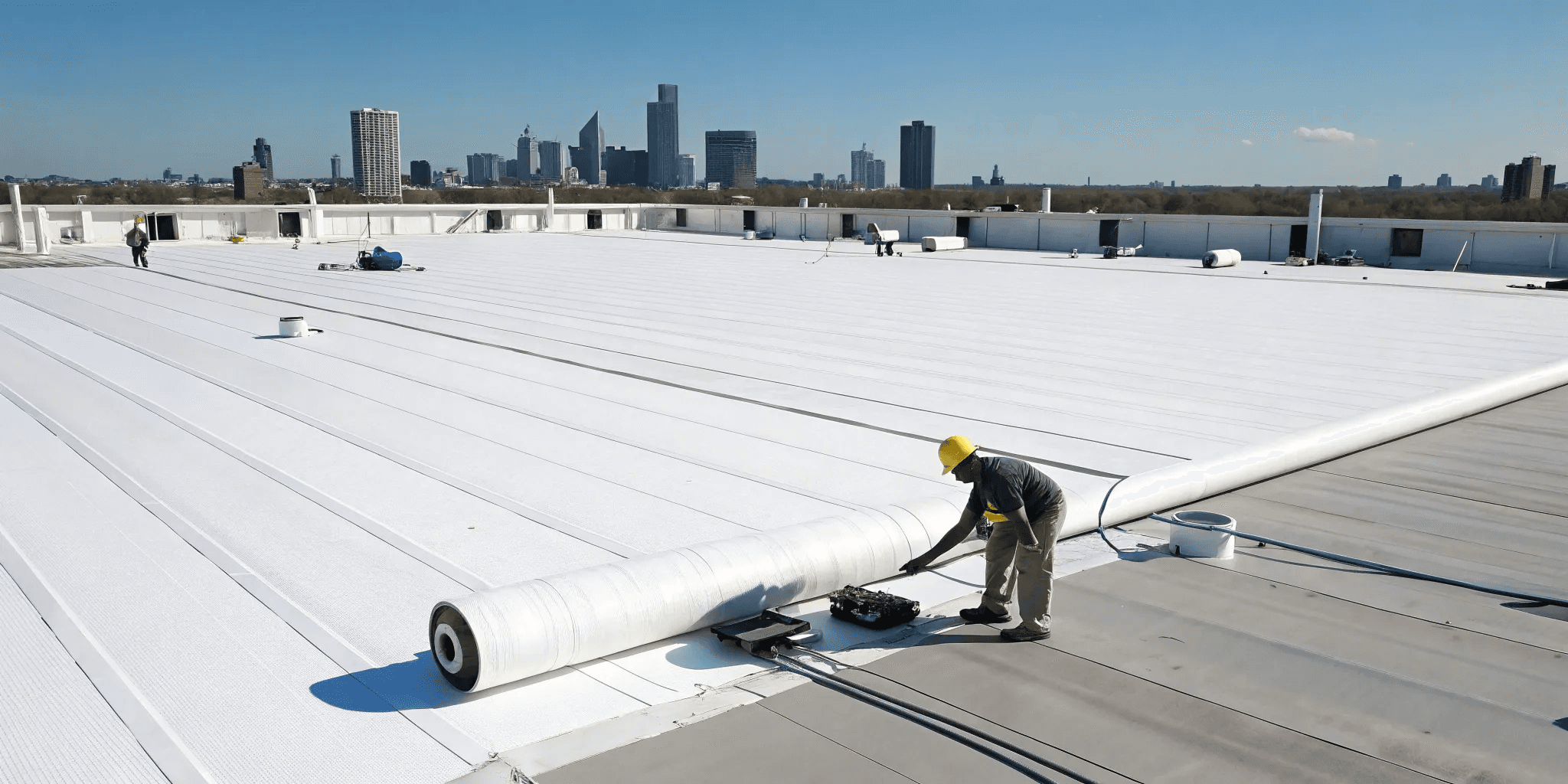
With the insulation in place, it’s time to roll out the TPO membrane. The most common method for securing it is mechanical attachment. In this process, large sheets of TPO are laid across the roof and fastened directly to the deck below using special plates and screws. The contractor strategically places these fasteners along the edge of the sheet. The next sheet then overlaps the fastened edge, hiding the hardware and preparing the seam for welding.
Welding Seams for a Watertight Seal
This is where the magic happens. To create a waterproof surface, the overlapped seams are fused using a hot-air welder. This tool heats the membrane, melting the layers so they bond into a single, solid piece. This process creates a seam that is stronger than the membrane itself. The same hot-air welding technique is used to create a watertight seal around vents, pipes, and other rooftop fixtures, ensuring a completely seamless finish.
Following Installation Best Practices
A successful TPO roof installation depends on the skill of the crew. It’s crucial that your contractor follows the manufacturer’s guidelines for every step, from the screw pattern to the welding temperature. A quality installation also involves inspecting the existing roof deck. If there’s significant water saturation in the old insulation, it must be removed. Covering up wet insulation can lead to serious problems, so discuss this with your roofer before the project begins.
TPO Lifespan and Maintenance
A TPO roof is a significant investment in your building's future, and like any major asset, its longevity depends on proper care. While TPO is known for its durability, it isn’t a "set it and forget it" solution. Understanding its expected lifespan and what it takes to maintain it will help you protect your property and get the most value from your new roof for decades to come. With a proactive approach to inspections and repairs, you can ensure your TPO roof performs at its best year after year.
How Long Does a TPO Roof Last?
When installed correctly and maintained with care, a TPO roof can last between 25 and 30 years. This impressive lifespan makes it a competitive choice among commercial roofing options. However, reaching that 30-year mark isn't automatic. The quality of the initial installation is the most critical factor, as improper techniques can lead to premature failure. After that, consistent roof maintenance plays a vital role. Regular check-ups and prompt repairs will help you catch minor issues before they turn into major problems, ensuring your roof reaches its maximum potential lifespan.
Factors That Influence Longevity
Several factors can affect how long your TPO roof will last. Because TPO is a newer technology compared to other roofing materials, the industry is still gathering long-term performance data. We do know that climate plays a huge role. Buildings in areas with intense, year-round sun and high heat may see their TPO membranes degrade faster, especially if the material wasn't specifically formulated for those conditions. The amount of foot traffic on the roof, the quality of the membrane itself, and the building's structural movement can also impact its durability over time.
Your Regular Inspection Checklist
Catching problems early is the secret to a long-lasting TPO roof. I recommend having a professional conduct inspections at least twice a year, typically in the spring and fall, and after any major weather event. This allows you to address seasonal wear and tear before it gets worse. During an inspection, a professional will look for key warning signs of trouble.
Your checklist should include:
Separated or failing seams
Punctures or tears in the membrane
Damaged or loose flashing around vents and equipment
Clogged drains or standing water
Debris, dirt, or signs of biological growth
How to Handle Common Repairs
The good news is that many common TPO issues are straightforward to fix if you catch them early. Small punctures or holes from dropped tools or flying debris can often be repaired by a professional. The process involves thoroughly cleaning the damaged area and heat-welding a new piece of TPO membrane over it to create a permanent, watertight seal. It’s crucial to hire an experienced contractor for this, as improper welding can damage the membrane. Attempting a DIY TPO repair can void your warranty and lead to bigger leaks down the road.
Proactive Care to Extend Its Life
Beyond routine inspections and repairs, you can take further steps to extend your roof's life. Keeping the surface clean is important, as dirt and debris can interfere with its reflective properties and lead to algae or mold growth. For an aging roof that’s starting to show wear, a restorative coating can be a great option. If an inspection finds that less than 25% of the underlying insulation is wet, a silicone coating can be applied to seal the roof and add another 10 to 15 years to its life. If moisture damage is more widespread, a full replacement will likely be necessary.
How Much Does TPO Roofing Cost?
Let's talk about one of the most important factors in any roofing project: the price. While TPO is known for being a cost-effective option, the final number on your invoice can vary quite a bit. Understanding what goes into the total cost will help you budget effectively and see why TPO is often considered a smart long-term investment for commercial buildings. Below, we’ll break down the costs, explore the factors that influence the price, and look at how a TPO roof can save you money over time.
Understanding the Cost Breakdown
When you get a quote for a TPO roof, the price typically includes both materials and labor. As a general guideline, you can expect the installation to cost between $6 and $12 per square foot. For a standard 20,000-square-foot commercial roof, this gives you a wide potential range. This all-in-one pricing helps simplify budgeting, but remember that it’s just a starting point. The final cost depends heavily on the unique characteristics of your building and the specifics of the project. A detailed TPO roofing guide can provide more context on how these initial estimates are formed before you start collecting quotes from contractors.
Factors That Affect the Final Price
Several key elements can cause your TPO roofing cost to go up or down. The biggest variable is almost always labor. A complex roof with many obstacles, like HVAC units, vents, or skylights, requires more time and skill to seal properly. Another major factor is the condition of your existing roof. If it needs to be completely torn off, the project will cost more than simply covering the old layer. Other considerations include how easy it is to access the roof, the type and thickness of insulation you choose, and whether any special permits are required for the job.
Calculating Your Long-Term Savings
The initial installation cost is only part of the story. A TPO roof can actually save you money over its lifespan, primarily through energy efficiency. Most TPO membranes are brilliant white, which is excellent for reflecting the sun's heat and UV rays instead of absorbing them. This "cool roof" effect helps keep your building cooler during hot months, reducing the workload on your air conditioning system. Over time, this can lead to significant savings on your energy bills. When you’re weighing the upfront cost, be sure to factor in these long-term financial benefits that make TPO a very practical choice for many building owners.
How to Budget for Your TPO Project
To create a realistic budget, start with the general range of $6 to $12 per square foot. Then, consider the specific factors for your building. Is your roof large and flat with few obstructions, or is it smaller but more complex? Will you need a full tear-off or just a recover? What are your insulation requirements? Answering these questions will help you anticipate where your project might fall within that price range. The best way to get a precise number is to request detailed quotes from several qualified roofing contractors. They can perform an on-site inspection and give you a complete breakdown of costs for your specific project.
How TPO Compares to Other Roofing
When you're looking at TPO, it's helpful to see how it stacks up against other common flat roofing materials. Each one has its own set of strengths, and the best choice often comes down to your building's specific needs, your budget, and your long-term goals. Let's walk through a few key comparisons to give you a clearer picture of where TPO fits in. Understanding these differences will help you make a more informed decision for your property.
TPO vs. EPDM
The main difference here is the material itself: TPO is a plastic-based membrane, while EPDM is rubber-based. This fundamental distinction impacts everything from installation to long-term performance. EPDM has been around for decades, and its durability is well-documented; some EPDM roofs installed in the 1970s are still going strong today. It's also known for being one of the easier materials to install, which can shorten project timelines. TPO, on the other hand, offers superior seam strength because its seams are heat-welded, creating a single, monolithic membrane. It also generally provides better energy efficiency due to its standard white, reflective surface.
TPO vs. PVC
TPO and PVC are often compared because they are both thermoplastic, single-ply membranes with heat-welded seams. Think of them as close cousins. The primary advantage of TPO is often its cost-effectiveness; it typically provides similar energy-efficient benefits at a lower price point. However, PVC has a longer track record and is known for its exceptional resistance to chemicals, grease, and fire. This makes PVC a go-to choice for buildings like restaurants or manufacturing facilities where chemical exposure is a concern. For most commercial buildings, though, TPO offers a fantastic balance of performance and value.
TPO vs. Modified Bitumen
This comparison pits a modern single-ply system against a more traditional, asphalt-based one. Modified bitumen, often called "mod bit," is known for its toughness and puncture resistance. It's a multi-ply system that can be easier to repair for some roofing contractors. However, TPO has several key advantages. It's significantly lighter, which puts less stress on your building's structure, and its installation is cleaner and faster since it doesn't involve torches or hot asphalt. TPO's reflective surface also provides much greater energy efficiency than the standard dark surface of a modified bitumen roof, leading to lower cooling costs.
Is TPO Roofing Right for Your Building?
Deciding on a new roof is a big commitment, and TPO is a fantastic option for many property owners. But is it the perfect fit for you? The answer depends on a few key factors: your building’s structure, your local weather, and the quality of both the materials and the installation. With TPO making up about 40% of the commercial roofing market, it’s clearly a popular choice for a reason. Let’s walk through the final checkpoints to help you determine if a TPO system is the right investment for your property.
Best Building Types for TPO
TPO roofing is specifically designed for commercial buildings with low-slope or flat roofs. Its single-ply membrane system is ideal for the large, uninterrupted surfaces common on these structures. You’ll often see TPO on top of warehouses, retail centers, industrial facilities, restaurants, and office buildings. Because it’s lightweight, it’s also a great choice for new construction and for retrofitting older buildings without adding significant structural load. If your building has a flat or nearly flat roof, TPO is likely one of the most practical and cost-effective options available to you.
Considering Your Local Climate
Your geographic location plays a big role in how well a TPO roof will perform. Because TPO is typically white and highly reflective, it’s an excellent choice for hot, sunny climates. It functions as a “cool roof”, bouncing sunlight away from your building to reduce cooling costs during the summer. However, if your property is in a high-altitude area with intense UV exposure, like Denver, the sun’s rays can cause the membrane to degrade more quickly. In these environments, you might consider a thicker TPO membrane or discuss UV-resistant alternatives with your contractor.
How to Choose the Best Manufacturer
The quality of TPO membranes can vary quite a bit from one brand to another, so choosing a reputable manufacturer is critical. Look for companies with a long track record of success, positive industry reviews, and comprehensive warranties. Some manufacturers, like Johns Manville, offer a complete roofing system rather than just the membrane. This means all the components, from the insulation to the fasteners and flashing, are designed to work together perfectly. This system approach can lead to a more reliable, longer-lasting roof and simplifies the warranty process if an issue ever comes up.
What to Look for in a Roofing Contractor
Even the best TPO material will fail if it’s not installed correctly. Finding a qualified, experienced roofing contractor is just as important as choosing the right manufacturer. You’ll want to hire a team that specializes in commercial roofing and has proven experience with TPO systems. Ask potential contractors if they are certified by the manufacturer whose product you plan to use. A great contractor will also discuss a plan for regular inspections and maintenance to catch small issues like punctures or seam separations before they become major problems.
Frequently Asked Questions
Is TPO a good choice for colder climates too? Absolutely. While the white membrane's cooling benefits are most noticeable in hot, sunny regions, TPO is a durable and waterproof option for any climate. In colder areas, the heat-welded seams provide excellent protection against leaks from melting snow and ice. You won't get the same energy savings on cooling, but you still get a lightweight, long-lasting, and cost-effective roof that performs well year-round.
How can I be sure my contractor is using a quality TPO product? This is a great question, and it comes down to doing a little homework on both the contractor and the material. Ask your potential roofer which manufacturers they work with and why. A reputable contractor will be transparent and recommend brands with a long history of performance, like Johns Manville or GAF. You can also ask if they are a certified installer for that specific brand, which means they’ve been trained to follow the manufacturer’s exact installation standards.
Can I walk on a TPO roof? Yes, you can walk on a TPO roof for routine maintenance and equipment servicing. However, it’s smart to be careful. The membrane can be punctured by sharp objects like dropped tools or screws. To protect the surface, it's a good practice to install designated walkway pads in high-traffic areas, such as around HVAC units or access hatches. This gives you a durable path and protects the membrane underneath.
What's the difference between repairing a TPO roof and applying a coating? A repair targets a specific problem, like a puncture or a small section of a failed seam. A professional will clean the area and heat-weld a patch of new TPO material over the damage to create a permanent seal. A coating, on the other hand, is a restorative measure applied over the entire roof surface. It's a fluid-applied membrane, often silicone, that can seal minor cracks and extend the life of an aging but still functional roof by another 10 to 15 years.
Is a thicker TPO membrane always the better option? Not necessarily, as the right thickness depends on your building's specific needs. Standard TPO is usually 45 or 60 mil thick, which is perfect for most commercial buildings. A thicker membrane, like 80 or 90 mil, offers more puncture resistance and can better withstand harsh UV exposure. It's a great choice for roofs with a lot of foot traffic or for buildings in high-altitude, sunny climates. For a typical warehouse or retail space, a 60 mil membrane often provides the ideal balance of durability and cost.