Date:
Editor:
Let’s be practical: finding a new doctor involves more than just looking up credentials. You have to think about insurance, office hours, and whether the location is convenient. When you’re in pain, these logistical details matter even more. This guide offers a straightforward, step-by-step approach to selecting the right foot doctor Bordentown has for you, without the added stress. We’ll cut through the noise and focus on what truly matters, from verifying insurance and checking for flexible scheduling to understanding the importance of a practice that offers a full spectrum of care. Think of this as your personal checklist for making a smart, practical choice that fits both your health needs and your life.
Key Takeaways
Verify Key Qualifications: When choosing a foot doctor, look for board certification as a sign of advanced expertise. It is also important to find a physician with specific experience in treating your particular condition, whether it's a common sports injury or a complex diabetic foot issue.
Evaluate the Whole Practice: A great doctor is just one piece of the puzzle. Ensure the practice fits your life by checking for insurance acceptance, convenient locations, and a full spectrum of services, from custom orthotics to surgery, so your care can adapt to your needs.
Listen to Your Body's Signals: Persistent foot or ankle pain, numbness, and skin changes are clear signs that you should see a specialist. Addressing these symptoms early by scheduling a consultation is the most effective way to prevent minor issues from becoming serious problems.
What Exactly Is a Foot Doctor?
If you’ve ever wondered what a foot doctor does, you’re not alone. Put simply, a foot doctor, or podiatrist, is a medical specialist who diagnoses and treats conditions affecting the feet, ankles, and lower legs. Think of them as the ultimate experts for everything that keeps you on your feet. Your feet are your body’s foundation, carrying you through every part of your day, so when something goes wrong, it can impact your entire life. That’s where a podiatrist comes in.
Their expertise covers a huge range of issues, from common problems like ingrown toenails and arch pain to more complex situations requiring surgery or long-term management. They provide a full spectrum of services designed to get you moving comfortably and prevent future problems. Whether you’re dealing with a sudden injury, a nagging ache that won’t go away, or a chronic condition like diabetes that requires special attention for your feet, a podiatrist has the focused training to help. They don’t just treat symptoms; they work to understand the root cause of your discomfort to find a lasting solution. Seeing a specialist ensures your foundation is strong, stable, and pain-free.
Podiatrists vs. Orthopedic Surgeons: What's the Difference?
It’s a common question: should you see a podiatrist or an orthopedic surgeon for your foot pain? While both can treat foot and ankle issues, their training paths are different. An orthopedic surgeon’s education covers the entire body’s musculoskeletal system, and they may later choose to specialize in the foot and ankle. A podiatrist’s training, on the other hand, is intensely focused on the foot, ankle, and lower leg from day one. This specialized path gives them a deep and comprehensive understanding of this specific area. Our physicians are board-certified podiatric surgeons, combining this specialized focus with advanced surgical training to give you expert care.
Signs It's Time to See a Foot Doctor
It’s easy to dismiss foot pain as a normal part of life, but it’s not something you have to live with. Your body often sends clear signals when something is wrong, and ignoring them can lead to bigger problems down the road. If you notice any of the following signs, it’s a good idea to get them checked out:
Lingering pain: Any ache or pain in your foot or ankle that lasts for more than a few days.
Numbness or tingling: A persistent pins-and-needles sensation could indicate nerve issues.
Skin or nail changes: This includes discoloration, persistent sores, or thick, brittle nails.
Uneven shoe wear: If one side of your sole wears out much faster than the other, it can signal an issue with your gait.
Recurrent ankle instability: Feeling like your ankle is constantly "giving way."
If any of these sound familiar, it's time to schedule an appointment and get the answers you need.
Common Foot Conditions We Treat in Bordentown
Foot pain can show up in many different ways, but you don't have to figure it out alone. Our team in Bordentown has seen it all, and we're here to help you get to the bottom of what's causing your discomfort. From common aches to more complex conditions, we create personalized treatment plans to get you back on your feet. Here are some of the most frequent issues we address.
Heel Pain and Plantar Fasciitis
That nagging pain in your heel, especially when you first get out of bed, is often a tell-tale sign of plantar fasciitis. This condition happens when the thick band of tissue connecting your heel to your toes, the plantar fascia, becomes inflamed. You might feel a sharp, stabbing pain or a persistent dull ache that just won't go away, even after you rest. It’s one of the most common causes of heel pain we see. Ignoring it can lead to chronic pain that interferes with your daily activities. If this sounds familiar, it's time to get a clear diagnosis and explore our treatment options so you can walk comfortably again.
Bunions and Hammertoes
Bunions and hammertoes are more than just cosmetic issues; they can be genuinely painful and make finding comfortable shoes feel impossible. A bunion is a bony bump that forms at the base of your big toe, pushing it out of alignment. A hammertoe is when one of your smaller toes bends downward at the middle joint, resembling a hammer. Both conditions can worsen over time, affecting your balance and ability to walk without pain. You don't have to live with the discomfort. Our expert physicians can assess your specific situation and recommend the best course of action, from simple footwear changes to more definitive treatments, to improve your quality of life.
Diabetic Foot Care and Neuropathy
If you have diabetes, paying close attention to your feet is essential. One of the most common complications is peripheral neuropathy, or nerve damage, which can cause symptoms like numbness, tingling, or burning sensations in your feet. Because you might not feel a small cut or blister, these minor issues can quickly become serious infections. Regular check-ups are your best defense against these risks. We provide comprehensive diabetic foot care to help you manage symptoms, prevent complications, and keep your feet healthy for the long run. Don't wait for a problem to arise; proactive care is key.
Gout and Arthritis
Waking up to a sudden, intense pain and swelling in your big toe could be a sign of gout. This painful form of arthritis occurs when uric acid crystals build up in a joint, causing severe inflammation. While the big toe is a common spot, gout can affect other joints in your feet and ankles, too. Arthritis in general can cause stiffness and aching that make movement difficult. Addressing these conditions promptly is crucial for managing pain and preventing long-term joint damage. If you suspect you have gout or another form of arthritis, schedule an appointment to get the relief you need.
Sports Injuries and Achilles Tendinitis
Whether you're a weekend warrior or a dedicated athlete, foot and ankle injuries can stop you in your tracks. One common issue we treat is Achilles tendinitis, which is an overuse injury of the tendon connecting your calf muscles to your heel bone. It often causes pain and stiffness along the back of your leg, near the heel. Pushing through the pain can lead to a more serious injury, like a tear or rupture. Proper diagnosis and treatment are vital for a safe and speedy recovery. Our team is experienced in treating a wide range of sports injuries to help you get back in the game.
Our Foot and Ankle Services in Bordentown
At The Foot & Ankle Group, we believe that quality care should be comprehensive and close to home. Our Bordentown office provides a full range of services to address everything from minor discomfort to complex foot and ankle conditions. We’re committed to finding the right solution for you, whether that involves advanced surgical procedures or conservative, non-invasive therapies. Our team works with you to create a personalized treatment plan that fits your lifestyle and helps you get back on your feet. We combine years of experience with a patient-first philosophy, ensuring you feel heard, understood, and confident in your care every step of the way.
Surgical Solutions
When foot or ankle pain doesn't respond to conservative treatments, surgery can offer a path to lasting relief. Our team includes highly skilled podiatric surgeons who are prepared to handle a wide range of conditions, from bunion correction and hammertoe repair to complex reconstructive surgery for injuries or deformities. For example, Dr. Robert Norton is one of our foot doctors who specializes in foot and ankle surgery, bringing extensive experience to our Bordentown patients. We approach surgery with careful consideration, ensuring you understand the procedure and what to expect during recovery. Our goal is to restore function, eliminate pain, and help you return to your daily activities with confidence.
Non-Surgical Treatments
We always explore the most effective, least invasive options first. Our practice offers a wide array of non-surgical treatments designed to relieve pain and promote healing without a lengthy recovery. Depending on your specific condition, your treatment plan might include physical therapy, anti-inflammatory medications, corticosteroid injections, or bracing and splinting. We focus on providing expert care with a kind and understanding approach, helping you with everything from common sports injuries to chronic conditions. Our team is dedicated to finding a conservative solution that works for you, reserving surgery for when it is truly the best and necessary option for your long-term health.
Custom Orthotics and Preventive Care
Preventing foot problems before they start is just as important as treating them. We use modern technology, including 3D scanning, to create custom shoe inserts that are tailored to your unique foot structure. Unlike generic, over-the-counter insoles, custom orthotics are designed to correct biomechanical imbalances, provide support, and redistribute pressure to alleviate pain from conditions like plantar fasciitis, flat feet, and arthritis. By addressing the root cause of your discomfort, orthotics can not only relieve current symptoms but also help prevent future injuries. This proactive approach is a cornerstone of our commitment to your lifelong foot and ankle health.
Specialized Diabetic Foot Care
If you have diabetes, regular foot care is essential for your overall health. Diabetes can lead to complications like poor circulation and nerve damage (neuropathy), which makes your feet vulnerable to wounds and infections that are slow to heal. Our podiatrists provide specialized diabetic foot care to help you manage these risks. We offer comprehensive foot exams, professional nail and callus care, and advanced wound treatment to prevent serious issues from developing. We also educate you on how to inspect your feet at home and choose proper footwear. Don't wait for a problem to arise; schedule an appointment for a routine check-up to keep your feet healthy.
Meet Your Bordentown Podiatry Experts at The Foot & Ankle Group
Finding the right doctor is about more than just credentials; it’s about finding a team you can trust. At our Bordentown location, we’ve brought together a group of specialists who are not only leaders in their field but also genuinely care about your well-being. We believe that the best care comes from combining deep medical knowledge with a personal touch. Our goal is simple: to help you understand your treatment options, feel comfortable with your care plan, and get you back to moving freely and enjoying your life.
Our Board-Certified Podiatric Surgeons
When you’re dealing with foot or ankle pain, you want to know you’re in the most capable hands. Our team of physicians includes board-certified podiatric surgeons, which is a significant distinction. This certification means they have completed extensive training and passed rigorous exams, demonstrating the highest level of skill in foot and ankle care. Whether you need a simple in-office procedure or a more complex surgical solution, our surgeons have the specialized expertise to ensure you receive exceptional treatment tailored to your specific needs.
Advanced Technology for Precise Care
We pair our medical expertise with the latest advancements in podiatric technology to give you the best possible results. Using modern diagnostic tools allows us to get a crystal-clear picture of what’s going on, leading to a more accurate diagnosis from the start. For treatment, we use state-of-the-art equipment, including 3D scanning to create truly custom orthotics that fit your feet perfectly. These advanced services aren't just for show; they translate into more precise, effective, and comfortable care for you.
Our Patient-First Approach
From the moment you walk through our doors, you are the center of our focus. We take the time to listen to your concerns, understand how your foot or ankle issue affects your daily life, and answer all of your questions. Our promise is to provide personal care and develop solutions that work for you in the long run, not just quick fixes. We combine our top-tier medical skills with a compassionate, caring approach because we want to see you thrive. If you're ready to take the next step, you can easily request an appointment online.
Key Qualifications for Your Bordentown Foot Doctor
Choosing a doctor is a big decision. You're putting your health and well-being in their hands, so you want to feel confident in their skills. When it comes to your feet and ankles, finding a podiatrist with the right qualifications is the first step toward getting back to your life without pain. It’s not just about a degree on the wall; it’s about specialized training, a deep understanding of your specific problem, and a commitment to using the best available treatments. Think of it as building your healthcare dream team, and your foot doctor is a key player. Let's walk through the most important qualifications to look for so you can make an informed choice for your care in Bordentown.
Board Certification and Surgical Training
You’ll often hear the term “board certified,” but what does it actually mean? Think of it as a doctor’s gold star. A board-certified podiatrist has gone through extensive training and passed rigorous exams to prove their expertise in foot and ankle surgery. This certification, often from a body like the American Board of Foot and Ankle Surgery, isn't a one-time thing; it requires ongoing education to maintain. It’s a clear sign that your doctor is dedicated to upholding the highest standards of care. When you browse the profiles of our board-certified physicians, you can feel confident that you’re in the hands of true experts who are at the top of their field.
Expertise in Your Specific Condition
Foot pain can stem from countless issues, from a nagging sports injury to complications from diabetes. That’s why it’s so important to find a doctor who specializes in your specific condition. A podiatrist with a general practice is great, but one who has deep experience with your particular problem can make all the difference in your treatment outcome. Many podiatrists in the Bordentown area have expertise in both general podiatry and complex foot and ankle surgery. This allows them to provide comprehensive care tailored to your exact needs, ensuring you get the most effective and efficient path to recovery, whether your solution is surgical or non-surgical.
Experience with Modern Treatment Techniques
The field of medicine is constantly advancing, and podiatry is no exception. A great foot doctor is one who stays current with the latest, most effective treatment methods. This commitment to innovation can lead to better diagnoses, less invasive procedures, and faster recovery times for you. For example, many modern practices utilize advanced diagnostic tools and 3D scanning to create truly custom orthotics that are a perfect fit for your feet and your lifestyle. By choosing a practice that invests in modern technology, you’re choosing a partner in your health who is dedicated to providing the best possible outcome for your feet and ankles.
How to Choose the Right Bordentown Foot Doctor for You
Finding the right doctor is about more than just medical expertise. You also need someone whose practice fits your life. When you're dealing with foot or ankle pain, the last thing you want is added stress from logistics like payments, scheduling, or travel. Considering a few practical factors can make your healthcare experience much smoother. Think about what you need from a practice in terms of insurance, location, and the types of care they offer. This will help you find a foot doctor in Bordentown who is not just a great physician, but also the right partner for your health journey.
Insurance, Payments, and Office Logistics
Let's get the practical stuff out of the way first. Before you even book a visit, it’s smart to confirm that the doctor’s office accepts your insurance plan. This simple step can save you from surprise bills down the road. Most practices list accepted insurance providers on their website, often on a page for new patients. You should also look into how the office handles payments for co-pays or other out-of-pocket costs. Finally, consider how easy it is to schedule a visit. Many modern practices allow you to request appointments online, which is a huge time-saver when you’re trying to coordinate care around your busy life.
Convenient Location and Flexible Scheduling
When your feet or ankles hurt, even a short trip can feel like a marathon. Choosing a doctor with a convenient office is essential. Many podiatrists serve multiple communities, so a practice might have several locations near Bordentown, including in neighboring towns like Columbus or Mount Laurel. This gives you more flexibility for finding an office that’s easy to get to from your home or work. Also, think about scheduling. Does the office have hours that work with your schedule? A practice that understands the demands of modern life will make it easier for you to get the consistent care you need without turning your calendar upside down.
A Full Spectrum of Care Options
Your foot condition might seem straightforward now, but you want a doctor who is equipped to handle whatever comes next. Look for a practice that offers a full spectrum of services, from non-surgical treatments and custom orthotics to advanced surgical solutions. Choosing a comprehensive care group means you won’t have to find a new specialist if your needs change or your condition requires a different approach. A team that can manage everything from a common sports injury to complex diabetic foot care provides peace of mind, ensuring you have access to expert care all under one roof, for every step of your recovery.
Should You Trust Patient Reviews?
When you’re looking for a new doctor, scrolling through online reviews can feel like a full-time job. It’s a helpful tool, but how much weight should you give to a stranger’s opinion? The truth is, patient reviews can offer a glimpse into what you can expect from a practice, as long as you know how to read between the lines.
Think of it as gathering clues. Positive feedback can highlight a doctor's strengths and the office's atmosphere, while negative comments can point to potential issues. By looking for patterns instead of focusing on single reviews, you can build a more accurate picture and make a choice that feels right for you.
What Positive Reviews Can Tell You
Positive reviews are more than just a star rating; they’re a window into the patient experience. When you see consistently high ratings for a doctor, it often signals a high level of patient satisfaction with their care and results. Look for comments that mention specific qualities you value. Do patients say the doctor is a good listener? Do they praise the staff for being friendly and efficient? These details can tell you a lot about a practice’s culture.
Consistent praise for a doctor's communication style or their ability to make patients feel comfortable is a fantastic sign. It suggests you’ll be treated with respect and that your concerns will be heard. You can see what makes our board-certified podiatrists stand out by learning about their individual expertise and patient-focused philosophies.
How to Spot Red Flags in Reviews
While you shouldn't let one negative comment scare you away, you should pay attention to recurring complaints. If you notice multiple reviews mentioning the same problems, like consistently long wait times, rude staff, or difficulty getting questions answered, it’s a valid reason for concern. These are often signs of systemic issues within a practice that could affect your own experience.
Focus on the substance of the complaints. A review about a billing mix-up is different from one detailing unprofessional behavior or a dismissive attitude from the doctor. While every practice has an off day, patterns of poor communication or disorganization are red flags. Knowing what to expect at your first visit can help you prepare and identify if a practice is a good fit from the start.
Your First Appointment: What to Expect
Walking into a new doctor’s office can feel a little intimidating, but your first visit with us is simply a conversation. It’s the first step toward understanding the cause of your discomfort and creating a plan to get you back on your feet, pain-free. Our goal is to make you feel comfortable, heard, and confident in your care from the moment you walk through our doors. We’ll handle the complex diagnostics; you just have to show up ready to talk about what you’ve been experiencing. Knowing what happens during this initial visit can help ease any nerves and make the process feel smooth and straightforward.
How to Prepare for Your Visit
A little preparation can go a long way in making your first appointment as productive as possible. Before you come in, take a moment to think about your foot or ankle pain. When did it start? What does it feel like (sharp, dull, aching)? Does anything make it better or worse? You don’t need a perfect medical history, just a few notes to help guide our conversation. We also recommend bringing a pair of your most frequently worn shoes, as they can offer clues about your foot structure and gait. To save time at check-in, you can find and fill out any necessary paperwork on our new patients page before you arrive.
A Look Inside Your First Consultation
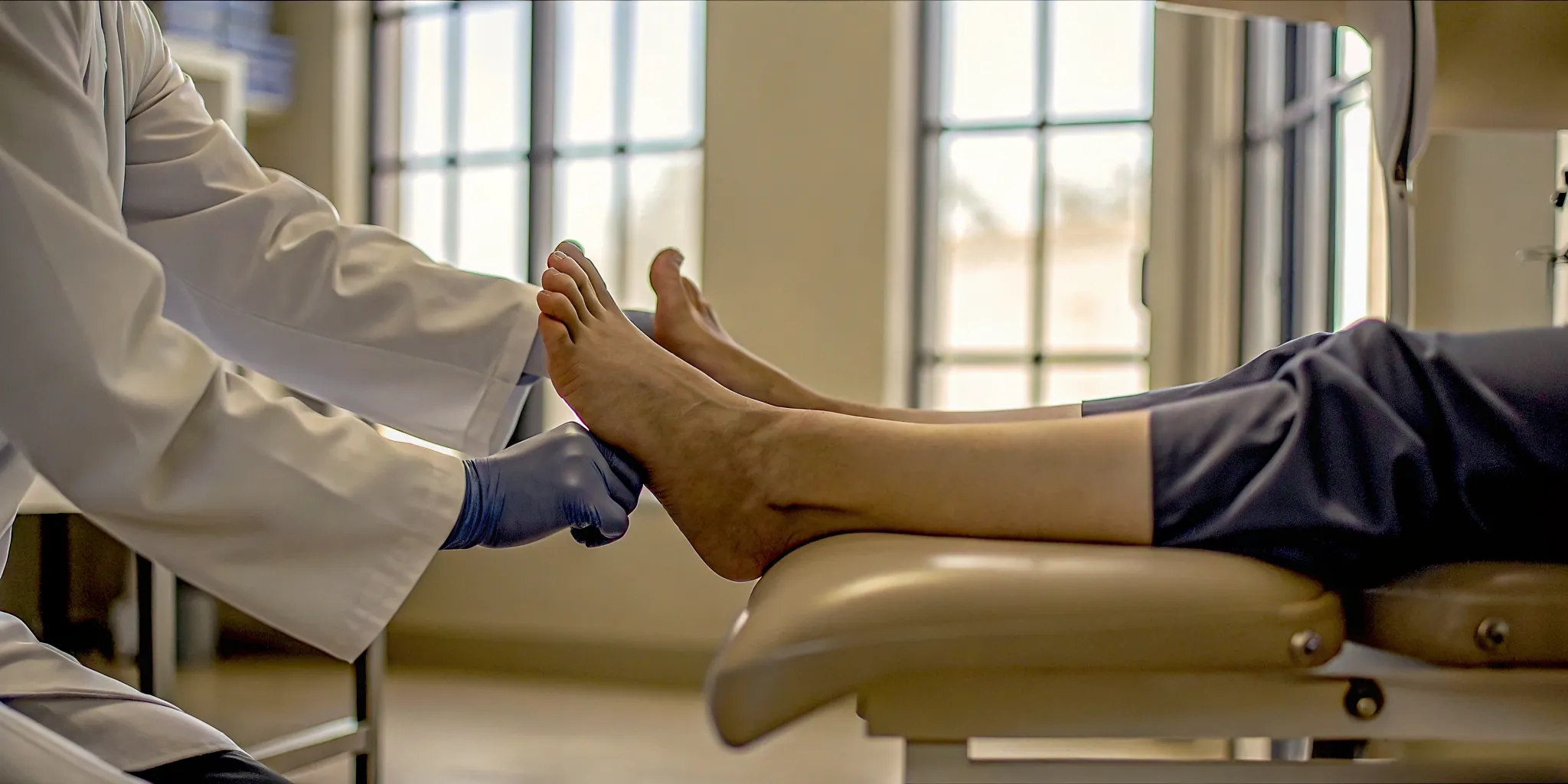
During your first visit, you’ll meet with one of our dedicated podiatrists. We’ll start by sitting down to discuss your symptoms, your lifestyle, and any concerns you have. This is your time to share your story. After our chat, your doctor will perform a gentle but thorough examination of your feet and ankles, assessing your range of motion and identifying specific areas of tenderness. Our team of board-certified physicians combines years of experience with a compassionate approach to pinpoint the root of the problem. From there, we’ll discuss our findings with you and outline a potential treatment plan tailored to your unique needs and goals.
Related Articles
Podiatry Services & Foot & Ankle Treatments | The Foot & Ankle Group
Foot & Ankle Specialists in Mount Laurel & Philadelphia | The Foot & Ankle Group
Frequently Asked Questions
Should I see a podiatrist or an orthopedic surgeon for my ankle pain? This is a great question. While both types of doctors can treat foot and ankle problems, a podiatrist’s training is intensely focused on the foot, ankle, and lower leg from the very beginning. An orthopedic surgeon’s education covers the entire body, and they may specialize later. Choosing a podiatrist means you are seeing a specialist whose entire practice is dedicated to the complex structures that keep you moving.
Do I need a referral to schedule an appointment? For many insurance plans, you do not need a referral from your primary care physician to see one of our specialists. However, policies can vary, so it is always a good idea to confirm the details of your specific plan. Our office staff is also happy to help you figure out what your insurance requires before you book a visit.
Will I need surgery for my foot pain? Many patients worry about this, but surgery is rarely our first step. We believe in a conservative approach, which means we start with the most effective, least invasive treatments available. This could include physical therapy, custom orthotics, or medication. We only recommend surgery when it is the best and necessary path to providing you with lasting relief and improved function.
Are custom orthotics really better than the inserts I can buy at the store? Yes, there is a significant difference. Over-the-counter inserts provide general cushioning, which might offer temporary comfort but won't fix an underlying problem. Custom orthotics are medical devices created from a precise 3D scan of your feet. They are designed to correct your specific biomechanical imbalances, providing targeted support to relieve pain and prevent future issues.
What should I bring to my first appointment? To make your first visit as smooth as possible, please bring your insurance card, a photo ID, and a list of any medications you are currently taking. It is also very helpful if you bring a pair of shoes you wear frequently, as they can give us important clues about your gait. Filling out the new patient forms on our website ahead of time will also save you time when you arrive.