Date:
Editor:
Diabetes can affect foot nerves and blood flow, which may make injuries harder to notice and slower to heal. Check your feet every day, protect them from injury, and contact a clinician about new changes, wounds, or signs of infection.
Contact our team to discuss a foot concern
How can diabetes affect the feet?
Diabetes-related nerve damage may reduce sensation. A small blister, cut, or pressure spot can go unnoticed if you do not feel it. Changes in blood vessels may also affect circulation and healing. These effects do not happen to everyone, and one symptom alone cannot tell you what is causing a problem.
The National Institute of Diabetes and Digestive and Kidney Diseases explains that foot problems are common in people with diabetes and advises looking for problems such as cuts and calluses: NIDDK guidance on diabetes and foot problems. Regular observation and timely medical advice can help you respond when something changes.
What foot changes should you watch for?
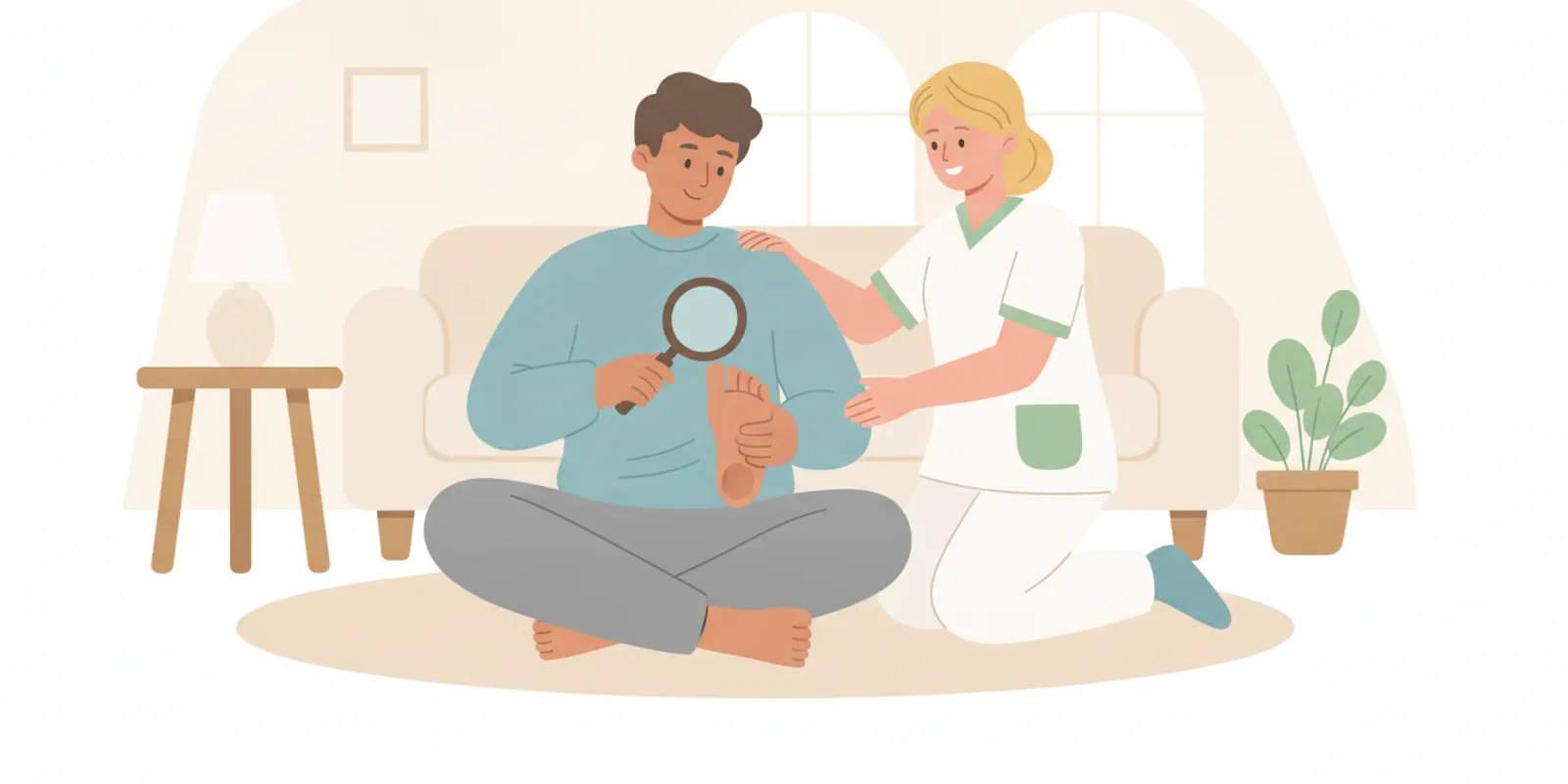
Look at the tops, soles, heels, sides, and spaces between your toes. Use a mirror or ask someone you trust to help if you cannot see the bottom of your feet clearly. Notice changes from your usual appearance and sensation, including:
A cut, blister, crack, sore, or area of broken skin.
Redness, warmth, swelling, drainage, or an unpleasant odor near a wound.
A callus, corn, or thickened skin, especially where shoes rub.
New tingling, burning, numbness, or pain.
A change in skin color, temperature, or shape, or a nail problem.
Do not assume that a lack of pain means a wound is harmless. Reduced feeling may make an injury less noticeable. If a wound appears infected, is getting worse, or does not seem to be healing, contact a healthcare professional promptly. For urgent symptoms or rapidly worsening changes, seek urgent medical care.
How can you compare common changes and next steps?
What you notice | What to do | Why it matters |
|---|---|---|
Intact skin with a small area of dry or thickened skin | Keep checking it; ask your clinician how to manage it safely. | Repeated pressure can irritate skin, and home cutting can cause injury. |
New blister, cut, crack, or sore | Contact a clinician for advice, especially if you have reduced sensation or circulation concerns. | A small injury may be easy to miss and can need assessment. |
Redness, warmth, swelling, drainage, or worsening wound | Seek prompt medical advice; use urgent care for severe or rapidly worsening symptoms. | These can be signs of infection or another problem needing timely evaluation. |
New numbness, tingling, burning, or pain | Arrange an evaluation and describe when it began and what has changed. | Sensation changes can have several causes and merit clinical review. |
This comparison is general guidance, not a diagnosis. If you are unsure how quickly to act, call your healthcare professional and describe what you see.
What daily habits can support foot awareness?
A consistent routine makes it easier to notice a new problem. Choose a time that fits your day and use the same sequence each time.
Inspect your feet. Check the skin, toes, nails, heels, and soles. Look for breaks in the skin, color changes, swelling, and areas of rubbing.
Wash and dry carefully. Clean your feet gently and dry between the toes. If you have questions about moisturizing or skin care, ask your clinician what is appropriate for you.
Check footwear before putting it on. Look inside shoes for rough seams, stones, or objects. Make sure footwear fits without rubbing or squeezing.
Protect your feet. Avoid walking barefoot, including indoors, if that could expose your feet to cuts or burns. Choose footwear that fits comfortably and protects the skin.
Keep appointments and raise concerns. Tell your care team about changes in sensation, circulation, skin, or nails, even if they seem minor.
For more information about the practice's diabetes-related foot care information and foot and ankle services, review the relevant pages and discuss your individual needs with a clinician.
What should you avoid doing at home?
Do not cut corns or calluses with a blade or use sharp tools on your feet. Avoid trying to remove a skin lesion or treating a wound with harsh products without professional advice. If you have reduced feeling, a minor burn or cut may be difficult to judge by sensation alone. Ask your clinician before using over-the-counter treatments or making changes to your routine.
Do not wait for pain before seeking advice about a visible wound. If you cannot inspect your feet safely, ask a family member or caregiver for help, or raise this difficulty at your next visit.
What may happen during a foot evaluation?
A clinician may ask when you noticed the change, whether it has grown or changed, and whether you have numbness or discomfort. They may examine the skin, nails, foot shape, and the affected area, and assess sensation or circulation as appropriate. The next step depends on what they find; it could include wound care, footwear guidance, further testing, or follow-up. No single plan is right for every patient.
Before the visit, note your symptoms, when they started, and any recent changes in footwear or activity. Bring a list of medicines and relevant health conditions. If you have a wound, avoid concealing it with products that could irritate the skin; ask the office how to prepare if you are uncertain. Find office location information, learn what to expect as a new patient, or review the appointment information.
How can family members help with foot checks?
Family members can help someone who has trouble bending, seeing the soles, or noticing changes. Ask permission, use good lighting, and compare both feet for changes. Report concerns without trying to diagnose them. A caregiver can also help keep a simple record of when a wound or symptom appeared and whether it changed. If a person has difficulty managing foot care alone, mention that to the clinical team.
Patients in Philadelphia and South Jersey can use the practice's contact page to find a way to reach the office. For related reading, see this guide to diabetic foot exam frequency. This information is educational and does not replace individual medical advice.
How can footwear and routines be adapted?
Small practical adjustments can make daily checks easier to maintain. Keep a mirror near a place where you already sit to dress, or place a reminder beside your usual footwear. If bending is uncomfortable, arrange for a trusted helper to check the soles and between the toes. Good light helps reveal subtle differences in color or skin condition. These steps are about noticing changes, not diagnosing them.
Pay attention to the fit and condition of shoes. A seam, pebble, rough lining, or tight area can create repeated rubbing. Check the inside before wearing shoes, especially if sensation is reduced. If a particular pair repeatedly leaves marks or causes discomfort, stop wearing it until you can discuss the fit with a clinician. Socks should feel comfortable and should not bunch inside the shoe. No shoe choice can remove every risk, so continue checking your feet even when footwear feels fine.
When bathing, use comfortably warm rather than very hot water and avoid testing water temperature with a foot if sensation is reduced. Dry carefully, especially between toes. Ask your clinician whether moisturizer is appropriate for your skin; avoid applying it between toes unless advised. A practical routine should be gentle and repeatable. If a step causes irritation or you are unsure how to do it safely, pause and ask for individual guidance.
How can you keep a useful record of changes?
A brief note can help you describe a concern clearly. Record the date you first noticed it, where it is, whether the skin is open, and any changes in color, warmth, swelling, drainage, sensation, or discomfort. Note whether it seems stable, improving, or worsening. A photo taken in consistent light may help you remember how it looked, but do not let photographing it delay contacting a clinician about a wound or possible infection.
Keep the description factual. Instead of guessing what caused a mark, explain what you noticed and what happened beforehand, such as a new shoe or a longer walk. Mention any home care you tried and whether it changed the area. If you speak with an office, these details can help them understand the question and advise you on the next step. Do not use a record to decide that a concerning wound is safe to watch without medical input.
What questions can you ask at a visit?
Patients do not need to arrive with a diagnosis. A few direct questions can help make the visit useful and clarify a daily plan. Consider asking:
What might explain this change, and what signs would make it more urgent?
How should I protect the area while it is being evaluated or healing?
Are there footwear or activity changes I should make for now?
How often should I check this area, and when should I follow up?
Which skin or nail care steps are safe for me to do at home?
It can also help to say whether you have trouble seeing, reaching, or feeling your feet. Those details affect which routine is realistic. If you use a caregiver's help, ask how that person can support checks without causing pressure or irritating the skin. Follow the clinician's instructions about specific treatments and follow-up rather than relying on general online advice.
How do daily checks fit with ongoing care?
A daily look at your feet is useful because it gives you a chance to notice a change between appointments. It does not replace examination or individualized advice from your healthcare team. At routine visits, mention any new numbness, burning, recurrent rubbing, thickened skin, nail concerns, or prior wounds. Your clinician can discuss what monitoring makes sense for your health and whether a particular area needs attention.
Keeping a simple care routine can reduce uncertainty: inspect, protect, note changes, and reach out when something is new or worsening. The goal is not to examine every mark anxiously. Compare with what is usual for you and ask for help when the difference is unclear. If a visible wound or possible infection develops, do not wait for a scheduled appointment just because it is already on the calendar.
How can you find appropriate care?
People with diabetes may have questions about a range of foot changes, from intact but irritated skin to an open wound or altered sensation. The appropriate clinician and timing depend on the particular concern, its progression, and your medical history. If you are uncertain, describe what you see and ask the healthcare team what to do next. Severe or rapidly worsening symptoms call for urgent medical attention.
The Foot & Ankle Group provides foot and ankle care in Philadelphia and South Jersey. You can review information for people with diabetes, explore the practice's foot and ankle surgeons, and check office locations to identify a convenient office. For preparation details, review new-patient information.
Contact the office to discuss a change in your feet
Frequently Asked Questions
Can diabetes affect my feet even if they do not hurt?
Yes. Reduced sensation can make a cut, blister, or pressure spot less noticeable. Check your feet visually and contact a clinician about new wounds or changes, even when there is little or no pain.
When should I contact a clinician about a foot wound?
Contact a healthcare professional promptly about a new wound, a wound that is worsening, or signs such as redness, warmth, swelling, or drainage. Seek urgent care for severe or rapidly worsening symptoms.
Should I remove a callus myself?
Avoid cutting or shaving a callus with a blade or sharp tool. Ask a clinician how to manage thickened skin safely, especially if sensation is reduced or the skin is irritated.
What if I cannot see the soles of my feet?
Use a mirror if it is safe and comfortable, or ask a trusted person to help with a daily visual check. Tell your clinician if checking your feet is difficult so you can discuss a practical routine.
Ready to discuss a foot concern?
In Our Expert Opinion, noticing a change early and asking for guidance is a practical way to care for your feet. If you have diabetes and see a new wound, skin change, or sensation change, contact a healthcare professional for advice tailored to you.
To prepare, describe what changed, when it began, and whether it is getting better or worse. The Foot & Ankle Group provides foot and ankle care in Philadelphia and South Jersey; use the locations page to identify an office and contact the team for next steps.