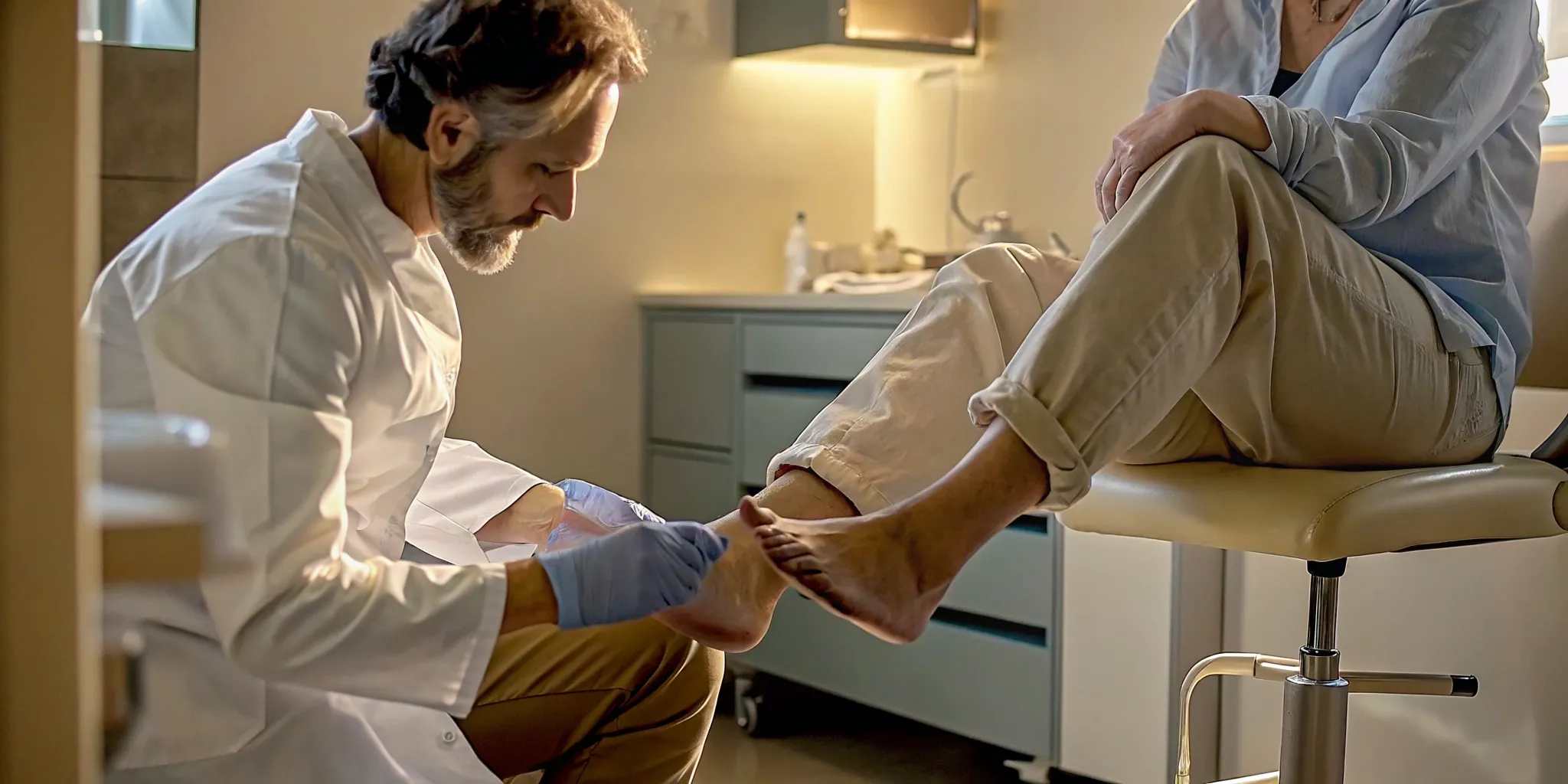
Why a Diabetic Wound Care Podiatrist Prevents Amputation
Date:
Editor:
The Foot & Ankle Group
A small blister, crack, or pressure spot can become a serious problem when diabetes affects sensation and circulation. Because these changes may develop quietly, early evaluation is one of the most important steps in protecting mobility and avoiding an emergency.
A diabetic wound care podiatrist helps prevent amputation by identifying ulcers and infection early, evaluating nerve function and blood flow. Removing unhealthy tissue when needed, reducing pressure on the wound, and coordinating advanced care with a wound center. About 12% of people with diabetes develop a foot ulcer during their lifetime, according to the CDC, so prompt attention matters even when a wound does not hurt.
Understanding how diabetic foot ulcers begin makes it easier to recognize why a seemingly minor injury deserves professional attention. The combination of reduced sensation and impaired healing can allow a wound to progress before you realize it is there.
How Diabetic Foot Ulcers Develop and Why They Need Immediate Attention
Diabetic foot ulcers usually develop through the combined effects of nerve damage and reduced blood flow. Understanding these mechanisms explains why a small blister, cut, or pressure spot can become a serious wound without prompt medical attention.
Peripheral neuropathy can hide an injury
Peripheral neuropathy is nerve damage associated with diabetes. Over time, it can reduce the ability to feel pain, pressure, heat, or an injury in the feet. A person may continue walking on a blister or overlook a cut because it does not hurt. The CDC explains that nerve damage can make foot injuries difficult to notice, allowing them to worsen before treatment begins.
This risk is common enough to take seriously: about 12% of people with diabetes develop a foot ulcer during their lifetime, according to the CDC. Routine inspection and professional evaluation can identify problems before they become deep or infected. For more background, read our complete guide to diabetic foot ulcers.
Peripheral vascular disease slows healing
Peripheral vascular disease, also called peripheral arterial disease in many clinical discussions, limits blood flow to the legs and feet. Blood delivers oxygen and nutrients needed for tissue repair and immune defense. When circulation is poor, even a tiny cut may heal slowly or fail to heal, creating an opening for infection. Diabetes-related foot conditions can therefore involve both lost sensation and impaired circulation, not just a visible break in the skin.
Because neuropathy may mask symptoms while poor circulation limits recovery, any new sore, blister, color change, or wound deserves timely assessment by a podiatric professional. Early recognition depends on knowing the warning signs to watch for.
Warning Signs of Diabetic Foot Complications You Should Not Ignore
Diabetic foot complications can begin quietly. In fact, nearly 50% of people with diabetic peripheral neuropathy may not have noticeable symptoms. And diabetes-related problems can start in the feet before you recognize anything is wrong. Regular attention and prompt evaluation give you the best opportunity to address a problem early and help prevent serious outcomes, including amputation.
Watch for these changes:
Tingling, burning, or numbness: New or worsening sensation changes may signal nerve damage. Do not dismiss them simply because there is no visible wound.
Changes in skin color or temperature: Redness, unusual paleness, bluish skin, or a foot that feels noticeably warmer or cooler than the other may indicate a developing problem.
Cuts or sores that heal slowly: Even a small break in the skin deserves attention when healing takes longer than expected. Reduced sensation can make an injury easy to overlook, while circulation problems can slow healing. The CDC notes that poor blood supply can cause even a tiny cut to heal slowly or not at all.
Swelling: Persistent or unexplained swelling, especially with redness, drainage, pain, or warmth, should be assessed rather than monitored indefinitely.
These signs are reasons to contact your doctor, not to try to treat the problem yourself. Avoid cutting into a sore, applying over-the-counter products without medical guidance, or waiting for symptoms to become severe. A podiatric evaluation can identify risks that are not obvious at home and connect you with specialized diabetic foot care when needed.
If you notice a concerning change, prompt care from a diabetic wound care podiatrist can support early detection and appropriate management.
Treatment Options a Diabetic Wound Care Podiatrist Provides
Treatment depends on the wound's depth, circulation, pressure points, signs of infection, and overall health. A diabetic wound care podiatrist evaluates these factors before building a plan focused on healing the wound, protecting surrounding tissue, and reducing the chance of recurrence. The table below outlines the primary treatment categories and what each involves.
Treatment | What It Does | Typical Use |
|---|---|---|
Debridement | Removes dead, damaged, or infected tissue to support healing | Initial wound cleaning, non-healing ulcers |
Offloading | Redistributes pressure away from the wound using custom footwear, casts, or orthotics | Active ulcers, high-pressure areas on the foot |
Advanced dressings | Applies moisture-balancing or antimicrobial materials to protect the wound | Post-debridement, chronic wounds |
Infection management | Uses antibiotics and close monitoring to control bacterial growth | Infected or draining wounds |
Revascularization | Surgically restores blood flow to the affected limb | Severe circulation impairment, non-healing wounds |
Debridement and advanced dressings
Debridement removes dead, damaged, or infected tissue that can interfere with healing. It may be performed in the office or as part of a more advanced procedure, depending on the wound. After the wound is cleaned, a clinician may use a dressing that balances moisture or provides antimicrobial support. The goal is to create a healthier environment for new tissue while monitoring the wound closely over time.
Offloading pressure from the wound
Continued pressure from walking or footwear can keep an ulcer from healing, even when the wound is dressed properly. Offloading may include specialized footwear, a total contact cast, or custom orthotics made with 4D scanning. These options redistribute pressure away from the injured area and can help patients move more safely while healing progresses.
Managing infection and circulation
When infection is present, treatment may include wound care, antibiotics, and close follow-up. Poor blood flow can also limit healing, so vascular optimization is an important part of the standard approach at The Foot & Ankle Group. For severe or chronic non-healing wounds, a patient may need revascularization surgery to restore blood flow or another surgical intervention to address damaged tissue. The CDC identifies wound cleaning, revascularization, and antibiotics among possible treatments for diabetes-related foot complications: CDC guidance on preventing diabetes-related amputations.
At The Foot & Ankle Group, care may combine vascular optimization, advanced debridement, custom offloading, and coordination with other medical specialists. This integrated approach helps address the wound and the conditions that allowed it to develop. If you need professional treatment for diabetic ulcers, prompt evaluation can help determine the safest next step.
Why Wound Center Leadership Matters for Limb Salvage
Diabetic wound care becomes more complex when an ulcer threatens deeper tissue, circulation, or the patient's ability to walk safely. In those situations, office-based treatment alone may not be enough. The Foot & Ankle Group's medical directorships at Virtua and Jefferson wound healing centers give its podiatrists a direct role in hospital-level wound coordination and limb salvage.
That distinction matters because diabetes complications account for 80% of lower-limb amputations, according to the CDC. In 2016, approximately 130,000 diabetes-related hospital discharges involved a lower-extremity amputation. After one amputation, 19% to 53% of patients may experience another within five years. These numbers reinforce why early, coordinated intervention is more than a treatment preference. It is an important part of protecting a patient's mobility and long-term health.
Coordinated care for complex wounds
At a wound healing center, a diabetic wound care podiatrist works alongside the specialists a patient may need, including vascular surgeons, infectious disease physicians, and endocrinologists. The team can evaluate blood flow, address infection, support blood sugar management, remove unhealthy tissue, and determine whether additional procedures are necessary. This collaboration helps ensure that a wound is assessed as part of the patient's overall health rather than treated as an isolated skin problem.
Expertise focused on keeping the limb intact
Medical leadership at Virtua and Jefferson also means experience managing wounds that have not responded to routine care. The goal is not to promise a cure for a chronic condition. It is to identify threats early, coordinate advanced treatment, and support healing whenever limb preservation remains possible. For patients in Philadelphia and South Jersey, that hospital wound center perspective can make a meaningful difference in the care plan.
Sources: CDC information on diabetes-related amputations and CDC guidance on podiatric care for diabetes.
Prevention Tips for Long-Term Diabetic Foot Health
Consistent daily habits and scheduled medical care can help identify foot problems before they become wounds or infections. Prevention is especially important because diabetes may reduce sensation, making an injury easy to miss.
Check your feet every day
Inspect both feet, including the soles and spaces between the toes, for cuts, blisters, redness, swelling, drainage, or changes in skin color. Use a mirror or ask someone to help if you cannot see the bottoms of your feet. Do not try to treat a concerning area yourself. Contact your doctor promptly if you notice a new problem.
Protect your feet and manage blood sugar
Wear clean socks and well-fitting shoes that do not rub or compress your toes. Never walk barefoot, even at home, since reduced sensation can keep you from noticing heat, sharp objects, or friction. Healthy eating, physical activity, and blood sugar management can reduce the risk of lower-limb amputation. Diabetes self-management education and support (DSMES) can also provide practical guidance for managing blood sugar and preventing complications.
Keep regular podiatric exams
Yearly comprehensive foot exams can help avoid or delay complications. People who have difficulty managing blood sugar or blood pressure may need checks every 3 to 6 months. Eligible Medicare patients typically have coverage for a diabetic foot exam or treatment by a podiatrist every 6 months. The Foot & Ankle Group follows American Diabetes Association guidelines for proactive screening and offers comprehensive podiatric services.
These steps work best under the guidance of an experienced diabetic wound care podiatrist.
Frequently Asked Questions
What type of doctor treats diabetic wounds?
A podiatrist with diabetic wound care experience evaluates the skin, nerves, circulation, pressure points, and depth of a foot wound. Treatment may include debridement, offloading, infection management, and coordination with vascular, infectious disease, or wound center specialists when needed.
Should diabetics go to a podiatrist?
Yes. Regular podiatric care helps identify changes before a small problem becomes a serious ulcer. The CDC recommends yearly comprehensive foot exams, while patients who have difficulty managing blood sugar may need foot checks every three to six months. Your care schedule should reflect your risk factors and medical history.
What is the fastest way to heal a diabetic foot wound?
The safest approach is prompt professional evaluation, followed by a treatment plan that addresses the cause of the wound. Depending on the findings, care may involve pressure relief, debridement, advanced dressings, infection treatment, circulation assessment, and blood sugar management. Do not rely on home treatment alone or continue walking on a wound without medical guidance.
Should diabetics get their toenails cut by a podiatrist?
People with diabetes should ask a podiatrist whether professional nail care is appropriate, especially if they have numbness. Poor circulation, thick or curved nails, a history of ulcers, or trouble seeing and reaching their feet. A minor cut can go unnoticed or heal slowly, so safer nail care may be part of a preventive plan.
Ready to Schedule Diabetic Wound Care?
A consultation can help clarify the next steps for protecting your foot and supporting limb preservation. The Foot & Ankle Group's podiatrists bring wound care expertise informed by leadership at Virtua and Jefferson wound healing centers, with locations throughout Philadelphia and South Jersey. Schedule a consultation online or call the location nearest you to speak with a diabetic wound care specialist.