Date:
Editor:
Prioritize Expertise for Proper Treatment: Always choose a board-certified podiatrist (DPM) for orthotics. Their advanced training is essential for accurately diagnosing your issue and creating a medical device that provides real correction, not just temporary cushioning.
Understand the Difference in Support: Custom orthotics are prescription medical devices designed to correct your specific foot mechanics, unlike store-bought inserts that only offer general cushioning. A proper orthotic addresses the root cause of pain from conditions like flat feet or plantar fasciitis.
Expect a Thorough, Multi-Step Process: Getting effective orthotics involves more than just a foot mold. A great podiatrist will conduct a full gait analysis, handle the precise fitting, and schedule follow-up visits to fine-tune the device for your comfort and long-term success.
Finding the Right Podiatrist for Orthotics in South Jersey
Finding the right podiatrist is the most important step in getting orthotics that actually work for you. Think of it as finding a partner for your health journey. You want someone with the right credentials, a focus on your specific needs, and a communication style that makes you feel comfortable and heard. When you’re dealing with something as personal as custom orthotics, which affect how you move every single day, the expertise and approach of your doctor make all the difference. Let’s walk through what you should look for to find the best fit for your foot and ankle care in South Jersey.
What to Look For in a Podiatrist's Experience
First things first, check their educational background. A podiatrist should have a Doctor of Podiatric Medicine (DPM) degree, which requires a strong foundation in sciences like biology and chemistry. This rigorous training is essential because it gives them a deep understanding of the complex mechanics of your feet and ankles. When a doctor is designing an orthotic, you want them to have this comprehensive knowledge. It ensures they aren't just treating a symptom but are addressing the root cause of your discomfort. You can usually find this information on a practice’s website, where they introduce their team of specialists and their qualifications.
Why Board Certification and Specialized Training Matter
Beyond their degree, look for board certification. This is a significant indicator of a podiatrist's expertise and dedication. To become board-certified by a group like the American Board of Foot and Ankle Surgery or the American Board of Podiatric Medicine, a doctor must pass intensive exams and prove their advanced skills. This certification isn't just a piece of paper; it’s a promise that your podiatrist is committed to upholding the highest standards in patient care. It gives you the confidence that you’re in the hands of a true expert who stays current with the latest advancements in foot and ankle treatment.
The Value of Personalized Care and Clear Communication
Finally, the right podiatrist will prioritize you as an individual. Orthotics are not a one-size-fits-all solution, so your treatment plan shouldn't be either. Look for a doctor who takes the time to listen to your concerns, answer your questions, and explain your treatment options clearly. A healthy, open line of communication is vital for success, especially since your orthotics may need adjustments over time. Feeling comfortable and supported makes the entire process smoother and leads to better results. If you're ready to experience this kind of personalized care, you can schedule a consultation to discuss your needs.
Could Orthotics Help You? Common Conditions We Treat
If you're dealing with persistent foot pain, you've probably wondered if custom orthotics could be the answer. It’s a question we hear often, and for good reason. Custom orthotics are specially-made shoe inserts designed to support your feet and correct abnormal motion, which is often the root cause of discomfort. Unlike the one-size-fits-all inserts you find at a drugstore, these are medical devices prescribed by a podiatrist to address your specific anatomy and condition.
Many people think of orthotics as just a way to add cushioning, but their function goes much deeper. They can realign your foot structure, improve your balance, and redistribute pressure to relieve pain not just in your feet, but also in your ankles, knees, and back. By providing targeted support exactly where you need it, orthotics can make daily activities like walking, standing, or exercising much more comfortable. Our team of physicians can determine if they are the right solution for you.
Flat Feet, Plantar Fasciitis, and More
Orthotics are a cornerstone of treatment for many common foot and ankle problems. If you have flat feet, for example, custom orthotics can provide the necessary arch support to prevent your foot from rolling inward and causing strain. For those suffering from the sharp, stabbing heel pain of plantar fasciitis, an orthotic can cushion the heel and support the plantar fascia ligament, giving it a chance to heal.
We also use orthotics to help manage pain associated with arthritis, bursitis, and complications from diabetes. In these cases, the goal is often to reduce pressure on sensitive areas, prevent sores, and improve overall foot function. By addressing the underlying mechanical issues, our services can help you find lasting relief and get back to your life with less pain.
Matching the Orthotic to Your Condition
Not all orthotics are created equal, and the right type for you depends entirely on your condition. We generally work with two main categories: rigid and soft. Rigid orthotics, often made from firm materials like carbon fiber or plastic, are designed to control motion. They are excellent for treating foot aches and strains caused by improper foot alignment. Think of them as providing firm, functional control to guide your foot into a more efficient position.
On the other hand, soft orthotics are made from cushioned materials and are built for comfort and pressure relief. These are ideal for taking stress off uncomfortable spots, like calluses, foot ulcers, or sore areas common in arthritic or diabetic feet. During your appointment, we’ll perform a full evaluation to determine which type of orthotic will give you the best results.
Essential Orthotic Services a Practice Should Offer
When you’re dealing with foot pain, finding the right support is everything. A great podiatry practice knows that effective treatment isn’t one-size-fits-all. They should offer a complete range of orthotic services, starting with a thorough evaluation to understand your specific needs. From custom-molded inserts to specialized braces, the goal is to provide a solution that fits your foot, your condition, and your lifestyle perfectly. Here are the key services a top-tier practice should provide.
Custom vs. Over-the-Counter: What's the Real Difference?
It’s easy to find shoe inserts at any pharmacy, and you might wonder if they’re good enough. While store-bought inserts come at a fraction of the cost of those that are custom-made, they serve a very different purpose. Think of it like buying reading glasses off the rack versus getting a prescription from an eye doctor. An over-the-counter insert might offer some extra cushion, but it can’t correct underlying biomechanical problems.
Custom orthotics, on the other hand, are prescription medical devices. They are crafted from a precise mold of your feet and designed to correct your specific foot posture, provide targeted support, and treat the root cause of your pain. Our comprehensive services always start with an evaluation to determine if a custom device is the right path for you.
Types of Orthotics: From Rigid to Soft
The term "orthotic" covers a wide variety of devices, each with a unique function. A skilled podiatrist will match the type of orthotic to your specific condition. For example, rigid orthotics are made to help ease foot aches and strains, and they’re made from harder materials like plastic or carbon fiber. These are excellent for controlling motion and improving foot function, making them ideal for treating structural issues.
In contrast, soft orthotics serve to take the pressure off of uncomfortable areas of the feet, such as sores or foot ulcers. Made from cushioned materials, they provide shock absorption and relief, which is especially helpful for individuals with diabetes, arthritis, or deformities. Some conditions even benefit from semi-rigid orthotics that combine support with cushioning.
Specialized Bracing and Ankle-Foot Orthoses (AFOs)
Sometimes, foot and ankle issues require more support than an in-shoe orthotic can provide. That’s where specialized bracing comes in. Ankle instability, weakness, tendonitis, or other ankle pain may be temporarily treated with an ankle brace to provide stability and reduce strain during recovery. These devices are crucial for preventing further injury and allowing tissues to heal properly.
For more complex conditions, some patients may benefit from another type of ankle brace, called an ankle-foot orthosis (AFO). An AFO is a larger device that supports both the ankle and the foot. It’s often used to help manage issues like drop foot, severe arthritis, or neurological conditions. Our experienced physicians can determine if this advanced level of support is necessary for your care.
The Importance of Gait Analysis and a Full Assessment
A truly effective orthotic can only be created after a comprehensive assessment. Simply taking a mold of your foot isn’t enough. To understand the source of your problem, the podiatrist then performs a physical examination, assessing foot structure, alignment, and range of motion. Gait analysis is often used to see your body in motion. This involves watching you walk to observe how your feet and ankles function with every step.
This detailed analysis allows your podiatrist to identify the exact biomechanical issues causing your pain. It’s this diagnostic step that ensures your custom orthotic or brace will provide true correction and lasting relief. If you’re ready for an in-depth evaluation, you can schedule an appointment with our team.
Your First Orthotic Appointment: What to Expect
Thinking about getting custom orthotics? It’s a great step toward relieving foot pain and improving your mobility. The process might seem a bit mysterious, but it’s actually quite straightforward. We want you to feel comfortable and informed from the moment you walk in, so here’s a simple breakdown of what happens during your orthotic appointments with us. It’s all about understanding your unique needs and creating a solution that fits your life perfectly.
Your Initial Evaluation
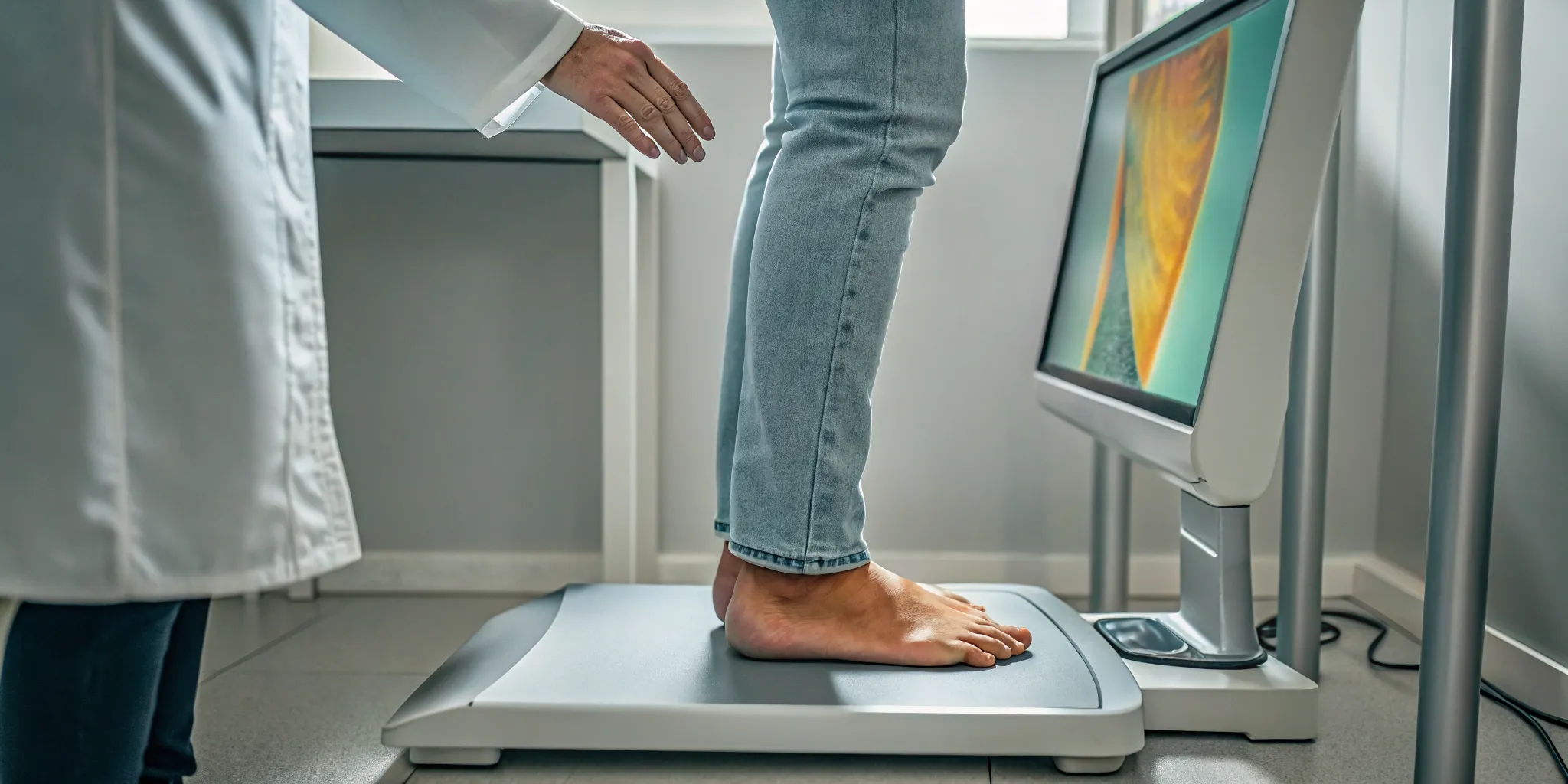
Your first visit is all about getting to know you and your feet. One of our expert physicians will sit down with you to discuss your symptoms, lifestyle, and any pain you’re experiencing. Then, we’ll conduct a thorough physical examination to check your foot structure, alignment, and range of motion. We’ll also perform a gait analysis, which simply means we watch how you walk. This helps us spot any unique patterns or issues in your stride. This complete assessment gives us the detailed picture we need to determine if orthotics are the right solution for you and what type will provide the most benefit.
Getting Fitted for Your Custom Orthotics
If we decide that custom orthotics are the best path forward, the next step is the fitting. This is where the "custom" part really comes to life. We will take a precise 3D scan or a physical mold of your feet to capture their exact shape and contours. This impression is then used to create an orthotic that is truly yours. Depending on your needs, we might design a rigid orthotic from a firm material like carbon fiber for functional control, or a soft, cushioned orthotic to relieve pressure and absorb shock. This personalized approach ensures your orthotics address your specific foot condition and support your daily activities.
Follow-Up Visits and Fine-Tuning
Getting your custom orthotics isn’t the end of our journey together. We’ll schedule a follow-up visit after you’ve had some time to wear them. This appointment is key to making sure they are working correctly and feel comfortable. It’s normal for there to be a short adjustment period, and we want to hear all about your experience. If anything feels off, we can make small adjustments to fine-tune the fit and function. Our goal is your long-term comfort and relief, so we encourage you to contact us with any questions as you get used to your new orthotics.
Our Approach to Custom Orthotics at The Foot & Ankle Group
At The Foot & Ankle Group, we see custom orthotics as a key part of a comprehensive treatment plan, not just a product you pick off a shelf. Our process is built around you: your specific foot structure, your lifestyle, and your personal goals for pain relief and mobility. We believe the best results come from a partnership between you and your podiatrist. From the initial evaluation to long-term support, our team is here to ensure your custom orthotics provide the precise support you need to get back to your life comfortably.
Starting with a Comprehensive Analysis
Your journey begins with a thorough evaluation. We don't just look at your feet; we analyze how you walk, stand, and move. This complete assessment helps us understand the underlying mechanics causing your discomfort. Custom orthotics are medical devices designed to control joint function and treat conditions ranging from flat feet and plantar fasciitis to muscle strain. By understanding your unique biomechanics and symptoms, we can pinpoint the exact support you need. This detailed analysis is the foundation for creating an orthotic that offers genuine relief and improves your overall foot health. Our services are designed to address a wide range of foot and ankle issues.
Designing Your Truly Custom Orthotics
Once we have a clear picture of your needs, we design an orthotic that is truly yours. "Custom" refers to much more than just matching your foot's shape. It involves selecting the right materials and design to address your specific condition. For example, rigid orthotics made from materials like carbon fiber can help control motion and ease aches and strains. In contrast, soft orthotics provide cushioning and take pressure off sensitive areas, like sores or ulcers. We tailor every aspect of the device to fit your diagnosis, activity level, and even your footwear, ensuring a perfect match for your life.
Guidance from Our Team of Specialists
You are never alone in this process. Our dedicated physicians are here to guide you every step of the way. After your initial assessment, we will discuss our findings with you and explain if custom orthotics are the right treatment option. We believe in clear communication and making sure you feel confident and informed about your care. Your podiatrist will walk you through the benefits, what to expect as you adjust to your new orthotics, and how they fit into your broader treatment plan. Our goal is to empower you with the knowledge to take an active role in improving your foot health.
Providing Ongoing Support and Care
Our commitment to your well-being doesn't end when you receive your orthotics. We view this as the beginning of our journey together. There is often an adjustment period, and we are here to support you through it. We will schedule follow-up appointments to check your progress, ensure the orthotics are comfortable, and make any necessary fine-tuning adjustments. Maintaining an open line of communication with your podiatrist is key to long-term success. We are dedicated to providing continuous care to ensure your orthotics continue to do their job effectively for years to come.
Related Articles
Podiatry Services & Foot & Ankle Treatments | The Foot & Ankle Group
Foot & Ankle Specialists in Mount Laurel & Philadelphia | The Foot & Ankle Group
Contact The Foot & Ankle Group | Mount Laurel & Philadelphia Offices
Frequently Asked Questions
How are custom orthotics different from the inserts I can buy at the pharmacy? Think of it this way: store-bought inserts provide general cushioning, which can feel nice temporarily, but they don't correct the underlying problem. Custom orthotics are prescription medical devices created from a precise mold of your feet. They are designed by a podiatrist to address your specific foot mechanics, realign your structure, and treat the root cause of your pain, offering a true, long-term solution.
How long do custom orthotics typically last? The lifespan of your orthotics depends on the materials they are made from and your activity level, but a well-made pair can last for several years. We recommend bringing them to your regular check-ups so we can assess their condition. Over time, your feet can change, or the orthotics may wear down, so periodic evaluations ensure they continue to provide the support you need.
Will my insurance help pay for custom orthotics? Many insurance plans do provide coverage for custom orthotics, especially when a podiatrist determines they are medically necessary to treat a specific condition. Coverage can vary, so it's always a good idea to check the details of your specific plan. Our office staff is very familiar with this process and can help you understand your benefits.
What is the process like after my initial evaluation? After your initial assessment, if we determine custom orthotics are right for you, we will take a 3D scan or a physical impression of your feet. This mold is sent to a specialized lab where your orthotics are crafted. It typically takes a few weeks for them to be made. Once they arrive, you will come back for a fitting appointment to ensure they feel comfortable and function correctly.
Do I have to wear special shoes with my orthotics? For the most part, no. Custom orthotics are designed to fit into most everyday shoes that have a removable factory insole, like sneakers, walking shoes, and many casual or work shoes. We design them to be as versatile as possible for your lifestyle. When you come in for your fitting, we encourage you to bring a few pairs of your most frequently worn shoes so we can ensure a perfect fit.