Date:
Editor:
That familiar, sickening roll of the ankle—it happens in an instant. One wrong step off a curb or a bad landing on the court, and you’re left with sharp pain and immediate swelling. Your first thought is likely, "How bad is it?" followed quickly by, "What do I do now?" The path to recovery starts with the right support, and that’s where an ankle brace for sprain comes in. But it’s not as simple as grabbing the first one you see. The right brace depends on the severity of your injury, from a mild stretch to a complete tear. This guide will walk you through everything you need to know, from identifying your sprain’s grade to choosing the perfect brace and understanding how it fits into your full recovery plan.
Key Takeaways
Choose the Right Brace for Your Injury: The level of support you need depends on the severity of your sprain. A mild sprain might only need a compression sleeve, while a more serious injury requires a structured brace. Getting a professional diagnosis is the surest way to match the brace to your specific needs.
Don't Let the Brace Do All the Work: A brace provides external stability, but true recovery comes from rebuilding your ankle's own strength. Following through with rehabilitation exercises is critical for restoring your range of motion and preventing future sprains.
Prioritize Proper Fit and Consistent Use: An ill-fitting brace can do more harm than good. Ensure your brace is snug but comfortable, and wear it consistently as recommended by your doctor, especially during activity. Pairing it with the right socks and shoes will also help you heal effectively.
What Is an Ankle Brace for a Sprain?
If you’ve ever rolled your ankle, you know that sharp, surprising pain and the swelling that quickly follows. An ankle brace is a supportive device you wear to stabilize the joint after an injury like a sprain. Think of it as a helping hand for your ankle. It keeps everything in place to prevent further damage, which allows the ligaments to heal properly. While it provides crucial support, it’s not a rigid cast, so you can still have some gentle, safe movement. This controlled motion is important because it prevents the joint from becoming too stiff while it heals.
Ankle braces are a key part of the recovery process, but they are not one-size-fits-all. The right one for you depends on your specific injury and lifestyle. It’s always a good idea to talk to a doctor to figure out which type of brace will help you heal most effectively. Our team at The Foot & Ankle Group can assess your sprain and recommend the perfect brace to get you back on your feet. We can help you schedule an appointment at one of our convenient locations in Mount Laurel, Columbus, Bordentown, or Philadelphia.
How Does an Ankle Brace Help You Heal?
An ankle brace works by providing stability and compression to your injured joint. After a sprain, your ligaments are stretched or torn, making your ankle feel weak and wobbly. A brace helps by limiting unsafe movements while still allowing for the gentle motion needed for recovery. This external support can give extra stability, which is especially important if you’ve had ankle injuries before.
This approach aligns with the "Protect" step of the well-known PRICE therapy method (Protect, Rest, Ice, Compress, and Elevate). By protecting your ankle from further strain, the brace creates a safe environment for your body to begin the healing process, helping to manage pain and reduce swelling along the way.
When Should You Start Wearing One?
You should start wearing a brace as soon as possible after the injury, once a doctor has confirmed it's a sprain. The length of time you'll need it depends on how severe your sprain is. For a mild sprain, you can typically expect to wear an ankle brace for one to two weeks. If your sprain is more moderate, you might need that extra support for three to four weeks.
Remember, a brace is just one part of your recovery. It works best when you also focus on gentle exercises to rebuild strength and flexibility in your ankle. Pairing your brace with supportive footwear is also a great way to promote healing and prevent future injuries.
What Are the Different Grades of Ankle Sprains?
When you roll your ankle, the first thing you probably wonder is, "How bad is it?" Not all sprains are created equal, and understanding the severity is the first step toward a solid recovery plan. Podiatrists classify ankle sprains into three "grades" based on how much damage the ligaments have sustained. Think of it like a scale from mild to severe. Knowing your sprain's grade helps determine everything from your recovery timeline to the type of brace you’ll need. While only a doctor can give you a definitive diagnosis, this guide can help you understand what you might be dealing with.
Grade 1: Mild Sprain
A Grade 1 sprain is the most common and least severe type of ankle injury. This happens when your ligaments are stretched or have very tiny tears, but they are still intact. You’ll likely experience mild pain, some tenderness when you touch the area, and a bit of swelling. The good news is that your ankle should still feel stable, and you can usually walk on it, though it might be uncomfortable. Recovery for a Grade 1 sprain is relatively quick, often taking just one to two weeks. During this time, a simple compression sleeve or a light, flexible brace can provide enough support and help manage swelling while the ligaments heal. Our team can recommend specific services to help you recover quickly.
Grade 2: Moderate Sprain
If your sprain is a Grade 2, you’re looking at a more significant injury. This grade involves a partial tear of the ligament, which means it’s been stretched to the point of damage. The pain and swelling will be more intense than with a Grade 1 sprain, and you’ll probably see some bruising around the ankle. The biggest difference you’ll feel is a sense of instability or wobbliness when you try to put weight on it. Walking will be painful and difficult. Healing a Grade 2 sprain typically takes longer, usually around three to four weeks. You’ll need more support during this time, so a lace-up or hinged brace is often recommended to keep the ankle stable as the ligament repairs itself.
Grade 3: Severe Sprain
A Grade 3 sprain is the most severe type and involves a complete tear of one or more ankle ligaments. This is a serious injury that causes intense pain, significant swelling, and extensive bruising. Because the ligament is fully torn, your ankle will feel very unstable, and you won’t be able to put any weight on it at all. Recovery from a Grade 3 sprain is a much longer process, taking anywhere from six to 12 weeks or more. This level of injury requires immediate medical attention and immobilization with a rigid brace or a walking boot to allow the ligament to heal properly. If you suspect you have a severe sprain, it's important to make an appointment with a podiatrist right away.
What Are the Main Types of Ankle Braces?
Walking into a pharmacy and seeing a wall of ankle braces can feel overwhelming. They come in all shapes and sizes, from simple sleeves to complex, structured supports. The key is understanding that each type is designed for a specific purpose and level of injury. Choosing the right one isn't about picking the most heavy-duty option; it's about matching the support to your ankle's needs as it heals. The wrong brace can either be ineffective or overly restrictive, potentially slowing down your recovery.
Think of braces on a spectrum of support. On one end, you have flexible sleeves that offer light compression, perfect for minor soreness or swelling. On the other end, you have rigid braces that essentially immobilize the ankle, which are necessary for more severe injuries. In between, you'll find options that provide a balance of support and flexibility. Understanding these categories will help you make an informed choice. Our team provides a range of foot and ankle services and can help you identify the best brace for your specific sprain, ensuring you get the right support from day one.
Compression Sleeves
Compression sleeves, sometimes called elastic braces, are your go-to for mild ankle sprains and tendonitis. Made from a light, stretchy material, they slide on like a sock and provide gentle pressure around the joint. This compression helps reduce swelling and can improve your sense of balance without limiting your ankle's natural range of motion. They also keep the joint warm, which can ease muscle stiffness. A sleeve is a great starting point if you're dealing with minor pain or just want a little extra support during daily activities, but it won't provide enough stability for a moderate or severe injury.
Lace-Up Braces
For mild to moderate ankle sprains, a lace-up brace is a solid step up in support. These semi-stiff braces are designed to limit excessive side-to-side and up-and-down movement, which helps protect your ligaments as they heal. As the name suggests, you tighten them with laces, much like a shoe, allowing you to customize the fit and level of compression. Most designs are slim enough to fit inside your everyday shoes, making them a practical choice for people who need to stay mobile. They offer a good balance of stability and comfort for recovery from a more significant twist or roll.
Hinged Braces
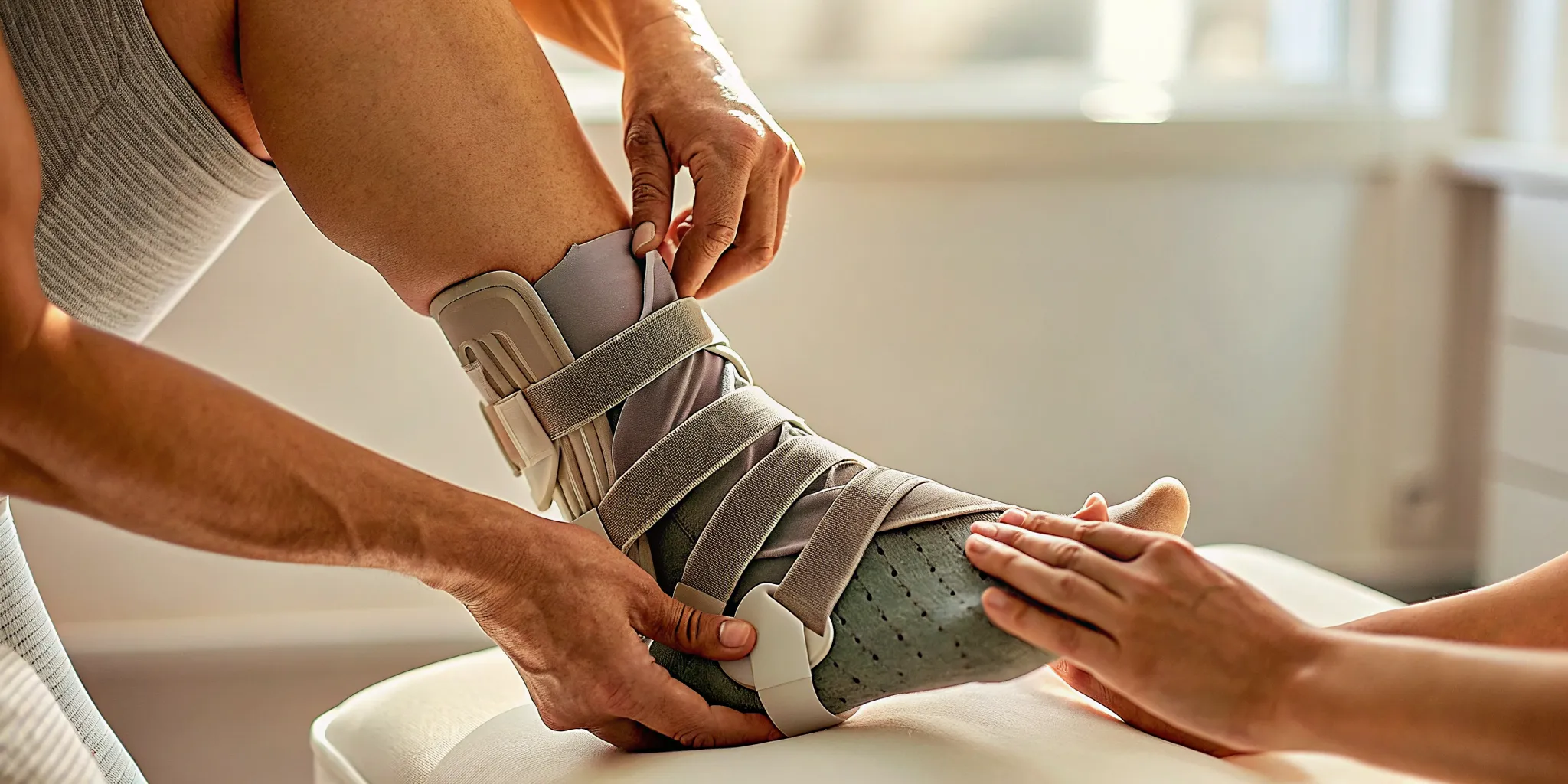
Hinged braces are specifically designed to prevent your ankle from rolling inward or outward while still allowing for normal up-and-down motion (flexing and pointing your foot). They typically feature semi-stiff supports on either side of the ankle connected by a hinge at the joint, with soft padding for comfort. Adjustable Velcro straps make them easy to put on and secure. Because they offer targeted stability against side-to-side movement, they are an excellent option for healing from a sprain and for athletes returning to sports where quick directional changes are common. Keep in mind that these are often made for either the right or left ankle, so be sure to get the correct one.
Rigid Braces
A rigid brace offers the highest level of protection and is often what a doctor will recommend for a severe ankle sprain or a stress fracture. These are made of hard plastic shells that run up both sides of your ankle, held securely in place with Velcro straps. Their main job is to stabilize the joint and prevent almost all movement, giving your ligaments or bones the stable environment they need to heal properly. Because of their bulky, rigid construction, they often don't fit inside a regular shoe. If you think your injury might require this level of support, it's best to schedule an appointment for a professional evaluation.
How to Choose the Right Ankle Brace
Walking into a pharmacy or searching online for an ankle brace can feel overwhelming. With so many options, how do you know which one is right for you? The key is to remember that not all braces are created equal, and the best one for your friend might not be the best one for you. Making a thoughtful choice is a critical step in your recovery, as the right brace provides the support you need without getting in the way of healing. A poorly chosen brace can either be ineffective or, in some cases, even hinder your progress by providing the wrong kind of support or causing discomfort.
Think of it like this: a mild sprain needs a gentle hug, while a more severe injury requires a firm, protective shield. Your daily routine also plays a big role. Are you resting at a desk all day or trying to get back on the basketball court? To find your perfect match, you’ll want to consider a few key factors: the severity of your sprain, the fit and comfort of the brace, the material it’s made from, and your personal activity level. Getting these details right will help you heal properly and get back on your feet with confidence. If you're ever unsure, our team can provide expert podiatry services to guide you.
Match the Brace to Your Sprain's Severity
The most important factor in choosing a brace is the grade of your ankle sprain. As one expert guide puts it, "It's important to pick the right brace based on the severity (degree) of your ankle sprain." A mild Grade 1 sprain, which involves minor stretching of the ligaments, may only require a simple compression sleeve to reduce swelling. For a moderate Grade 2 sprain with a partial ligament tear, you’ll likely need more substantial support, like a lace-up or semi-rigid brace. A severe Grade 3 sprain, involving a full ligament tear, demands maximum stability from a rigid or hinged brace to prevent further injury and allow the ligament to heal correctly.
Prioritize a Proper Fit and Comfort
A brace can only do its job if it fits correctly. If it’s too loose, it won’t provide adequate support. If it’s too tight, it can cut off circulation and cause more pain. As one manufacturer notes, "A brace that fits poorly or utilizes the wrong material may end up being uncomfortable." To find the right size, use a soft measuring tape to measure the circumference of your ankle according to the product’s instructions. Don’t just guess your size. Comfort is just as important, because an uncomfortable brace is one you’ll avoid wearing. A proper fit ensures you can wear your brace consistently, which is essential for a smooth recovery.
Consider the Material and Breathability
Ankle braces come in a variety of materials, and your choice can impact both comfort and function. Many simple sleeves are made of a stretchy, elastic fabric that provides light compression. As one medical resource explains, "Compression braces are made of light, stretchy material. They let your ankle move normally." More structured braces often use durable materials like nylon and vinyl for stability. Pay attention to breathability, especially if you live an active lifestyle or will be wearing the brace for long hours. Materials that wick away moisture will keep your skin dry and comfortable, preventing irritation while your ankle heals.
Factor in Your Activity Level
The brace you need for walking around the house is different from the one you’ll need to return to sports. Your daily activities should guide your choice. If you have a desk job and are only walking short distances, a lighter, more flexible brace may be sufficient. However, "Ankle braces are often recommended for athletes in sports where ankle injuries are more likely," such as basketball, soccer, or volleyball. If you’re an athlete, you’ll want a brace that offers robust support against side-to-side movements without completely restricting your performance. A hinged or lace-up brace often provides the right balance of stability and mobility for returning to play. If you're unsure what your activity level requires, you can always schedule an appointment with one of our specialists.
How Long Should You Wear an Ankle Brace?
So, you’ve sprained your ankle and have your brace. The big question now is, how long do you need to wear it? There’s no single answer, as the timeline depends entirely on the severity of your sprain and where you are in the healing process. Generally, recovery is broken down into three key stages: the acute phase right after the injury, the rehabilitation period, and the final return to your daily activities. Understanding what your ankle needs during each stage is key to a smooth recovery. While this guide provides a helpful overview, remember that personalized advice from a specialist is always best. If you're unsure about your injury, it's a good idea to schedule an appointment for a proper diagnosis.
The First 72 Hours (Acute Phase)
The first few days after an ankle sprain are all about managing pain and swelling. This is the acute phase, and your brace is your best friend. Its main job is to provide stability and compression to the injured ligaments. For mild sprains, wearing a brace for one to two weeks is often enough to get you through this initial period. Think of the brace as a supportive hug for your ankle, preventing movements that could cause further damage. During this time, you should also focus on the R.I.C.E. method: Rest, Ice, Compression, and Elevation. Combining these steps with consistent brace use gives your ankle the best possible start on its healing journey.
The Next Few Weeks (Rehabilitation)
Once the initial swelling and pain have subsided, you’ll enter the rehabilitation phase. Don't be tempted to ditch your brace just yet. The complete healing process for a sprained ankle can take anywhere from six to twelve weeks, and during this time, your ligaments are still vulnerable and unstable. Continuing to wear your brace, especially during activities that involve walking or standing, provides crucial support. It acts as a safeguard, protecting the healing tissues from accidental twists or rolls that could set your recovery back. This is the time to gradually reintroduce gentle movement and begin rehabilitation exercises, all while your brace keeps your ankle secure.
Returning to Your Activities
As you feel stronger, you’ll be eager to get back to your normal routine. How and when you do this depends heavily on your specific injury. For severe, Grade III sprains, your doctor may recommend immobilizing the ankle with a rigid brace or cast for at least 10 days before even thinking about activity. For milder sprains, you can start to wean off the brace. You might not need it for short walks around the house, but you should definitely wear it for more demanding activities like exercise, sports, or long days on your feet. Listening to your body is the most important rule here. If you feel pain, that’s a sign to slow down. Our team offers a range of rehabilitation services to help you return to your activities safely.
How to Wear Your Ankle Brace Correctly
Getting an ankle brace is a great first step, but wearing it correctly is what truly makes a difference in your recovery. Think of it as a supportive partner for your ankle; for it to do its job, you have to use it the right way. Improper use can slow down your healing or even make things worse. The good news is that it’s not complicated. By focusing on a few key habits, you can ensure your brace provides the stability and protection your ankle needs to heal properly. Let’s walk through the simple steps for positioning, consistent wear, and proper care.
Get the Positioning Right
Putting your brace on correctly is the most important step. A poorly positioned brace won't provide effective support and could even worsen your injury. Your brace should feel snug and secure, but never so tight that it causes numbness, tingling, or cuts off your circulation. Most braces come with instructions, so be sure to follow them closely. Generally, you’ll want to center the brace over your ankle bones. If you're using a lace-up or strap-on style, make sure the tension is even throughout. If you’re ever unsure about the fit, don’t hesitate to ask for help. Our physicians can show you exactly how to wear your specific brace during your appointment.
Wear It Consistently
Consistency is key when it comes to healing. Sporadic use won't give your ankle the continuous support it needs to recover. For a mild sprain, you might wear a brace for one to two weeks, while a moderate sprain could require three to four weeks of support. It’s especially important to wear your brace during any weight-bearing activities, even just walking around the house. This helps prevent accidental twists and turns that could set your recovery back. As your ankle gets stronger, your doctor will guide you on when to start weaning off the brace, but until then, make it a non-negotiable part of your daily routine.
Pair It With the Right Socks and Shoes
What you wear with your brace matters for both comfort and effectiveness. Ankle braces provide excellent support, but a brace that fits poorly with your socks or shoes can become very uncomfortable. Always wear a sock under your brace to prevent chafing and absorb sweat. A thin, moisture-wicking sock is usually the best choice. You’ll also need to choose your footwear carefully. You may need a shoe that is wider or a half-size larger to comfortably accommodate the brace. Forcing it into a tight shoe will create pressure points and discomfort. Athletic shoes with laces are often a great option because you can adjust the fit.
Keep Your Brace Clean
Just like any other piece of clothing you wear daily, your ankle brace needs to be cleaned regularly. Consistent cleaning is essential for good hygiene and helps prevent skin irritation, rashes, or infections. Most fabric braces can be hand-washed with mild soap and cool water, then left to air dry completely before you wear them again. Avoid putting your brace in the dryer, as high heat can damage the elastic and plastic components. Before you wash it, always check the manufacturer’s care instructions. Keeping your brace clean ensures it remains a helpful tool for your recovery, not a source of new problems. If you have any concerns, please contact us.
Ankle Brace Mistakes to Avoid
An ankle brace can be a fantastic tool on your road to recovery, but only if you use it correctly. Think of it like any other tool: the right one, used the right way, makes the job easier. Unfortunately, a few common missteps can turn your helpful brace into a hindrance, potentially slowing down your healing or even causing new problems. Let's walk through the biggest mistakes to avoid so you can make sure your brace is working for you, not against you.
Choosing the Wrong Brace Type
It’s easy to think any ankle brace will do, but they are definitely not one-size-fits-all when it comes to injuries. Using a lightweight compression sleeve for a severe sprain that really needs a rigid brace is like bringing a bandage to a broken bone; it just won’t provide the necessary support. On the flip side, a heavy-duty brace for a very mild sprain can be too restrictive. The key is to match the brace to your injury's severity. Getting a proper diagnosis from a specialist is the best way to understand what level of support your ankle truly needs to heal effectively.
Wearing It Incorrectly
Even the perfect brace won't do its job if it doesn't fit right. A brace that’s too loose will slide around, offering little to no stability. One that’s too tight can be even worse, potentially cutting off circulation, causing chafing, and creating a whole new set of problems. Always follow the manufacturer's sizing chart and instructions for putting it on. It should feel snug and secure, but not painfully tight. If you’re struggling to get a comfortable and effective fit, don't guess. It's always a good idea to ask a professional for guidance to ensure you're getting the full benefit.
Relying on It for Too Long
Think of your ankle brace as a temporary support system, not a permanent fixture. While it’s essential during the initial healing phase, wearing it for too long can make your ankle weaker. Your muscles and ligaments need to be challenged to regain their strength. Over-reliance on a brace can cause these supportive tissues to become lazy and atrophy, which can actually increase your risk of future injuries. It’s important to have a plan for weaning off the brace, which is something one of our physicians can help you create as part of your overall recovery strategy.
Skipping Your Rehab Exercises
This might be the most common mistake of all. A brace provides external stability, but it can't rebuild your ankle's internal strength. That’s where rehabilitation exercises come in. These specific movements are designed to restore your ankle's range of motion, strength, and balance. Skipping your rehab is like building a house on a weak foundation; it might look fine for a while, but it’s prone to problems down the line. Following a rehabilitation program is your best defense against chronic instability and re-injury, ensuring your ankle comes back stronger than ever.
Beyond the Brace: Your Full Recovery Plan
An ankle brace is an excellent tool for providing stability and reducing pain after a sprain, but it’s only one piece of the recovery puzzle. Think of it as a temporary support system, not a permanent fix. True healing involves actively rebuilding your ankle's strength and function to get you back to your daily life and prevent future injuries. A comprehensive recovery plan is your roadmap to getting there.
This plan goes beyond simply wearing the brace. It focuses on strengthening the muscles that support your ankle, understanding when it's time to let go of the brace, and learning to listen to your body’s signals. By taking a proactive approach, you empower yourself to heal correctly and reduce the chances of another sprain down the road. Our team of physicians is dedicated to creating personalized recovery strategies that address your specific injury and lifestyle, ensuring you don’t just heal, but come back stronger.
Rebuild Strength with Rehabilitation Exercises
A brace offers external support, but lasting stability comes from within. Once the initial swelling and pain begin to fade, it's time to focus on rehabilitation exercises. These movements are designed to restore your ankle's range of motion, flexibility, and strength. Gentle stretches and strengthening exercises help rebuild the muscles and ligaments that were damaged, creating a strong, internal support system for your joint.
This step is critical for preventing recurrent sprains. Without proper rehabilitation, your ankle can remain weak and unstable, leaving you vulnerable to another injury. Our services include guided physical therapy and rehabilitation programs tailored to help you regain strength safely and effectively, ensuring your ankle is ready for whatever comes next.
Know When to Wean Off the Brace
While a brace is essential in the early stages of healing, you shouldn't rely on it forever. The goal is to gradually transition away from it as your ankle gets stronger. For a mild sprain, you might only need the brace for a week or two. For a moderate sprain, it could be closer to three or four weeks.
These timelines are general guidelines, and your personal recovery schedule will depend on your specific injury. As you progress through your rehabilitation exercises and your ankle feels more stable, you can start wearing the brace less often. You might begin by taking it off for short periods at home and then gradually increase the time you go without it.
Listen to Your Body and Adjust
Throughout your recovery, your body will give you important feedback. It’s crucial that you listen. If you wear a brace all the time, the muscles around your ankle can become weak from lack of use. This is known as muscle atrophy, and it can make you more susceptible to future injuries once you stop wearing the brace.
Pay attention to pain signals. A little discomfort during exercises can be normal, but sharp or increasing pain is a sign to stop and rest. If you're unsure about what you're feeling or how to progress, it's always best to consult a professional. Schedule an appointment with a specialist who can assess your progress and adjust your recovery plan to ensure you’re healing properly.
When to See a Doctor for Your Ankle Sprain
While many minor sprains can be managed at home with rest and ice, some signs indicate you need a professional evaluation. It can be tough to tell the difference between a simple sprain and a more serious injury, so listening to your body is key. If you experience severe pain, can’t put any weight on your ankle, or notice any obvious deformity or bone poking through the skin, you should seek medical care right away. These can be signs of a severe sprain or a fracture that requires immediate attention.
Even if your symptoms aren’t that extreme, getting a proper diagnosis is the most important first step. A doctor can determine the grade of your sprain, which is essential for creating the right treatment plan. Without a clear diagnosis, you might choose the wrong brace or return to activity too soon, risking further injury. For example, a severe Grade III sprain may require a rigid brace or even a below-knee cast for proper healing, which is something only a doctor can prescribe.
You should also schedule an appointment if your pain and swelling don’t start to improve after a few days of home care. And if you find your ankle feels wobbly or gives out frequently long after an injury, you might be dealing with chronic ankle instability. This is a condition that needs a doctor's guidance to prevent repeated sprains and long-term joint damage. When in doubt, it’s always best to get it checked out. Our team is here to help you get an accurate diagnosis and a personalized recovery plan, so you can get back on your feet safely. You can schedule an appointment with one of our specialists to get the care you need.
Related Articles
Frequently Asked Questions
Can I just pick any brace off the shelf at the store? It's tempting to just grab one, but it's not the best idea. The right brace depends entirely on how severe your sprain is. A simple sleeve won't do much for a serious injury, and a rigid brace is overkill for a minor one. Your best bet is to get a proper diagnosis first so you know if you're dealing with a mild, moderate, or severe sprain. This will help you choose a brace that provides the right level of support for effective healing.
I've heard wearing a brace can make your ankle weaker. Is that true? This is a great question, and it can be true if you rely on the brace for too long and skip your exercises. A brace is a temporary tool for stability while your ligaments heal. The real, long-term strength comes from rehabilitation. Following a program of gentle stretches and strengthening exercises is what rebuilds your ankle's internal support system and prevents the muscles from becoming weak.
How can I tell if my brace fits correctly? A good fit should feel snug and secure, like a firm hug for your ankle. It shouldn't be so tight that it causes pain, numbness, tingling, or leaves deep marks on your skin. If it's too loose, it will slide around and won't offer any real support. You should be able to fit a finger or two comfortably under the straps. If you're unsure, it's always worth asking a professional to check the fit for you.
Should I wear my ankle brace to bed? Generally, you do not need to wear your brace while you sleep. The main purpose of the brace is to provide stability and prevent re-injury when you are up and moving around. When you're resting in bed, your ankle is not at risk of being twisted. Giving your skin a break overnight can also help prevent irritation. However, if your doctor gives you different instructions for a severe injury, you should always follow their specific advice.
What if my ankle still feels unstable even when I'm wearing the brace? If your ankle feels wobbly or like it might give out even with a brace on, it could be a sign of a few things. You might have a more severe sprain (like a complete ligament tear) than you realize, or you might be using the wrong type of brace for your injury. This is a definite signal to see a doctor. A specialist can give you an accurate diagnosis and ensure you get the right treatment plan, which might involve a more supportive brace or a different approach altogether.